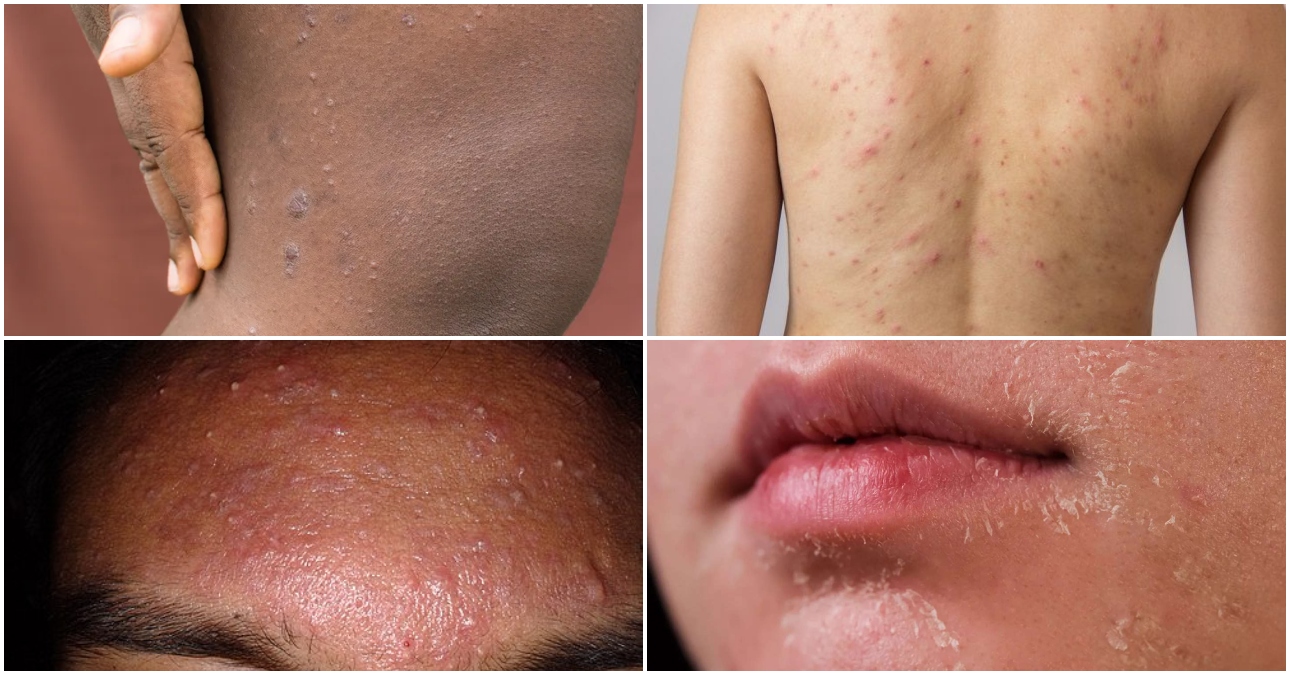
Across Kenya, skin problems are not rare anomalies; they are widespread health realities increasingly appearing in clinics, schools, and pharmacies—from sleepy villages to bustling cities, from Mombasa to Malaba, Vanga to Lokichogio, and from Isebania to Isiolo.
Healthcare reports tracking dermatological trends in Kenya indicate that conditions such as acne, eczema, hyperpigmentation, and dry skin account for roughly 10–30 percent of all outpatient dermatology visits nationwide.
This notable proportion highlights a broad public health concern rather than a niche issue.
In western Kenya, a cross-sectional survey found that approximately 11.2 percent of the population experiences acne, with significantly higher rates—between 28 and 38 percent—among urban adolescents.
This points to the influence of environmental and lifestyle factors.
At a major dermatology clinic in Kiambu, eczema was diagnosed in more than a quarter (25.5 percent) of patients, underscoring how many Kenyans live with persistent skin irritation or inflammation.
Taken together, these figures suggest that as many as one in three Kenyans may be affected by a skin condition at any given time.
The prevalence is higher in urban centres, where pollution, intense sun exposure, dietary changes, and stress intersect.
While skin disorders are a global concern, Kenya’s equatorial climate, rapid urbanisation, and limited access to specialised dermatology services amplify their local impact.
Dermatologists note that many patients delay seeking professional treatment, often relying on over-the-counter products or advice from social media until conditions worsen.
A common issue is damage to the skin barrier, leaving the skin sensitive, reactive, and slow to recover.
This trend has fuelled growing demand for dermo-cosmetic products—formulations developed to pharmaceutical-grade standards and recommended by skin specialists rather than designed purely for cosmetic appeal.
Rising interest in international dermatology brands such as Avène and Ducray, which focus on skin and scalp health, reflects a broader shift in how Kenyans are approaching skincare.
Increasingly, consumers are seeking science-backed, dermatologist-endorsed solutions that address underlying conditions rather than simply masking symptoms.
Beyond physical discomfort, chronic skin problems can also affect confidence, work performance, and overall mental wellbeing.
As awareness grows, health experts emphasize that skin and scalp care should be seen as both medical and lifestyle concerns; shaped by environment, habits, and consistent long-term care, rather than mere beauty trends.