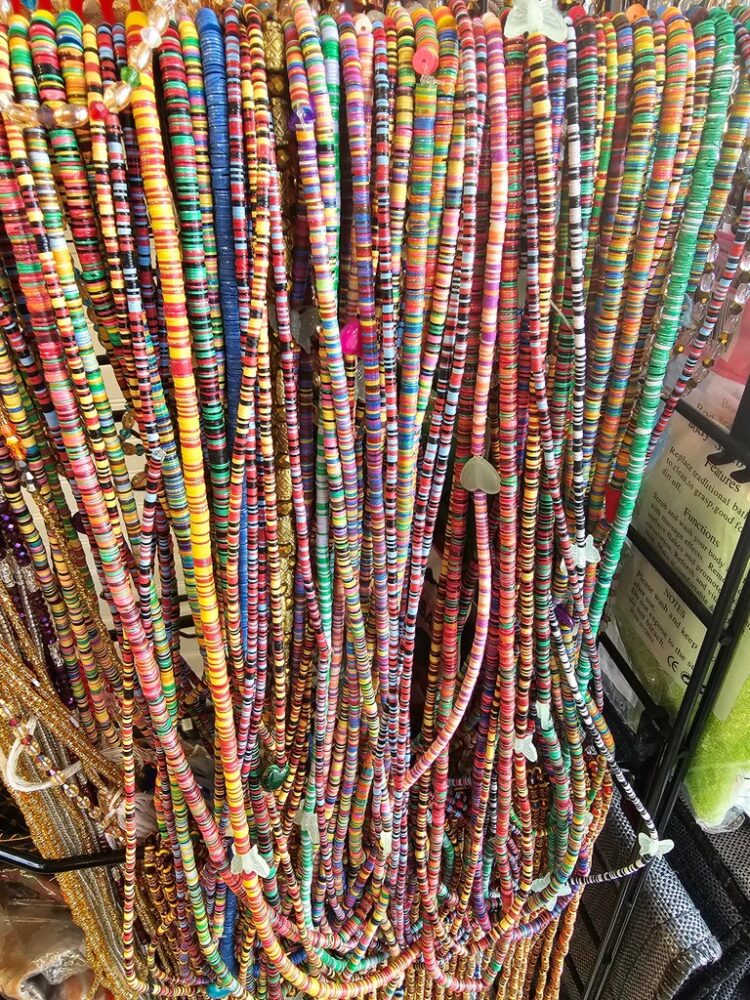
Waist beads are often seen as beautiful accessories, but in Swahili culture, they carry meaning far beyond decoration.
During a recent show appearance, media personality Fridah Mwaka broke down the deeper cultural significance of waist beads, explaining that for mature women, they serve as a private form of communication particularly within marriage.
According to her explanation, different bead colours traditionally carry specific messages.
A red waist bead, for example, signals that a woman is on her menstrual cycle. A white one indicates she is “clean” and ready for intimacy. Other colours simply represent beauty and confidence without speaking. Black beads, in some interpretations, can symbolize modesty or restraint.
In this context, waist beads are not just fashion items. They act as non-verbal cues between partners, a private language understood within the relationship.
Fridah noted that traditionally, these beads were not meant for public display. In Swahili culture, they are considered intimate adornments, worn beneath clothing and reserved for the private eye of a spouse.
She pointed out that modern trends, where waist beads are sometimes openly displayed on social media or worn as outer fashion statements, differ from their original cultural intent.
Beyond symbolism and beauty, waist beads have also been used practically. Some women use them as a way to monitor changes in body weight. Because the beads sit around the waist, any tightening or loosening can signal changes in the stomach area without stepping on a scale.
Across various African cultures, waist beads have historically symbolized femininity, maturity, sensuality, fertility, and identity. In Swahili tradition specifically, they reflect elegance and a deeper layer of communication within marriage.
Waist beads, in this context, are not just jewellery; they are language.