Every morning along the Sagana–Karatina–Marua road, the steady hum of heavy machinery signals more than the construction of a dual carriageway.
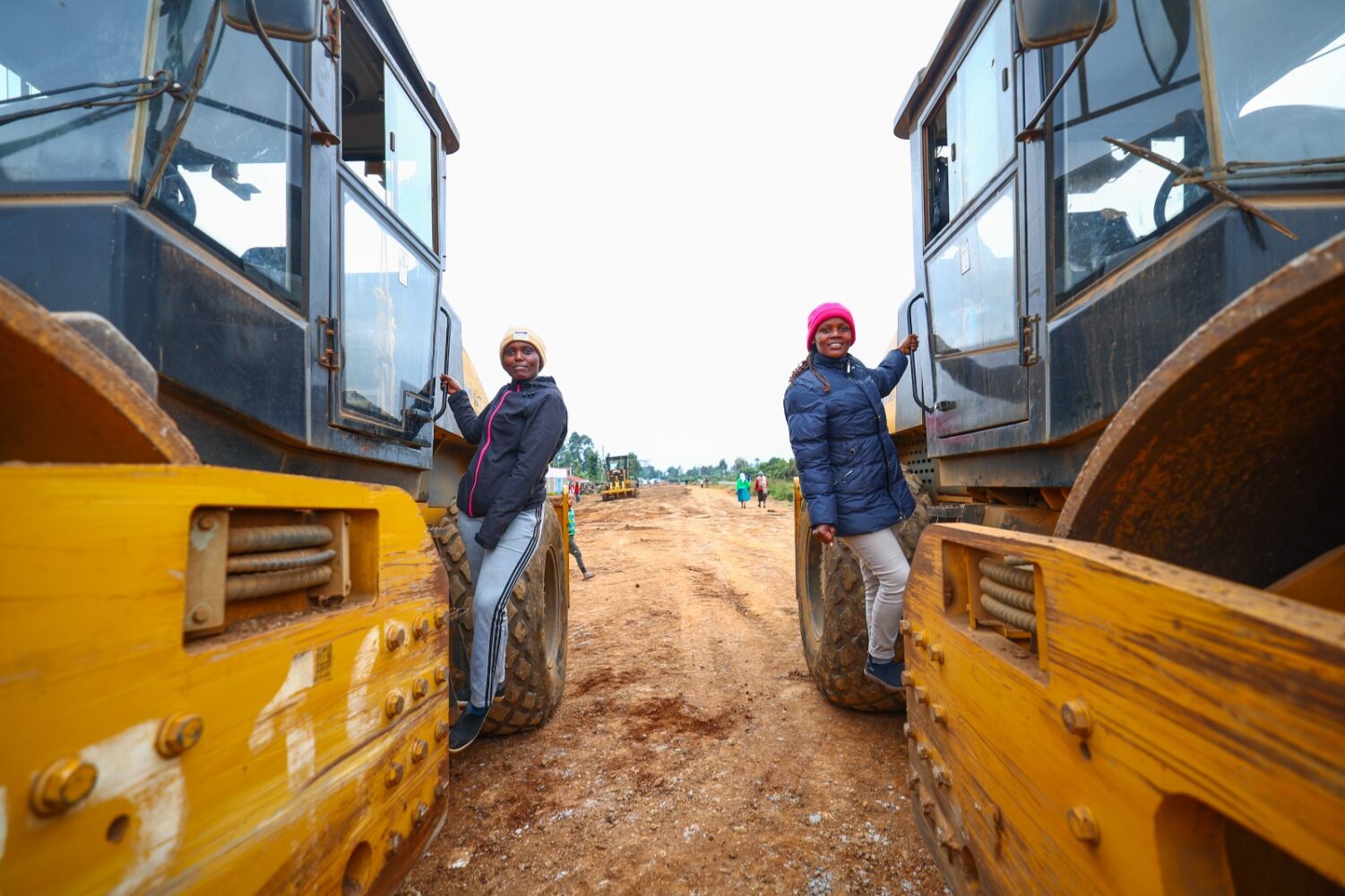
For 27-year-old Ruth Wambui Mwangi, it represents dignity, opportunity, and a quiet challenge to long-held gender stereotypes in Kenya’s infrastructure sector.
“I work on this project from Sagana, Karatina to Marua. I work as an operator, a roller operator,” she says, standing beside a road roller under the Central Kenya sun.
Ruth has been part of the project for over three years, a journey she describes with pride.
A graduate of Kilimambogo Institute in Thika, where she studied in 2017, she has worked in road construction for more than five years, moving between different companies before finding stability on the Sagana–Karatina–Marua road.
Her presence on site reflects shifting attitudes in a sector traditionally dominated by men, where women are increasingly taking on technical and operational roles.
According to the Kenya National Highways Authority (KeNHA), the Sagana–Karatina–Marua road is officially part of Lot 2 of the Kenol–Sagana–Marua highway and stretches approximately 36 kilometres through Kirinyaga and Nyeri counties.
The project begins about 700 metres from the Sagana–Murang’a junction and passes through the trading centres of Kibingoti, Kibirigwi and Karatina before terminating at the Marua junction.
KeNHA notes that the upgrade from a single carriageway to a dual carriageway is intended to reduce travel time, improve road safety, lower vehicle operating costs, and strengthen economic connectivity within Kenya and across the Horn of Africa.
The authority says the project has reached 93 per cent completion, with the expected completion date set for March 10, 2026.
The broader Kenol–Sagana–Marua Road, spanning 84 kilometres, is part of the Great North Road / Trans-African Highway No. 4, which runs from Cairo in Egypt to Cape Town in South Africa.
The corridor is a critical artery supporting trade between Kenya and Ethiopia, as well as the wider Horn of Africa region.
Construction on some sections had previously stalled due to delayed compensation payments to affected landowners.
“We were working on the access roads, which had already been paid for; the part that was not paid for, that is the one we had stopped. Now we have returned to it, this is one of the parts we had left because of a lack of money,” Ruth explains.
KeNHA says significant progress has been made on compensation. Cumulatively, the authority has disbursed Ksh 4,956,751,145.56 to the National Land Commission towards compensation for 2,343 Project Affected Persons (PAPs) within Lot 2 of the project.
Compensation payment by the National Land Commission is currently at 85.3 per cent.
The project has since regained momentum following renewed government financing.
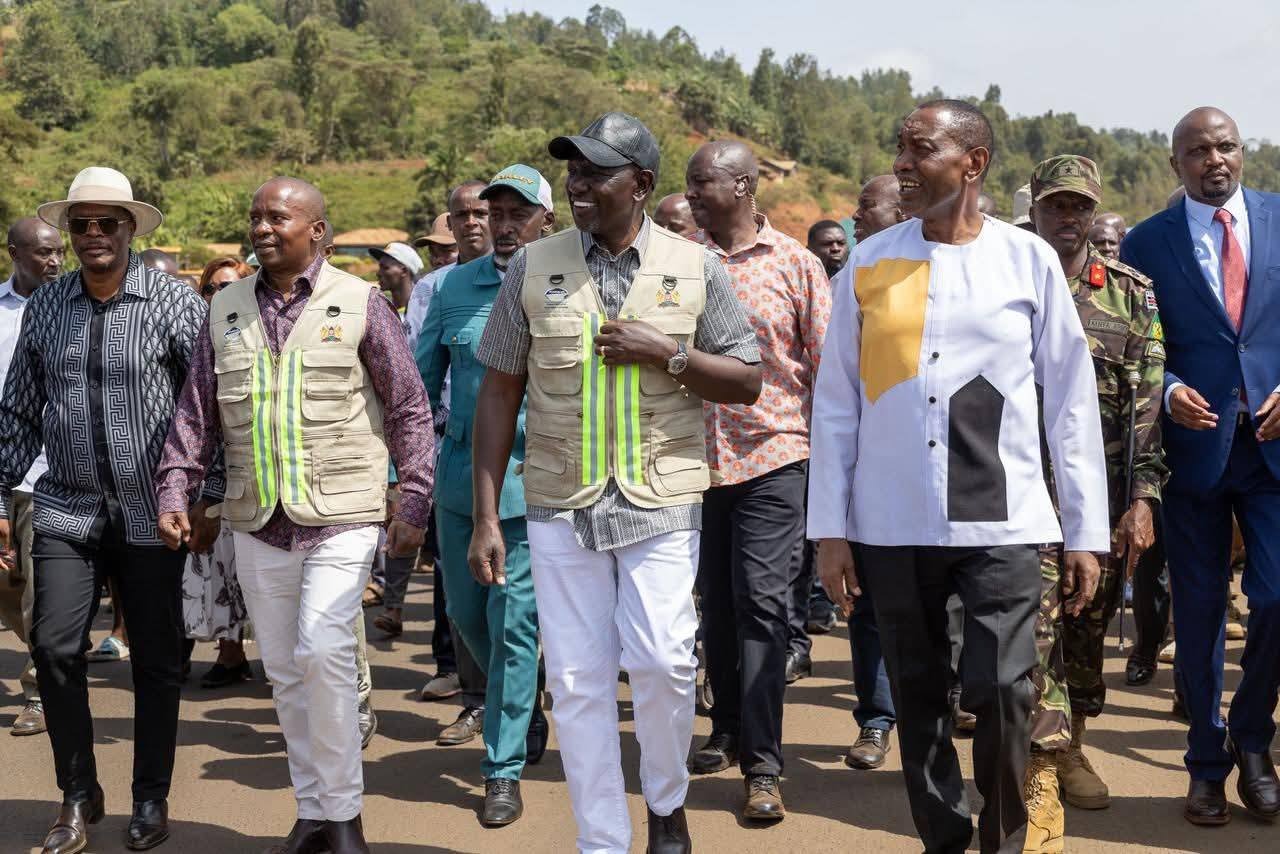
During an inspection at the Marua Interchange, President William Ruto said the road would “enhance traffic flow, boost road safety, facilitate trade between Nyeri and the entire region, and foster regional integration.”
The Head of State added that his administration has more than eight major roads currently being upgraded in Nyeri County during the current financial year at a cost of Ksh 4 billion.
He also announced plans to construct a dual carriageway from the Marua Interchange to Nyeri Town and extend it to Chaka trading centre in Kieni Constituency.
On his part, Deputy President Kithure Kindiki said that through strategic and innovative financing, the government has secured sufficient resources to complete road projects that had stalled for years.
“In Nyeri County, the upgrading of at least eight key roads is underway at a cost of Ksh 4 billion to ease mobility, boost trade and other economic activities, and ensure safety for travellers,” he said.
Beyond asphalt and concrete, the Sagana–Karatina–Marua road is shaping lives like that of Ruth Wambui Mwangi, for whom every metre rolled forward is proof that national development can be deeply personal, and that women, too, belong at the centre of Kenya’s infrastructure future.