
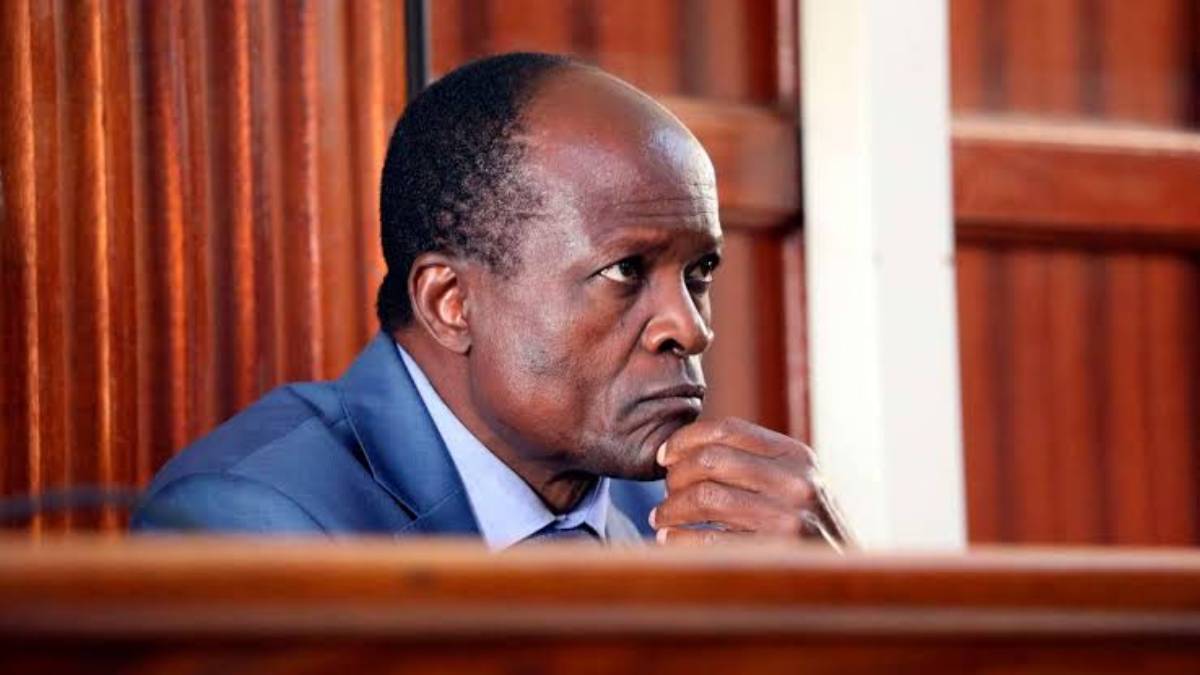
Former Migori Governor Okoth Obado has been sentenced to 25 years in prison for the 2018 brutal murder of Rongo University student Sharon Otieno.
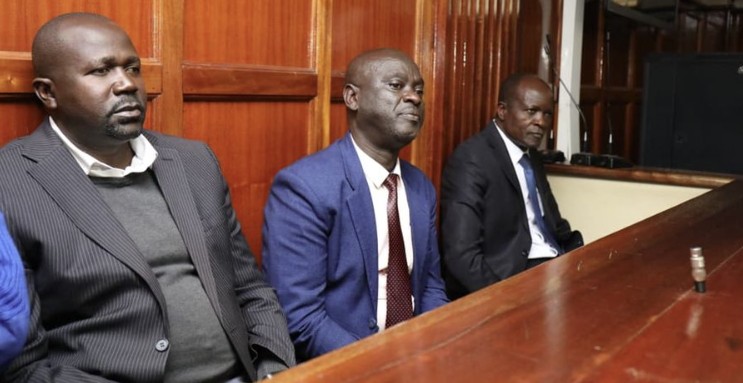
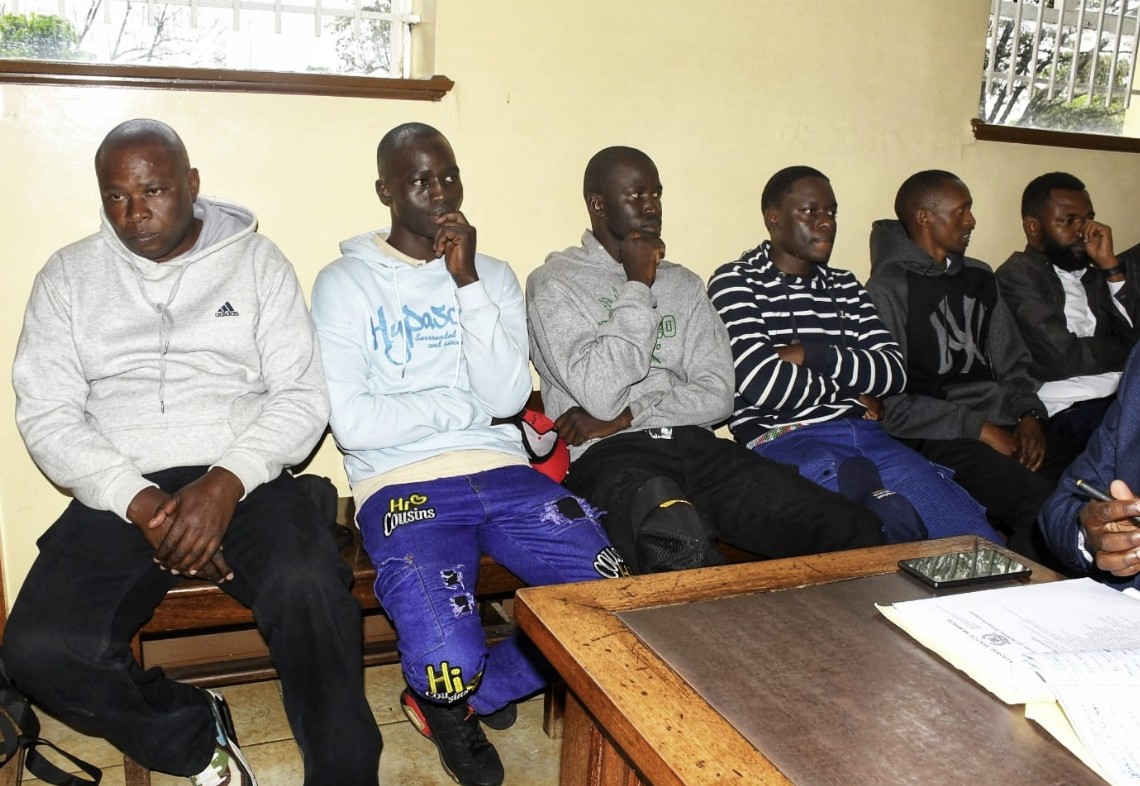
Appearing before Lady Justice Cecilia Githua alongside his co-convicts Michael Juma Oyamo and Caspal Obiero, Obado was slapped with a custodial sentence, meaning he has to spend all the 25 years behind bars.
In her ruling, Lady Justice Githua weighed contrasting pleas: state prosecutors were demanding the maximum penalty, while the late Sharon’s family had publicly forgiven Obado and asked for leniency, even as they sought harsh punishment for his co-accused.
In the end, the judge ruled to deny Sharon’s family compensation, owing to “insufficient evidence” of loss or suffering faced due to the late’s death.
Obado’s aides; Oyamo was also sentenced to 25 years custodial prison sentence, while Obiero received an 18-year custodial prison sentence.
The trio was facing two counts of murder for the deaths of Sharon and her unborn baby.
Pre-sentence report
Obado, Oyamo and Obiero were found guilty of murdering Sharon on July 23, 2026. Pre-sentence reports were filed on August 18, 2026, with the court receiving submissions from the prosecution, the defense, and the victim’s family.
Through their advocates, Sharon’s parents addressed the court, pleading for leniency for the accused persons so that they could financially support the deceased’s children.
While the court commended the family for their gesture of forgiveness and acknowledged that victims have a right to share their views, the judge emphasized that the court remains the ultimate determinant in sentencing, and a family’s forgiveness cannot stop the court from meting out an appropriate sentence.
On the family’s plea for compensation, the court noted that under Section 24 of the Victim Protection Act, any compensation order must be backed by sufficient proof of loss. Finding that inadequate evidence had been presented to prove the financial loss suffered by the family, the judge declined to issue any compensation order.
Turning to the sentencing, the court noted that the murder was executed in a cold-blooded and barbaric manner. Given that Sharon was seven months pregnant and, therefore, extremely vulnerable, the crime demonstrated extreme cruelty.
The judge observed that each convict played a distinct role in a common design to kill her, rejecting their pleas for a non-custodial sentence in favor of imprisonment.
Court’s findings on culpability
In assessing individual culpability, the court made the following findings:
First Accused (Okoth Obado)
Identified as the principal architect of the murder, Obado supplied both the motive and the financial resources. Given that he was in a personal relationship with Sharon and was the father of her unborn child, his role was central and his culpability was very high.
While empathizing with the parents’ plea that his imprisonment would cut off financial support for the children, the judge ruled that genuine support borne out of compassion should not be tied to or conditioned upon avoiding a custodial sentence.
Second Accused (Michael Juma Oyamo)
He was found to have operationalized the plot, with the court noting that Oyamo played a central role by arranging meetings, luring Sharon, and leading her to her killers.
His culpability was also deemed high.
Third Accused (Caspal Obiero)
He was found to have provided crucial logistical support to help avoid detection of the crime, including hosting planning meetings at his residence and procuring forged medical records.
However, his overall culpability was assessed as lesser than that of his co-accused.