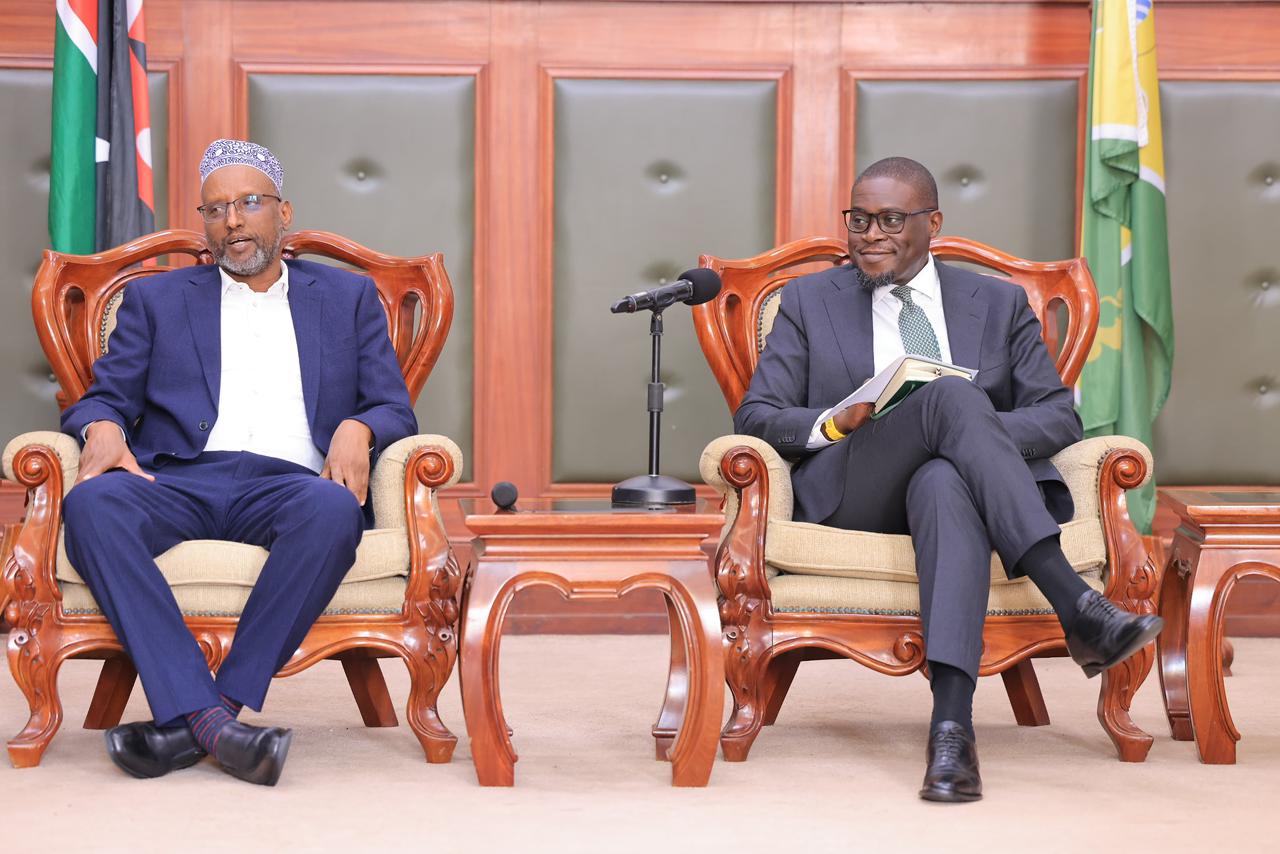
Nairobi Governor Johnson Sakaja has unveiled an ambitious plan to transform the capital into East Africa’s leading urban health research and disease surveillance hub, following the signing of a landmark Memorandum of Understanding (MoU) between the Nairobi City County Government and the Kenya Medical Research Institute (KEMRI).
The five-year agreement establishes a comprehensive framework for collaboration in human health research, clinical trials, disease surveillance, innovation, and capacity building across all county health facilities, marking a major shift towards evidence-based healthcare delivery.
“This collaboration allows us to move from assumptions to evidence, We are investing in research, innovation, and technology so that every health decision we make is informed by data and tailored to the real needs of our people,” Sakaja said during the signing ceremony.



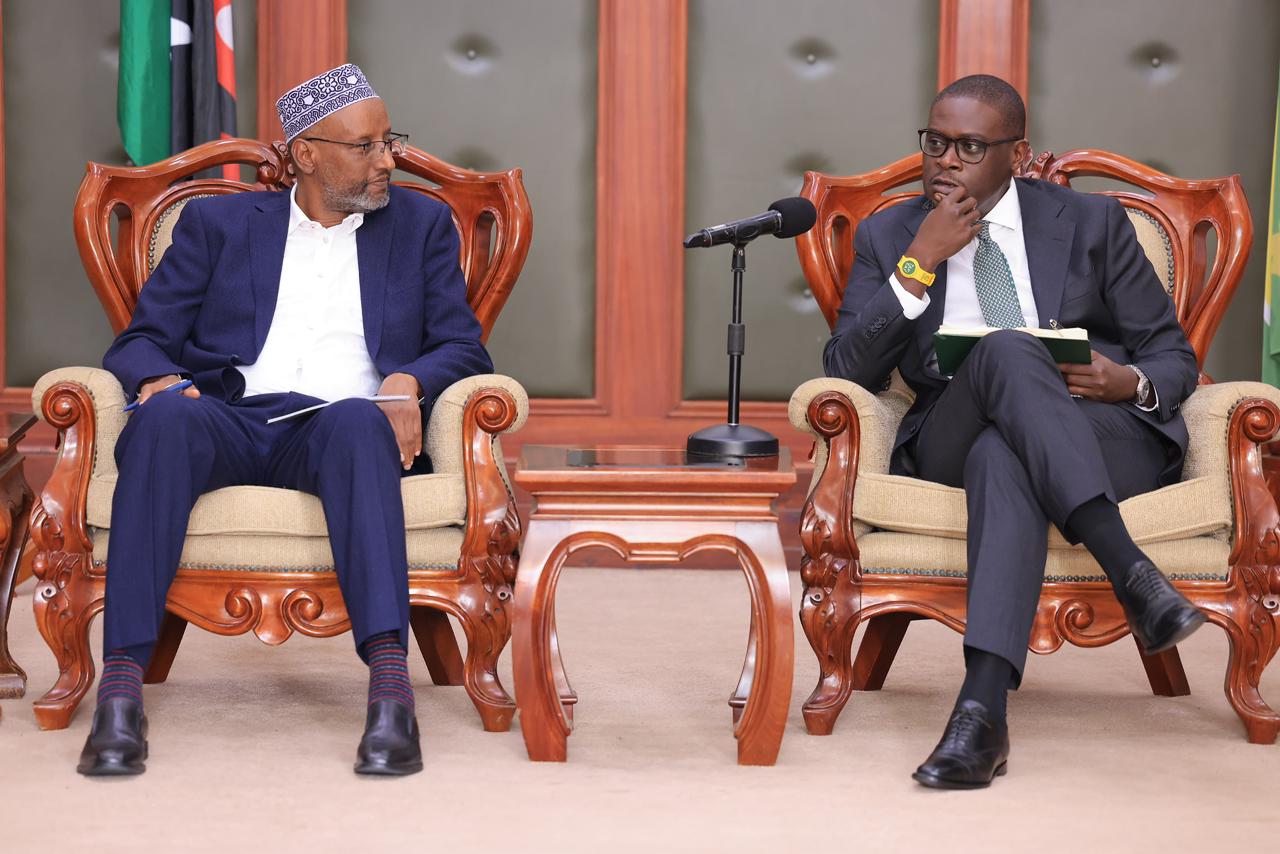
At the heart of the partnership is the establishment of a premier urban health research institute, the first of its kind in East Africa alongside a Nairobi Urban Disease Surveillance Hub designed to enhance early detection and rapid response to public health threats.
Sakaja says the initiative will significantly strengthen the county’s ability to detect, monitor, and respond to infectious diseases such as malaria, tuberculosis, HIV/AIDS, and emerging infections, ensuring faster intervention and preventing outbreaks from escalating.
“Through this partnership, we will detect diseases early and respond on time, without delay,” he said. “That is how modern cities protect their people.”
Beyond infectious diseases, the MoU places strong emphasis on public health research, policy development, and the use of data to guide reforms. Nairobi will open its health facilities and communities for research activities, while KEMRI will provide technical expertise, diagnostics support, disease surveillance, and specialized training for healthcare workers.
The agreement also supports clinical trials and advanced research, giving county doctors an opportunity to participate in high-quality research while improving patient care and strengthening professional capacity.
Water quality, sanitation, and environmental health form another key pillar of the collaboration. Sakaja said research findings will guide reforms in water and sanitation services, in partnership with Nairobi Water, to reduce water-borne diseases and improve public health outcomes.
“We are looking at health holistically from clean water and sanitation to prevention, detection, and treatment,” the Governor said.
Maternal, child nutrition, and growth monitoring will also benefit from the partnership. Research will support interventions aimed at improving child health outcomes, complementing the county’s flagship school feeding programme, Dishi na County, by tracking nutrition, growth patterns, and unmet needs among learners.
Sakaja further noted that Nairobi’s expanding health data ecosystem will be harnessed through the county’s Health Intelligence Unit to evaluate what is working, identify gaps, and continuously improve healthcare delivery.
“We have a lot of data in our health system, Through research and evaluation, we can strengthen what works and fix what doesn’t.” he said.
The MoU also provides for joint public health campaigns, community engagement, shared use of laboratories and research infrastructure, and collaborative resource mobilization, covering all 17 sub-counties.
Officials from both institutions said the partnership will bolster disease preparedness, advance universal health coverage, and ensure that research findings are translated into practical solutions that directly benefit Nairobi residents.
The agreement takes effect immediately and will remain in force for five years, with provisions for renewal subject to mutual consent.