
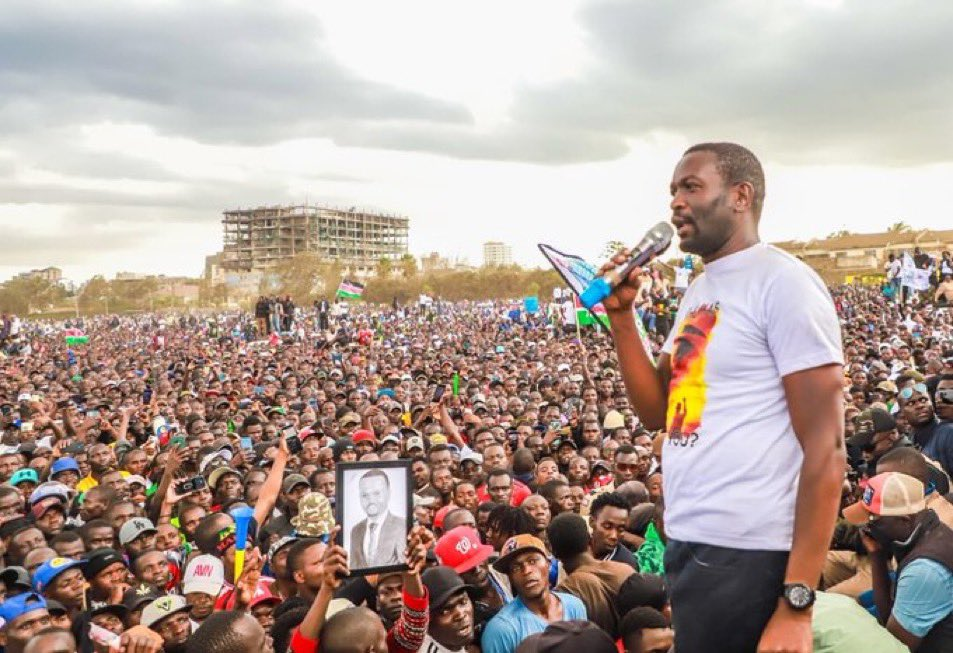
A founding member of The Equitable Party (TEP), Emmanuel Willyngtone Khamala, has moved to the Political Parties Disputes Tribunal seeking urgent orders to suspend the implementation of resolutions adopted during the party’s National Delegates Conference held on November 13, 2026.
In a Notice of Motion dated November 16, Khamala is challenging the circumstances surrounding the party’s transition to the Linda Mwananchi Movement (LMM), arguing that the process was undertaken without the full involvement or consultation of registered party members.
The applicant wants the Tribunal to certify the matter as extremely urgent and temporarily halt the implementation of all resolutions passed during the disputed delegates’ conference pending the hearing and determination of his application.
Khamala claims the conference was conducted in secrecy, alleging that it took place behind closed doors at a location that was only disclosed after the meeting had been concluded.
He further wants the Tribunal to compel the respondents to justify the legitimacy of the change of the party’s name from The Equitable Party to Linda Mwananchi Movement, as well as establish whether the individuals occupying leadership positions in the new outfit were lawfully appointed.
According to the court documents, The Equitable Party was registered on October 4, 2026, with the Interested Party serving as its party leader.
However, just four days later, on October 8, an application for a change of name was reportedly lodged, paving the way for the adoption of the Linda Mwananchi Movement identity, which was subsequently launched on October 30.
Khamala argues that the decisions affecting the party’s identity and leadership were made without giving registered members an opportunity to participate in the process.
He also questions the selection of individuals proposed to occupy various leadership positions within the new political outfit, claiming that members were neither consulted nor given an opportunity to scrutinise the appointments.
The applicant says he had previously raised concerns through two complaint letters dated October 28 and November 6, 2026, seeking explanations over the criteria used to select the proposed leaders and the decision to change the party’s name.
He contends that unless the Tribunal intervenes, registered members risk being denied their constitutional and political rights, particularly their right to participate in the affairs and leadership of their political party.
Khamala is relying on Articles 10, 47, 50 and 90 of the Constitution, alongside Sections 39, 40 and 41(2) of the Political Parties Act and Rule 9 of the Political Parties Disputes Tribunal Regulations, 2017.
He wants the Tribunal to grant any further orders it considers appropriate, as well as award costs of the application.
The matter places the spotlight on internal democracy, transparency and accountability in political parties as political formations begin positioning themselves ahead of the 2027 General Election.
The application to be heard on 1st December.