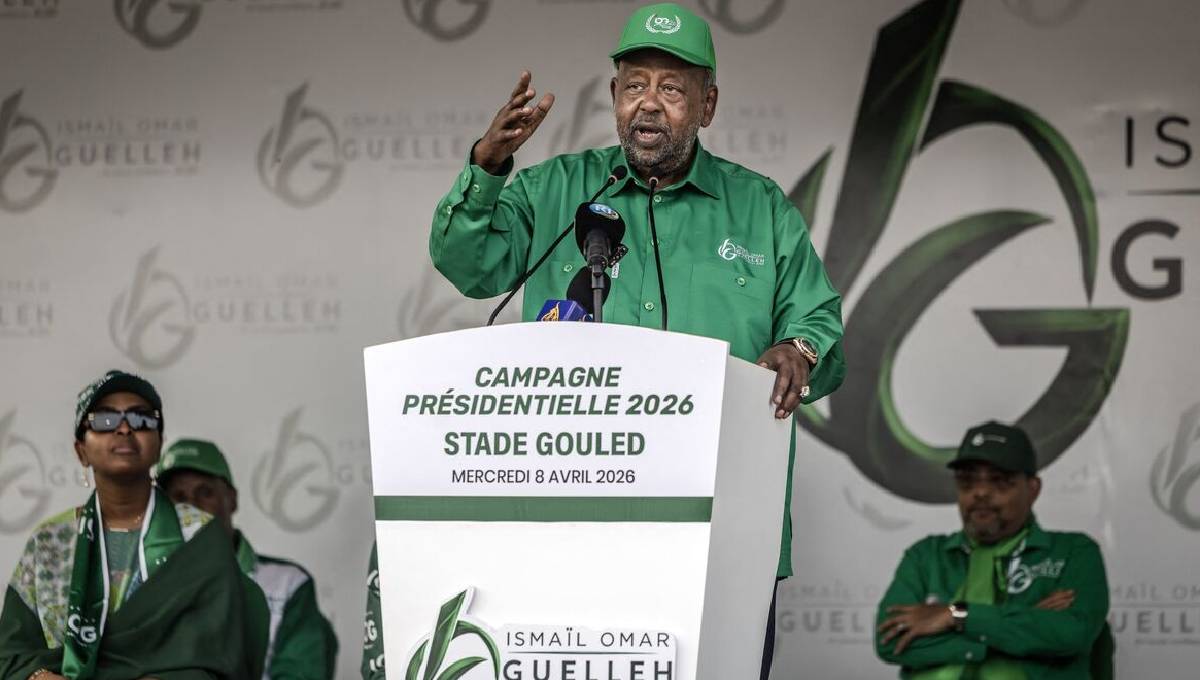
Ismail Omar Guelleh has secured another term as President of Djibouti after winning nearly 97% of all votes cast, with his closest rival picking up most of what remained.
The 78-year-old Gulleh is set to extend his 27-year rule.
The electoral commission’s announcement confirmed what polls had long suggested, that Guelleh retains an overwhelming grip on public confidence in the small but strategically vital Horn of Africa nation.
The president spoke in an emotional tone following the announcement of the results.
“Tonight is a special night… a night filled with immense joy. This victory belongs to the people of Djibouti,” he said.
He called on Djiboutians to pull together as the country enters what he termed a new phase of growth, emphasising that shaping the nation’s future was a collective responsibility.
“We want Djibouti to be visible on the world stage… a nation determined to overcome all hardships with a strong heart and a wise mind,” he added.
The renewed mandate arrives as Djibouti cements its reputation as one of the region’s most important economic and logistics hubs.
Sitting along some of the world’s busiest shipping lanes, the country has poured investment into port infrastructure and transport networks designed to drive regional trade.
Central to that vision is a transport corridor connecting Djibouti’s ports to Addis Ababa, with further extensions planned toward South Sudan and Uganda. This project could significantly deepen economic ties across East Africa.
Beyond trade, Djibouti’s strategic value keeps it at the centre of global security conversations. The country hosts military installations operated by China, the United States, and France, a rare arrangement that underlines just how much weight the nation carries internationally.
Diplomatically, its influence is also growing within the African Union, boosted recently by the ascent of Mahmoud Ali Youssef to a senior continental leadership role.
With five more years ahead of him, Guelleh steps back into office carrying both a strong public mandate and a crowded agenda, one that spans economic transformation, regional integration, and an increasingly prominent role in African and global affairs.