
In the heart of Nairobi’s Central Business District, the city pulses with movement – workers navigating traffic, street vendors calling out to customers all in a collective effort to revive an economy still catching its breath.
Yet, beyond the bustling streets, another kind of hustle unfolds daily in lecture halls and along the dusty pathways of Kenyan universities. Here, degrees are pursued with earnest zeal, but survival often demands more than textbooks.
These are Kenya’s campus hustlers, students fueled by dreams and ambition but the harsh reality lingers over what awaits them after graduation. Behind the pursuit of academic success lies a daily struggle that rarely appears in lecture notes or course outlines.
For many students, campus life is not only about attending classes and completing assignments; it is a constant balancing act between education and survival. Rising living costs, expensive campus accommodation, and limited financial support force many to seek alternative ways to sustain themselves while pursuing their studies.
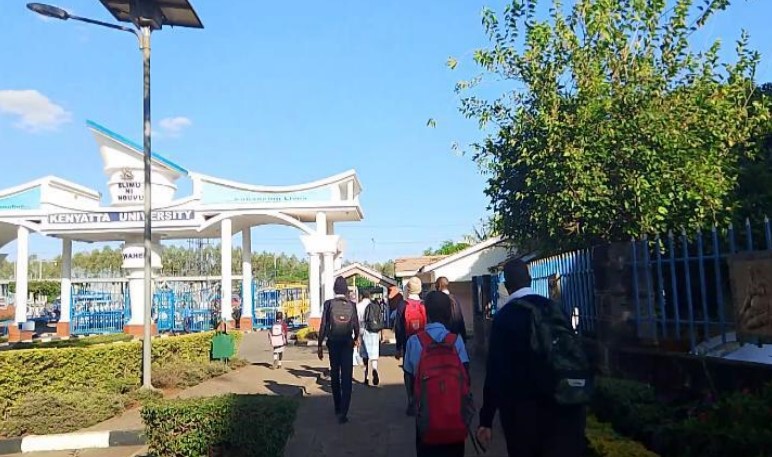
Sharon, a third-year student at Kenyatta University, has turned selling smokies within the campus into part of her everyday routine. Each afternoon after classes, she sets up her small stand, determined to make enough money to meet her basic needs.
“Sometimes I come from class and go straight to selling smokies,” Sharon says. “I miss classes sometimes. It’s not easy balancing school and business, but I have to do it because the money helps me pay rent and buy food. If I don’t hustle, life on campus becomes very difficult.”
Yet the challenges stretch beyond financial pressures. Competition for customers is high, academic workloads remain demanding, and the uncertainty of what lies ahead after graduation weighs heavily on many students.
“What worries me most is what will happen after I graduate,” Sharon admits. “You see many graduates outside here without jobs, so you just hope that all this struggle will eventually pay off.”
For many students like Sharon, every day on campus becomes a test of resilience. Some sell clothes, food, or accessories within campus grounds, while others offer small services such as hair braiding, graphic design, or online writing. Still, each small hustle started in a hostel room or campus corridor reflects the creativity, determination, and hope of a generation determined to carve out its own opportunities in a challenging economy.
After campus hustles
Graduation marks the pinnacle of campus life, a day filled with celebration, pride, and gratitude from family and friends. Yet it also marks the beginning of new struggles.
Behind the walls of Kenyatta University (KU), Ruiru Campus, ambition walks hand in hand with survival. There, seated behind a small display of colorful beads, is Dennis – not just a vendor, but a 2022 diploma graduate in Business Management.
“My name is Dennis. I did a diploma in Business Management and graduated in 2022. But here I am, nachapa kazi,”he says, his voice steady but heavy with truth. “I feel like so many of us have the skills, but getting a job opportunity is tricky. In most cases, you are expected to be corrupt, lazima utoe kichele.”
Dennis adds: “I feel like the government should intensify the fight against corruption in order to secure fair job opportunities for all graduates.”

For Dennis, the beads are not just merchandise; they are proof of persistence in a system that often rewards connections over competence. They are symbols of resilience in a system where qualifications alone are not enough. Behind every piece he sells lies a certificate folded carefully at home and a dream still waiting for its rightful chance.
Similar narratives echo across the country, as thousands of fresh graduates enter a job market in which formal employment opportunities are scarce. Many turn to informal side hustles; freelancing, hawking, online selling, or driving boda bodas, to sustain themselves while chasing elusive office jobs.
For some, the hustle becomes a safety net and a source of dignity.
“Currently, I am unemployed, but I run a small business selling poultry products and broiler chickens,” says Collins, a University of Nairobi graduate. “I have tried applying for white collar jobs but I haven’t been successful, I believe it’s due to lack of connections or inadequate skills.”
According to Collins, limited capital and the harsh economic conditions such as high taxation in the country have made it difficult for his small poultry business to grow. He urges the government to establish sustainable plans and introduce lenient tax policies to avoid oppressing small businesses.
He also calls for permanent and long-lasting job opportunities for the youth instead of short-term initiatives such as Kazi Mtaani, arguing that graduates with certificates, diplomas, and degrees deserve stable opportunities in the job market.
Mental health statistics

Statistics across the country show that many university graduands are engulfed by fear and doubt as they step into the uncertain world beyond campus. Frustration, anxiety, and a sense of helplessness often overwhelm them.
This leaves many young people searching for guidance and reassurance amid the harsh reality of unemployment and underemployment.
Parents, too, feel the strain. Many families take loans or make great sacrifices to send their children to university, hoping for a return on their investment. When employment does not follow, feelings of guilt and disappointment often set in.
Mental health counselors on campuses report rising cases of stress, despair, and burnout, many of which are linked to financial struggles and uncertainty about future careers.
The experiences of young people like Collins and Dennis reflect the broader struggle faced by many graduates across the country.
While Collins urges the government to support small businesses through sustainable policies, fair taxation, and long-term job creation, Dennis calls for decisive action against corruption to ensure fairness in the job market.
The duo argue that opportunities should be awarded based on merit rather than connections, and that youth employment strategies must move beyond temporary programs to lasting solutions.
For meaningful change to occur, the government must invest in sustainable job creation, strengthen accountability, support entrepreneurship, and ensure transparency in recruitment processes. Only then can the hopes of thousands of graduates transform into stable careers and meaningful economic participation.
While these concerns persist, the government has taken commendable steps to address graduate unemployment through initiatives such as the Nyota Fund, Ajira Digital, and various skills training and empowerment programs aimed at promoting self-employment and equipping youth with marketable skills.
These efforts demonstrate recognition of the challenges facing graduates in today’s economy. However, despite these interventions, the gap between education and sustainable employment remains significant. To create lasting impact, stronger partnerships with the private sector, increased investment in long-term job creation, and deeper structural reforms are necessary.
As thousands of graduates continue to seek opportunities, one question remains: will these efforts be enough to transform education into meaningful employment for every young person?