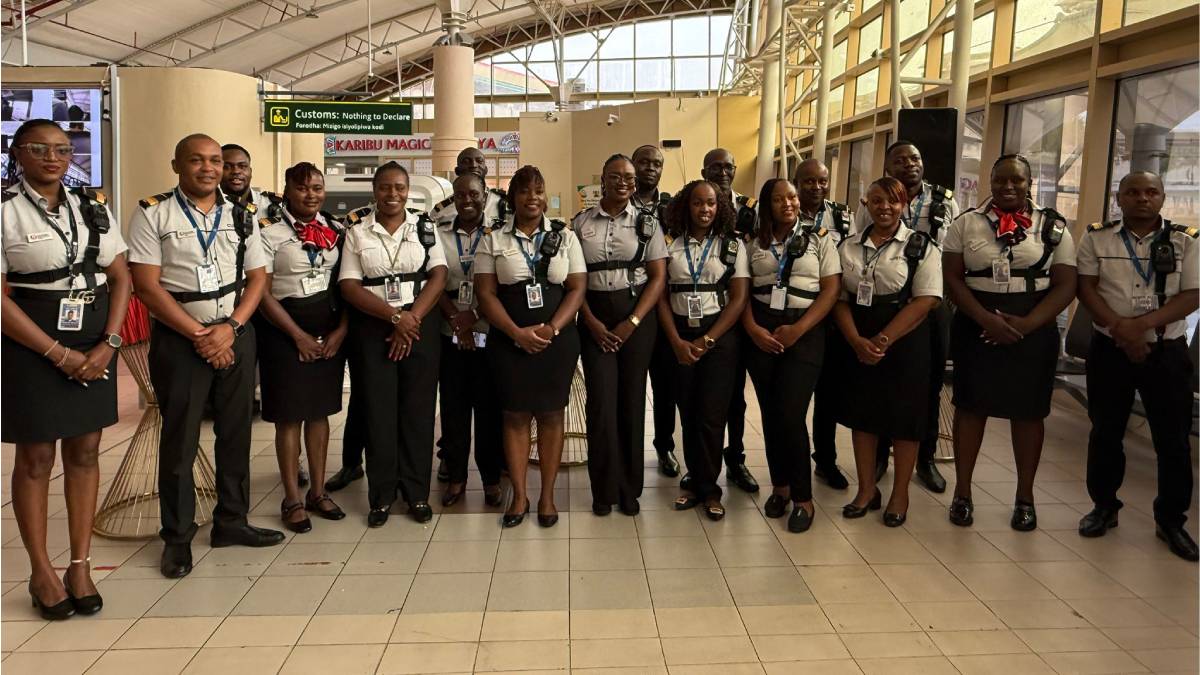
Kenya Revenue Authority (KRA) officers at the Jomo Kenyatta International Airport (JKIA) will start wearing body cameras from today (Tuesday, March 10).
This is after the Authority commissioned body-worn cameras for its customs and border control officers, in a bid to promote transparency, stronger compliance and security, faster dispute resolution, deter corruption and provide better experience for passengers.
According to KRA, adopting bodycams for its workers is not just about technology, but a bold statement that every traveller using JKIA deserves a fair, professional and consistent experience.
“[It is a statement] that every officer deserves a clear, documented record of their work. That integrity isn’t just a value we preach, it’s one we can now prove,” KRA says.
Why body-worn cameras matter
The Authority acknowledges that its customs is one of the most human-facing department, with its officers interacting with thousands of travellers, importers, and traders every day.
“These interactions shape perceptions of Kenya, of governance, of fairness. For too long, “𝑖𝑡’𝑠 𝑦𝑜𝑢𝑟 𝑤𝑜𝑟𝑑 𝑎𝑔𝑎𝑖𝑛𝑠𝑡 𝑚𝑖𝑛𝑒” has been an uncomfortable reality at border points. Disputes dragged on. Trust eroded. And the officers doing their jobs right had no way to prove it.”
Importance of body-worn cameras at JKIA
KRA is banking on the initiative to improve its service to all travellers and traders using JKIA as their entry point to the country.
✅ Transparency you can rewind: Every interaction is now a verifiable record. No more ambiguity. No more “he said, she said.” Just facts.
✅ A powerful deterrent against corruption: When the camera is rolling, professionalism isn’t optional; it’s the default. Recorded interactions raise the standard for everyone in the room.
✅ A better experience for passengers: Structured, consistent, and fair engagements at entry points mean travelers spend less time anxious and more time moving. That’s the experience Kenya’s airports and border posts should be known for.
✅ Faster dispute resolution: A complaint that once took weeks to investigate can now be resolved in hours. Objective footage cuts through the noise and gets to the truth quickly.
✅ Smarter operations: Beyond accountability, the footage becomes a tool for institutional learning. KRA can identify process gaps, improve training, and fine-tune service delivery where it matters most.
✅ Stronger compliance and security: Inspections and enforcement actions are now documented with precision, supporting both legal compliance and officer safety.
✅ A seat at the global table: From the UK Border Force to customs agencies across Europe and Asia, body-worn cameras are now standard. Kenya’s adoption of this technology signals that we are not just catching up, we are stepping forward.
KRA adds that, “We are committed to fairness. We are committed to integrity. And we are willing to be held accountable for it.”
All these efforts, KRA says, are geared towards gaining public trust.
“That kind of institutional courage builds something no policy document alone can manufacture, public trust. And public trust, in customs and trade, is not a soft metric. It’s the difference between a border that facilitates growth and one that frustrates it. It’s the difference between a country that attracts investment and one that scares it away.”