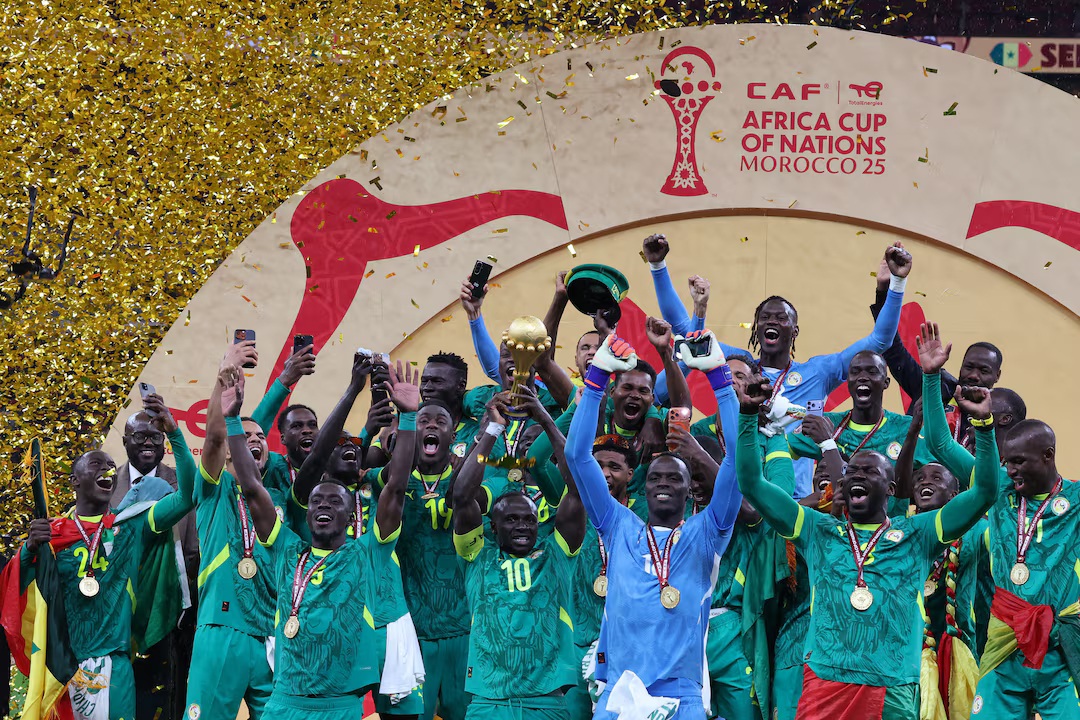

Morocco has vowed to pursue further legal action after the Court of Arbitration for Sport (CAS) reinstated Senegal as the 2025 Africa Cup of Nations champions, rejecting a ruling that had handed the title to the North African nation.
The Royal Moroccan Football Federation (FRMF) said it was dissatisfied with the decision, arguing that its submissions on the conduct of the final, refereeing and the integrity of the arbitration process had not been adequately addressed.
In a statement issued on Tuesday, November 24, the federation said it would explore all available legal avenues to challenge the ruling.
The development came hours after CAS unanimously upheld an appeal by the Senegalese Football Federation, setting aside the Confederation of African Football (CAF) Appeal Board’s decision of March 17, 2026, which had declared Senegal to have forfeited the final and awarded Morocco a 3-0 victory.
CAS instead reinstated CAF’s Disciplinary Board decision of February 11, 2026, confirming Senegal’s original 1-0 extra-time victory in the January 18 final played in Rabat.
One of Morocco’s main objections centres on alleged communication between German arbitrator Ulrich Haas, who sat on the CAS panel, and Senegalese Football Federation president Abdoulaye Fall shortly before the verdict.
The FRMF claims the reported contact took place about 48 hours before the decision was delivered and could undermine confidence in the independence and credibility of the proceedings.
However, the allegation remains disputed. CAS has since said there was no telephone contact between Haas and Fall, while Haas has denied having any direct contact with the parties involved in the case.
Morocco also criticised the panel for what it described as a failure to consider recent guidance from FIFA and the International Football Association Board (IFAB) on players leaving the pitch without the referee’s permission and the disciplinary consequences that may follow.
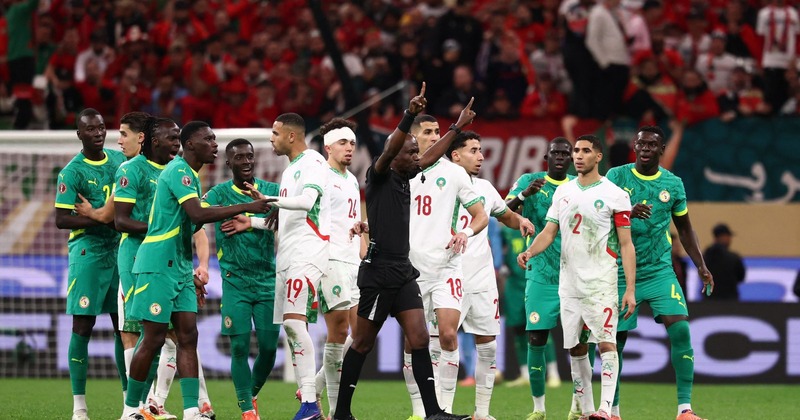
The dispute arose after Senegal’s players temporarily left the pitch during the final in protest over a penalty awarded to Morocco late in the match. The players later returned, and the game continued, with Senegal scoring the winning goal in extra time after Morocco’s Brahim Diaz missed the penalty.
In its ruling, CAS found that referee Jean-Jacques Ngambo Ndala had the authority to decide whether the match should resume. It concluded that he did not make an error of law by allowing play to continue.
The panel also determined that CAF regulations providing for a team to forfeit a match applied where the referee permanently abandoned the game, rather than when play resumed and the match was completed.
Although CAS decisions are generally final and binding, Morocco can seek a limited review before Switzerland’s Federal Supreme Court, which has jurisdiction over challenges to CAS awards.
Such a challenge would have to focus on procedural issues, including the independence of an arbitrator, the composition of the panel or whether a party was denied a fair hearing. The court would not ordinarily reconsider the match itself or replace CAS’s assessment of the sporting events.
Under Swiss law, applications to set aside international arbitration awards are generally subject to a 30-day deadline from notification.
CAF has indicated that it will implement the CAS decision, meaning Senegal’s status as champions is restored unless a competent court later sets aside the award.
The FRMF’s planned challenge could therefore extend a dispute that has kept the outcome of the January final in contention for months.