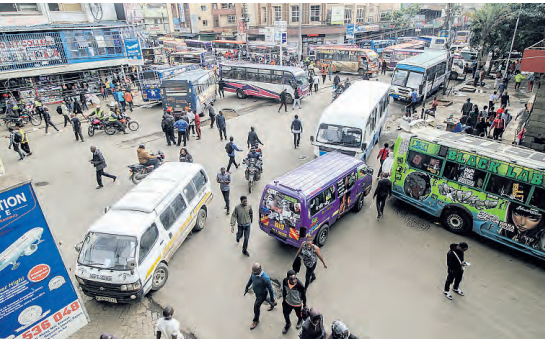
A Nairobi resident has moved to court seeking a total ban on loud music in public service vehicles (PSVs), arguing that the practice violates multiple constitutional rights of commuters.
In a constitutional petition filed before the High Court, the Petitioner Samuel Borongo Nyamari states that he has lived in Nairobi for the past six years and has relied on public transport—commonly known as matatus almost on a daily basis.
He claims that during this period, he and other commuters have been subjected to what he terms as ‘relentless noise pollution’ from loud, unsolicited and repetitive music played inside PSVs.
Borongo argues that it is a matter of public notoriety, and one deserving of judicial notice, that a majority of matatus operating within Nairobi are fitted with powerful music systems which play loud music throughout the day without the consent of passengers.
He contends that the constant exposure to loud music amounts to psychological torture and has created what he describes as a ‘silent pandemic’ affecting thousands of commuters daily. According to the petition, matatu operators play loud music indiscriminately, with little regard for vulnerable groups such as young children and babies with tender eardrums, elderly passengers, persons with autism and other sensory sensitivities, sick commuters, and passengers who may wish to make or receive phone calls or simply travel in peace.
The petitioner further argues that matatu operators fail to warn passengers of the loud music before boarding, thereby ambushing unsuspecting members of the public once the journey begins.
In his case, the petitioner claims that the practice violates the constitutional right to a clean and healthy environment under Article 42, asserting that excessive noise amounts to environmental pollution. He also alleges a violation of the right to freedom and security of the person under Article 29, arguing that persistent loud music constitutes psychological torture and an intangible form of violence from private actors.
Additionally, the petition cites a breach of consumer rights under Article 46 of the Constitution, claiming that passengers are denied services of reasonable quality and are not provided with essential information necessary to fully benefit from public transport services.
The Petitioner maintains that commuters are entitled to quiet and peaceful enjoyment of transport services.
The right to the highest attainable standard of health under Article 43 has also been invoked, with the Petitioner arguing that prolonged exposure to loud music threatens the hearing and overall health of children, the elderly, and persons with autism and other health conditions.
Among the remedies sought, the Petitioner wants the court to declare that the playing of loud music in PSVs is unconstitutional and in violation of Articles 29, 42, 43 and 46 of the Constitution. He is also seeking an order prohibiting all public service vehicles from playing loud music.
Respondents inthe casem are NTSA,NEMA and Matatu association .