
Every morning as the sun rises over Kenya’s busy towns and quiet villages, thousands of young people wake up with the same question lingering in their mind: will today be different?
For many, the day begins with hope—hope that a job application will be answered, hope that a small business he or she has started will thrive and finally yield profits, or hope that tomorrow will finally bring change. Yet for a majority of Kenyan youth, hope often collides with the harsh reality of unemployment.
Youth unemployment has emerged as one of the most pressing issues in Kenya today. Despite the growing numbers of university and colleges producing graduates every year, job opportunities remain limited.
Many people leave school armed with certificates and degrees, only to find closed doors in the job market. As a result, education, once seen as the surest path to success, now feel like a broken promise to many.
The youth bulge: A ticking time bomb?
And the numbers are appalling to say the least…
The Federation of Kenya Employers (FKE) say that although the overall unemployment in Kenya is at 12.7 percent, Youth (15 – 34 year olds), who form 35 percent of the Kenyan population, have the highest unemployment rate of 67 percent.
In February 18, 2026, Kenya’s National Council for Population and Development (NCPD) officially launched the Population Situation Analysis (PSA) 2025 Report.
According to the report, Kenya’s median age stood at approximately 20.5 years, with the young people under 35 years constituting more than 75 per cent of the total population.
Although a young population is gold, these young people — if they are unemployed — pose a big challenge on the Kenyan economy, since high youth unemployment is an impending threat to stability not just in Kenya but Africa at large.
Youth unemployment is a problem that Kenya must address to avert uprising and therefore maintain peace to attract investment and create wealth and the much needed employment.
High cost of living
As if unemployment is not disaster enough for this young population, the situation is further worsened by the rising cost of living. Prices of basic commodities such as maize flour, cooking oil, transport and rent continue to soar, placing unbearable pressure on unemployed and underemployed youth.
To survive, many turn to informal jobs; selling goods online, riding bodabodas, working as casual labourers, or engaging in short-term digital gigs. While these hustles provide temporary relief, they offer little security and no guarantee for the future.
Beyond economic hardship lies an even deeper struggle: Mental and emotional distress.The constant pressure to succeed, support families and meet societal expectations has left many young people fighting anxiety, stress and depression.
Unfortunately, mental health remains a neglected issue, with limited access to affordable counselling and support services. In silence, many youths suffer, afraid to speak out in a society that often equate struggle with failure.
Gov’t initiatives to uplift youth
The government has made efforts to address youth unemployment through initiatives such as youth funds, digital job programs and skills development projects.
One such programme is the National Youth Opportunity Towards Advancement (NYOTA) programme, which targets 820,000 youths aged 18 to 29 years, offering business grants, skills training, and digital courses to improve access to government opportunities.
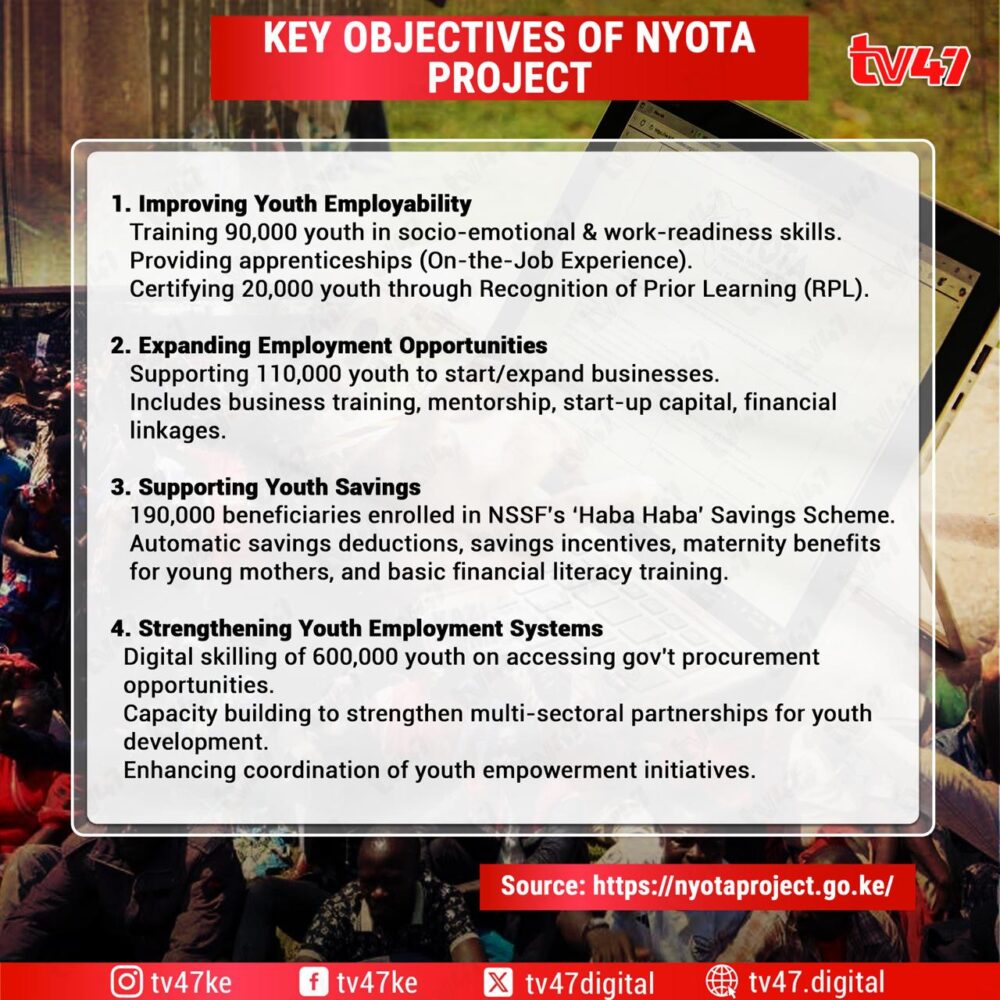
This week, the NYOTA programme received a huge boost when the government increased support for young entrepreneurs, adding an additional KSh3.38 billion to fund more beneficiaries.
The latest mini-budget tabled at the National Assembly on Wednesday, May 4 expands the programme’s reach from 17,500 to 50,000 youths, up from the KSh1.44 billion initially allocated for the year ending June 2026.
Is it enough?
However, many young people feel these initiatives do not reach those who need them most. Challenges such as corruption, poor implementation, and lack of awareness continue to undermine their effectiveness, leaving many disillusioned.
As Kenya looks toward the future, the voices of its youth cannot be ignored. A nation’s strength lies in its young population, and failing them means failing the future itself. If meaningful action is taken, the same youth struggling today can become the driving force of Kenya’s growth tomorrow. Until then, many will continue to wake up each morning, caught between hope and hustle, waiting for a chance to truly belong in the promise of their nation.