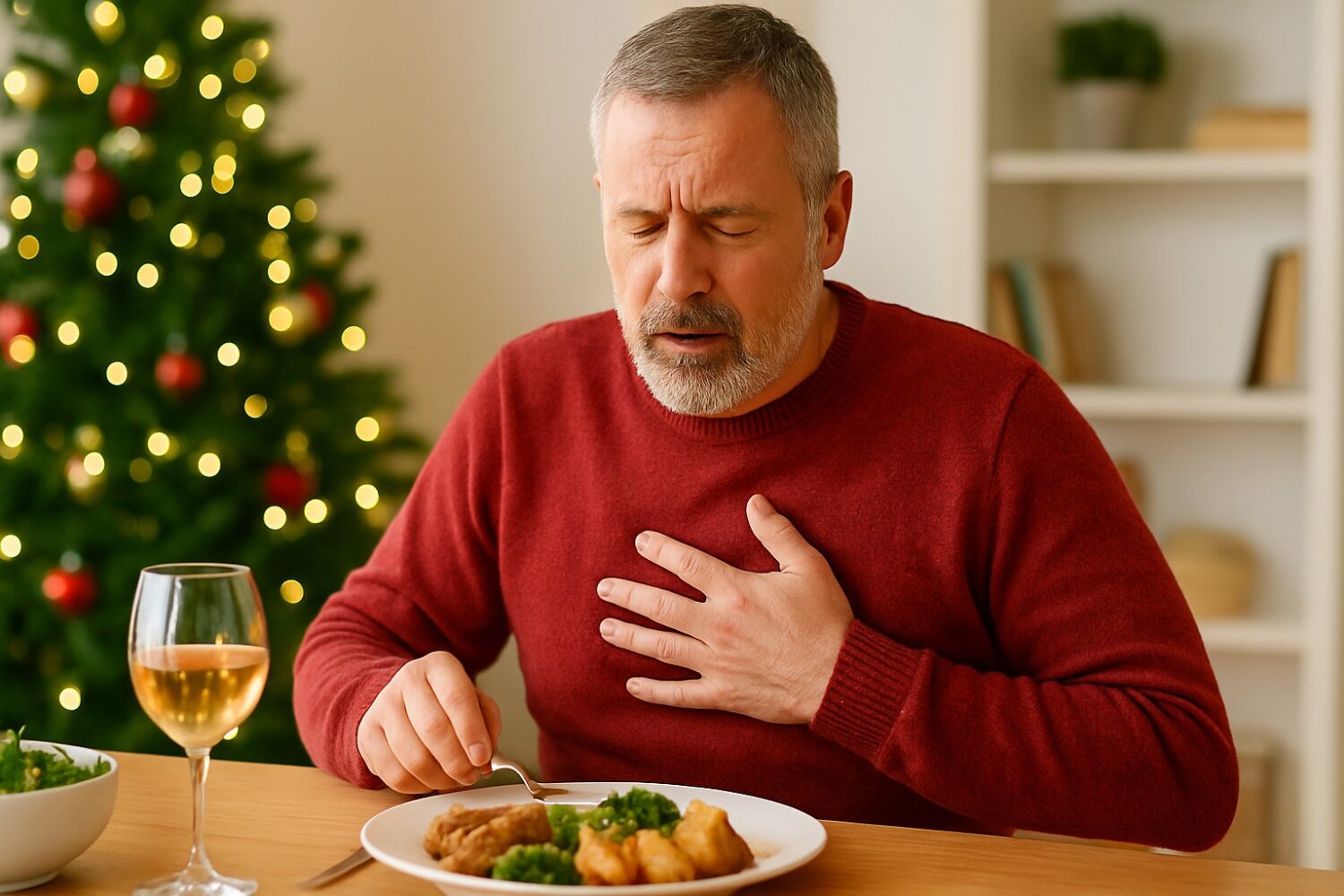
The holiday season is here! It’s a wonderful time, but for many people, all that festive eating comes with an unwelcome side effect: heartburn.
What actually happens when you get heartburn?
Think of your esophagus as a tube that carries food from your mouth down to your stomach. At the bottom of this tube sits a small muscular valve called the lower esophageal sphincter. Its job is simple: open up to let food pass through, then close tight to keep stomach acid where it belongs.
Dr. Tasneem Ahmed explains that heartburn happens when this valve doesn’t close properly. Stomach acid sneaks back up into your esophagus, and because your esophagus doesn’t have the same protective lining as your stomach, even a little bit of acid causes that burning sensation you feel behind your breastbone.

Why does it keep happening?
Heartburn usually strikes after you eat, and there are some clear reasons why:
Gravity stops helping. When you lie down or bend over after eating, acid can travel upward more easily. Staying upright gives you an advantage.
Certain foods make it worse. Professor Marcus Lee, who studies nutrition and digestive health, points out that fatty meals are particularly troublesome. They slow down how quickly your stomach empties and can actually relax that important valve at the bottom of your esophagus. Studies have consistently shown that both smoking and alcohol can reduce lower esophageal sphincter pressure, making reflux more likely.
Common triggers of heartburn
- Big, heavy meals that stuff you full
- Fried foods, fatty cuts of meat, or anything greasy
- Spicy dishes
- Citrus fruits, tomatoes, onions
- Chocolate and peppermint
- Coffee, alcohol, and fizzy drinks
- Smoking and carrying extra weight
- Pregnancy (the baby presses on your stomach)
- Stress, anxiety, or feeling down
- Some medications, including certain pain relievers and blood pressure drugs
Could this be something more serious?
Most of the time, heartburn is just heartburn. You will feel a warm, burning sensation behind your breastbone that might creep up toward your throat. You might taste something sour or bitter. It gets worse when you lie down or lean forward.
But here’s what you need to know: if you suddenly feel crushing chest pain that spreads to your arm or jaw, or if you’re short of breath, sweating, or feeling nauseous, call for emergency help immediately. Those are signs of a possible heart attack. When unsure, always err on the side of caution and get checked out.
How many people deal with this?
Studies show that up to 44% of adults get heartburn at least once a month, and nearly one in five people experience it every week. Research has found that smoking, drinking alcohol, and depression all increase your risk significantly, which shows how closely your lifestyle and mental health are connected to your digestive health.
What can you do about it?
The good news is that changing a few daily habits can make a big difference:
- Eat smaller portions more often instead of three huge meals
- Give yourself time to digest; wait at least two to three hours after your last bite
- Prop up your bed by raising the head six to eight inches (put blocks under the bed frame, not just extra pillows)
- Get to a healthy weight
- Cut back on alcohol and quit smoking
- Find ways to relax; stress makes everything worse, including heartburn
Dr. Anika Desai, an endoscopy specialist, points out that if the symptoms persist, it might mean you have ongoing inflammation or chronic reflux disease, and catching it early helps prevent damage to your esophagus down the road.
Foods to skip and foods to enjoy
Give these a pass when heartburn is bothering you: fried foods, fatty meats, spicy dishes, citrus fruits, tomatoes and tomato sauce, chocolate, coffee, and alcohol.
Stick with gentler options: oatmeal, bananas, rice, lean chicken or fish, steamed vegetables, low-fat dairy products, and foods that are low in acid and high in fiber. When flaring up, bland foods are your friend.
Medications that can help
If lifestyle changes aren’t cutting it, medications can provide relief:
Antacids work fast by neutralizing the acid that’s already in your stomach. Great for quick relief, but don’t last long.
H2 blockers reduce how much acid your stomach produces, and the effect lasts several hours.
Proton pump inhibitors are stronger and provide longer-lasting relief by blocking acid production more completely.
There are also newer options called potassium-competitive acid blockers that work well for people with frequent symptoms. Just remember: if you are taking any acid-reducing medication regularly, check in with your doctor to make sure it’s still the right approach for you.
When should you talk to a doctor?
Make an appointment if:
- Getting heartburn more than twice a week
- Over-the-counter treatments aren’t helping
- Trouble swallowing
- Losing weight without trying
- Vomiting
- Persistent chest pains
Chronic reflux that goes untreated can lead to more serious problems, including a condition called Barrett’s esophagus, which increases the risk of esophageal cancer.
The bottom line
Heartburn is incredibly common, and while uncomfortable, it’s usually not dangerous. The burning feeling comes from your digestive system. Once you figure out what triggers your symptoms and make some consistent changes to your eating habits and lifestyle, you can significantly reduce how often it happens and protect your digestive health for the long term.
The key is paying attention to what your body is telling you and taking action before a temporary annoyance become worse.