When a new president takes oath of office in East Africa, one of the most meaningful moments is the handing over of the instruments of power. These ceremonial items represent the authority of the president.
The Constitution, the flag, the sword, and the shield, each symbolizes a key part of governance that includes the law, sovereignty, and defense.
Together, they highlight that moment when power shifts from one leader to another. This can serve as a reminder to everyone that in a democracy, power is something to be held in trust with the law.
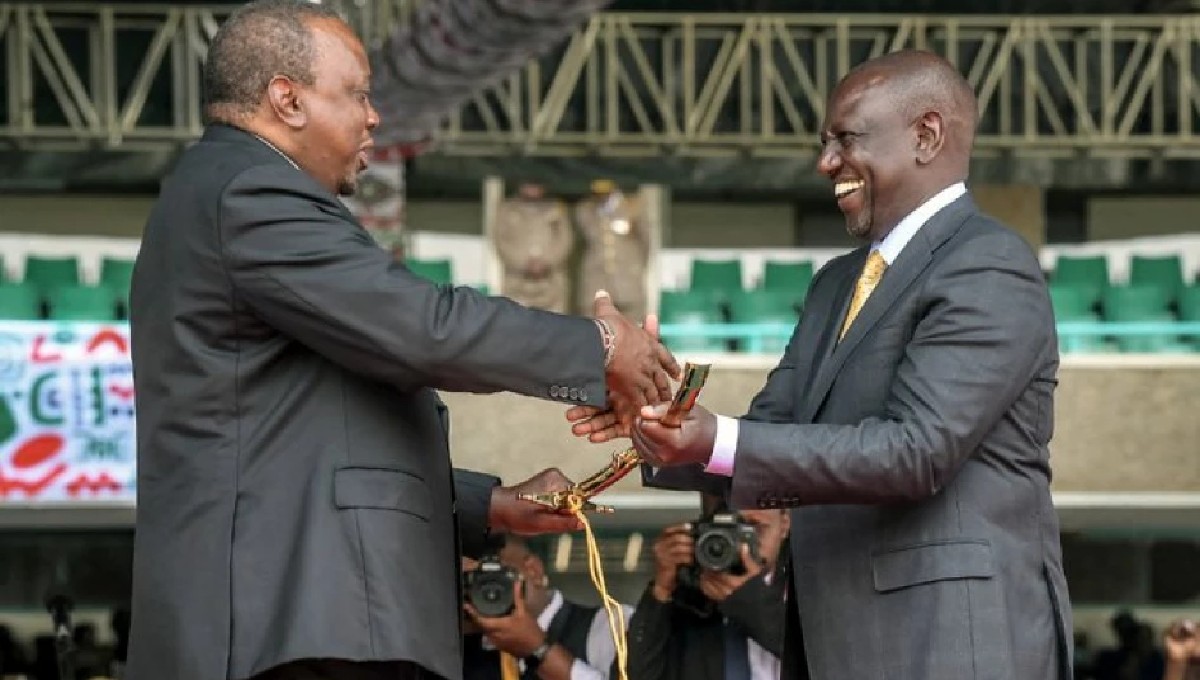
Kenya has a clear and concise way of handling the transfer of power. The Assumption of the Office of President Act (2012) states that the tools of power are the Constitution of Kenya and a ceremonial sword.
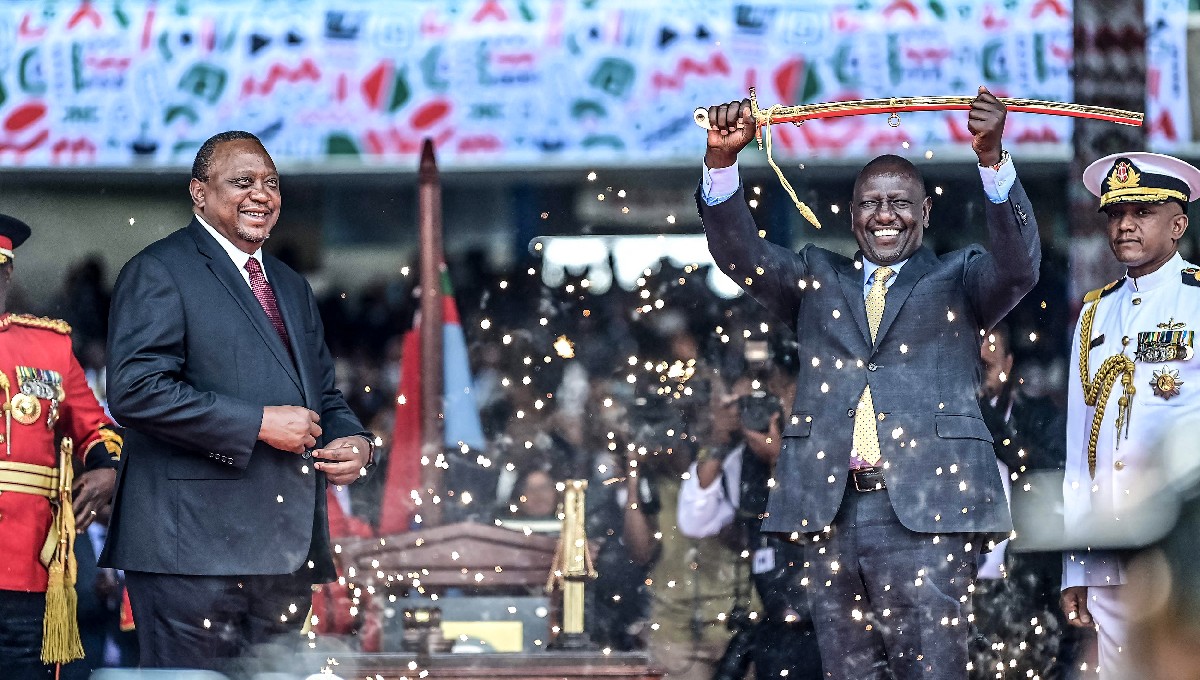
During the 2022 inauguration of President William Ruto, outgoing President Uhuru Kenyatta presented both of these symbols at Kasarani Stadium in Nairobi.
The Constitution implies the rule of law and sets the boundaries of presidential power. Meanwhile, the sword represents the Commander-in-Chief’s responsibility to protect the Republic. As Ruto lifted the sword high, the presidential flag with Kenyatta’s colors was lowered, and a new one was raised, marking a beautiful moment of peaceful transition that was celebrated with a 21 gun salute.
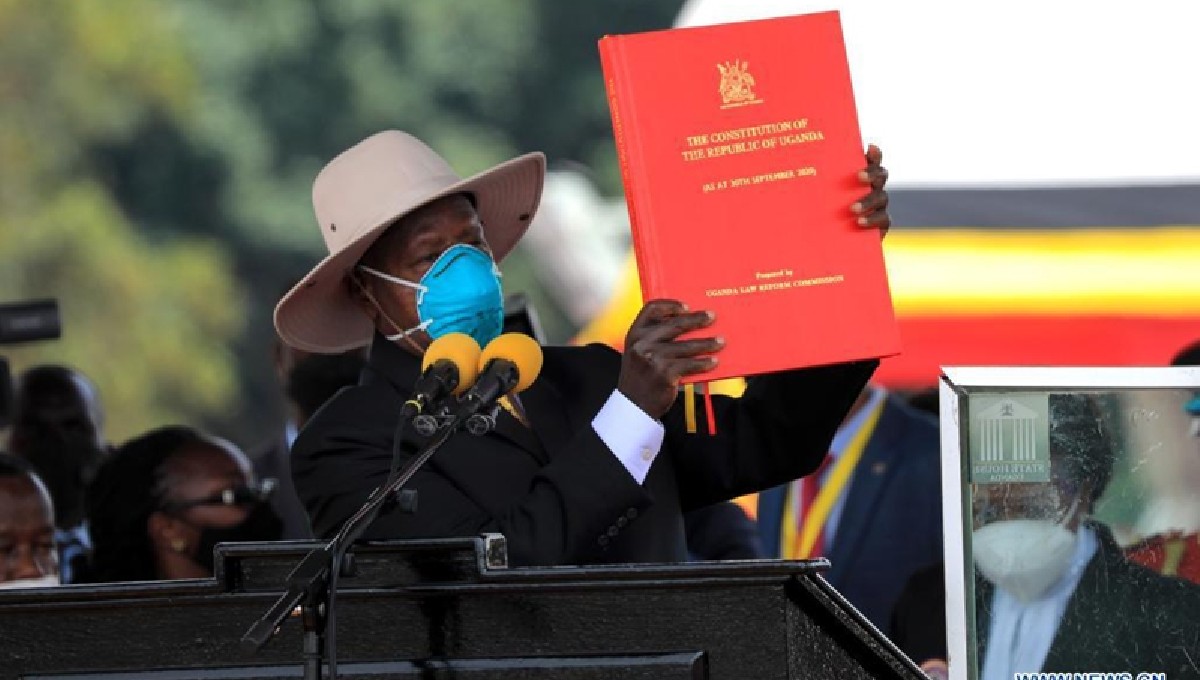
Uganda’s handover ceremony is also filled with deep symbolism. After taking oath, the new president receives the Constitution, the national flag, the presidential standard, the coat of arms, the public seal, and a ceremonial sword from the Chief of Defence Forces.
Each of these items conveys a significant message. The Constitution represents legal authority. The flag and the presidential standard signify the unity of the Republic. The coat of arms and seal symbolize official state power. The sword represents command and authority as the new leader of Uganda.
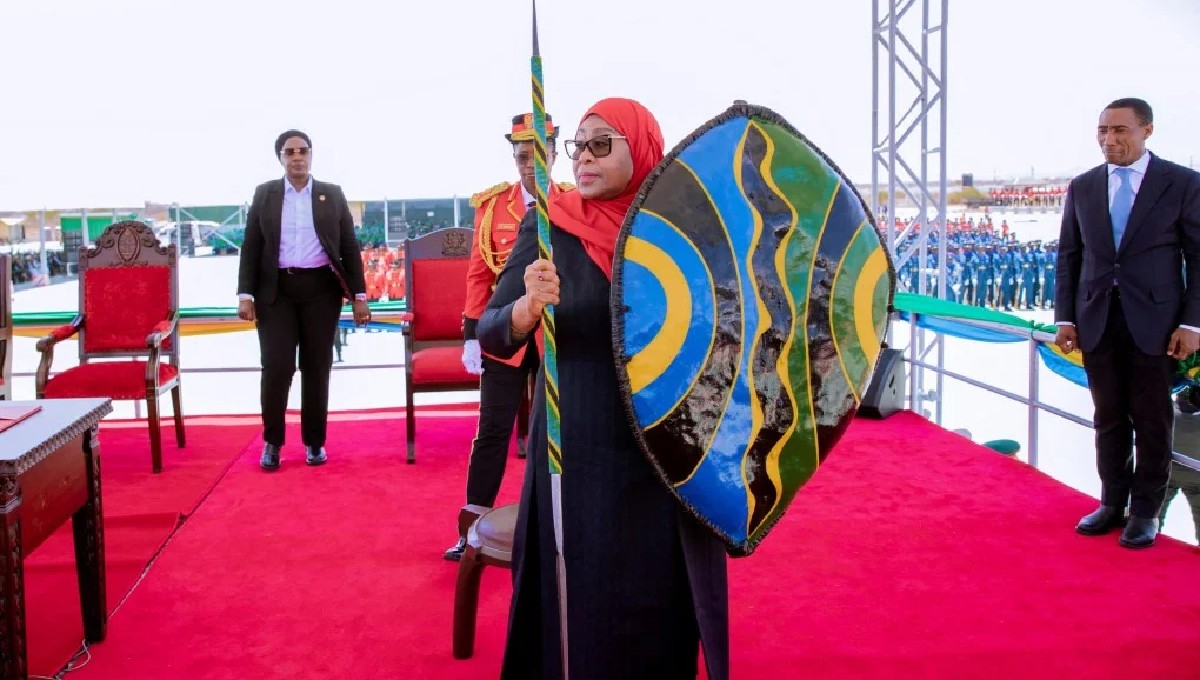
Samia Suluhu Hassan took her oath of office as President of Tanzania on November 3, 2025. She vowed to uphold the Constitution before receiving military honors and a salute. Tanzanian inaugurations include the spear and shield, which are national symbols representing leadership and the protection of the nation. These items are found in the coat of arms as well.
Other members of the East African Community also share similar themes.
In Rwanda, the president is presented with the Constitution, the national flag, and a ceremonial sword or shield by military leaders, symbolizing unity and order.
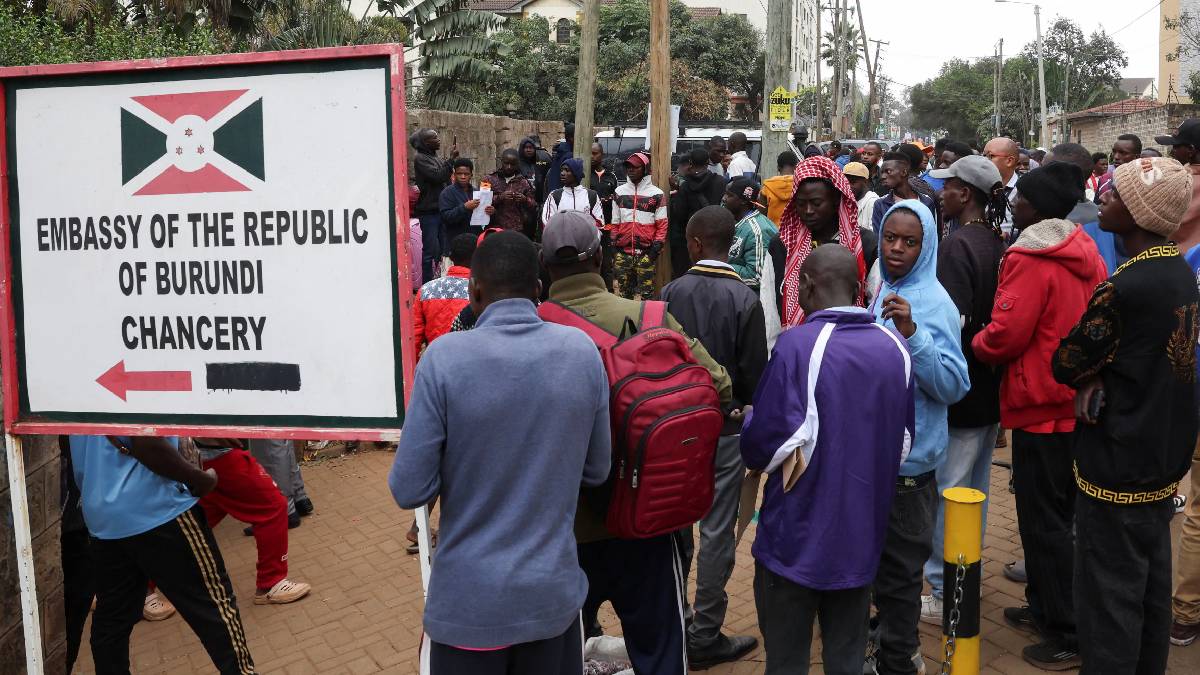
In Burundi, ceremonies typically consist of the Constitution and flag, occasionally accompanied by a traditional staff or baton, representing ancestral authority.
In South Sudan, the transitional Constitution and flag are presented with full military honours, reinforcing national sovereignty in the young nation.
The symbols of power combine law and spectacle, blending theatre with solemn oaths.
The symbols of power serve as a reminder to citizens that power should be transferred peacefully and exercised within the law. Such ceremonies provide reassurance that institutions remain intact, even during political divisions. They show that the nation will persevere whenever a new president raises an instrument of power.