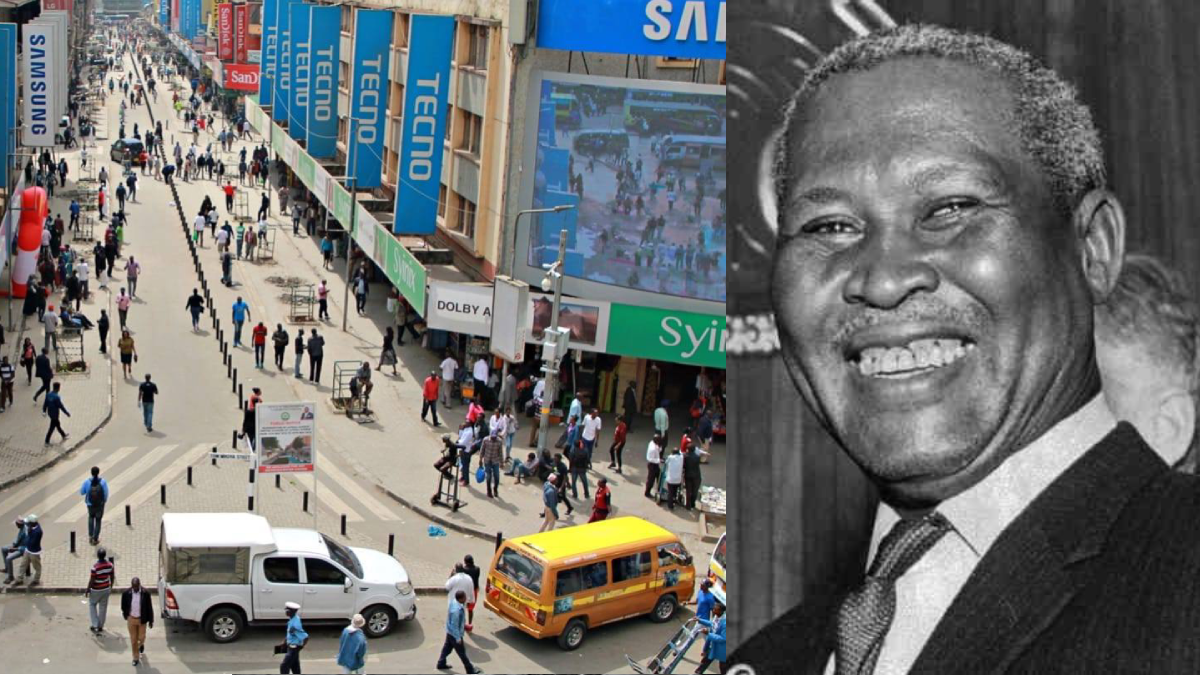
Luthuli Avenue is a popular street in Nairobi’s Central Business District, Kenya’s capital. Luthuli Avenue is popular because it is considered the main hub for electronics.
Luthuli Avenue is also popular because in 2019, and with the technical support of the UN-Habitat, it underwent a massive urban revitalisation initiative that transformed it into a modern, pedestrian-friendly space.
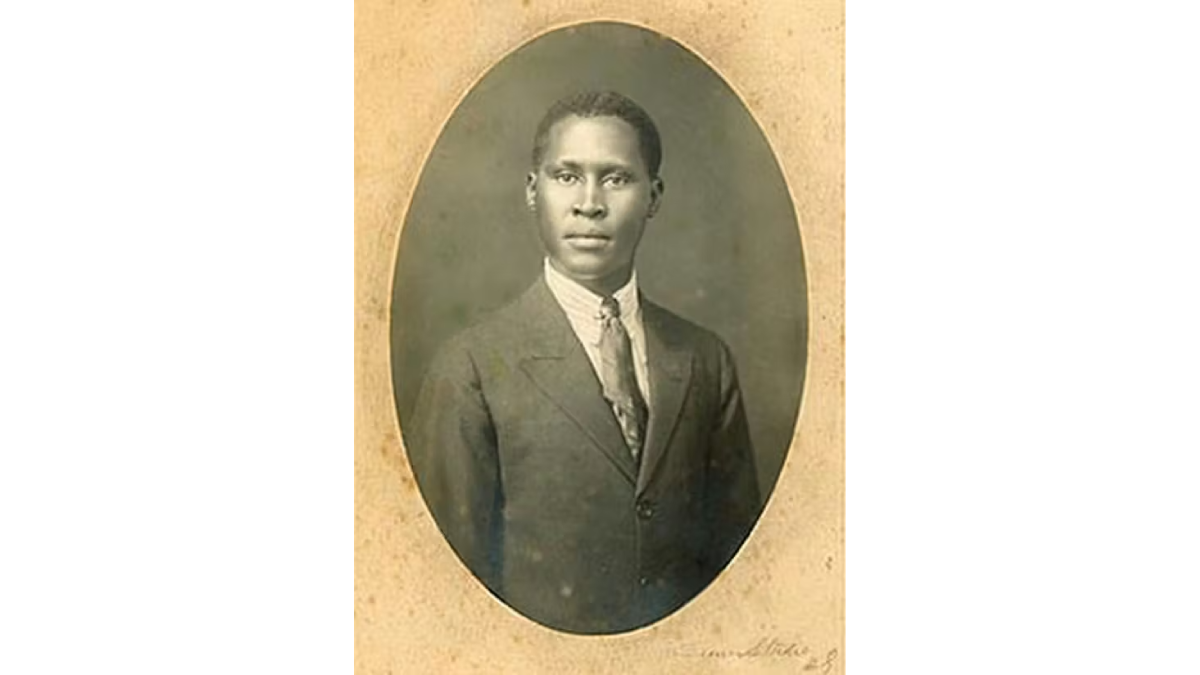
But even with its popularity, few Kenyans know the story behind the name “Luthuli”. This is the story of Albert Luthuli, the man behind the name “Luthuli Avenue” in Nairobi, Kenya’s capital.
Albert Luthuli was a South African liberation leader who died on July 21, 1967 near his home in Groutville in KwaZulu-Natal Province.
At the time of his death, a government inquest concluded that his death was an accident – hit by a freight train while walking along the railwayline. However, his family could not buy the story. They have always disputed that Luthuli was hit by a train and died, sensing mischief.
Almost 60 years later, those activists and family who had cast doubt were finally vindicated. A South African court on October 2025 ruled that first African Nobel laureate’s death was the result of an “assault” by apartheid police.
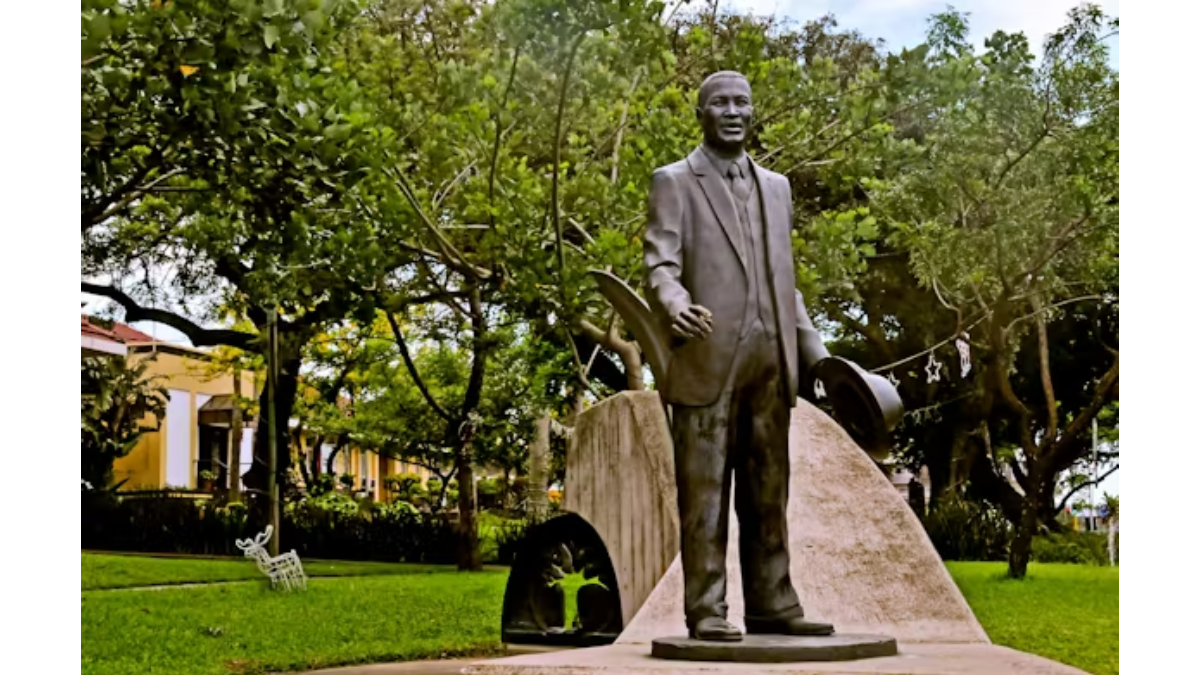
The judge presiding over the court ruled that the anti-apartheid hero died as a result of a fractured skull and a cerebral haemorrhage associated with an assault.
Albert John Mvumbi Luthuli was born in 1898 in Bulawayo, Zimbabwe. He was not born in his ancestral land, Groutville, since his father was a missionary during the Second Matebele War.
His father died when he was a baby and at about 10, he was sent back to Groutville. He was educated in mission schools and at Adam’s College in Natal where he later taught until 1936. In response to repeated calls and requests from the elders of his tribe to come home and lead them, he left teaching that year to become chief of the tribe. He was not a hereditary chief as his tribe had a democratic system of electing its chiefs.
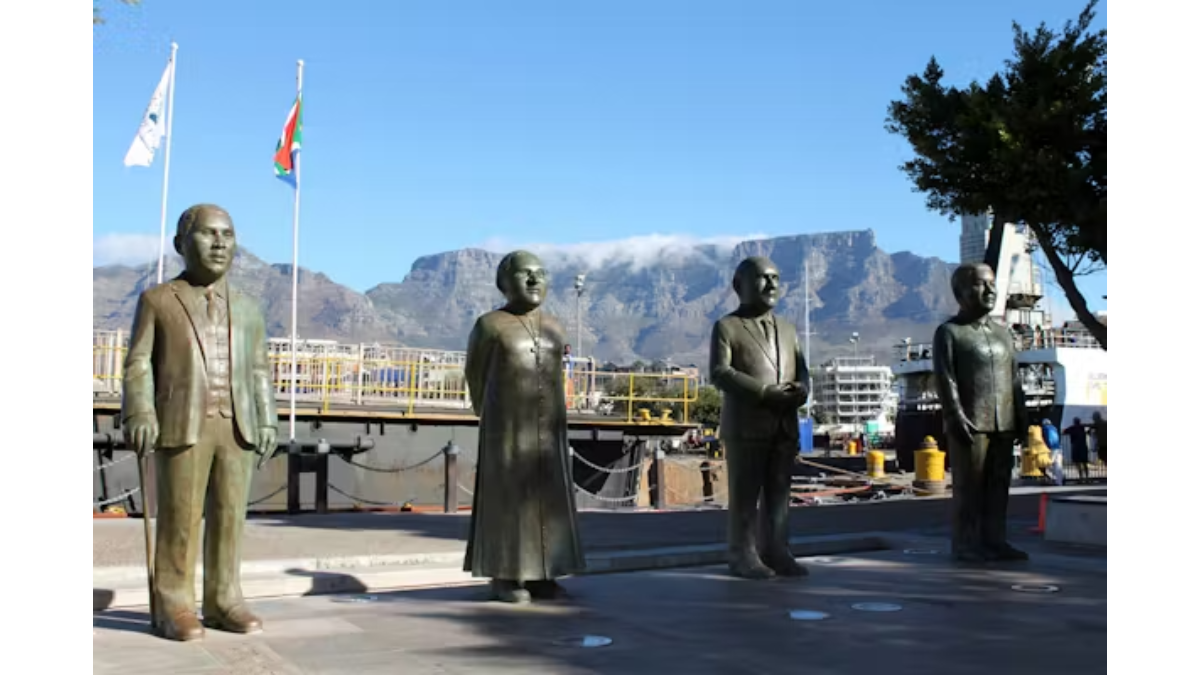
During his 17 years as chief, Luthuli experienced first hand the ruthless African political, social and economic realities — those of rightless and landless people.
During his tenure, Luthuli would organise African sugar farmers and hold a seat on the Native Representatives Council. In 1938, he was a member of the executive of the Christian Council of South Africa.
The futility and limited nature of tribal affairs and politics made him look for a higher and broader form of organisation and struggle, which was national in character.
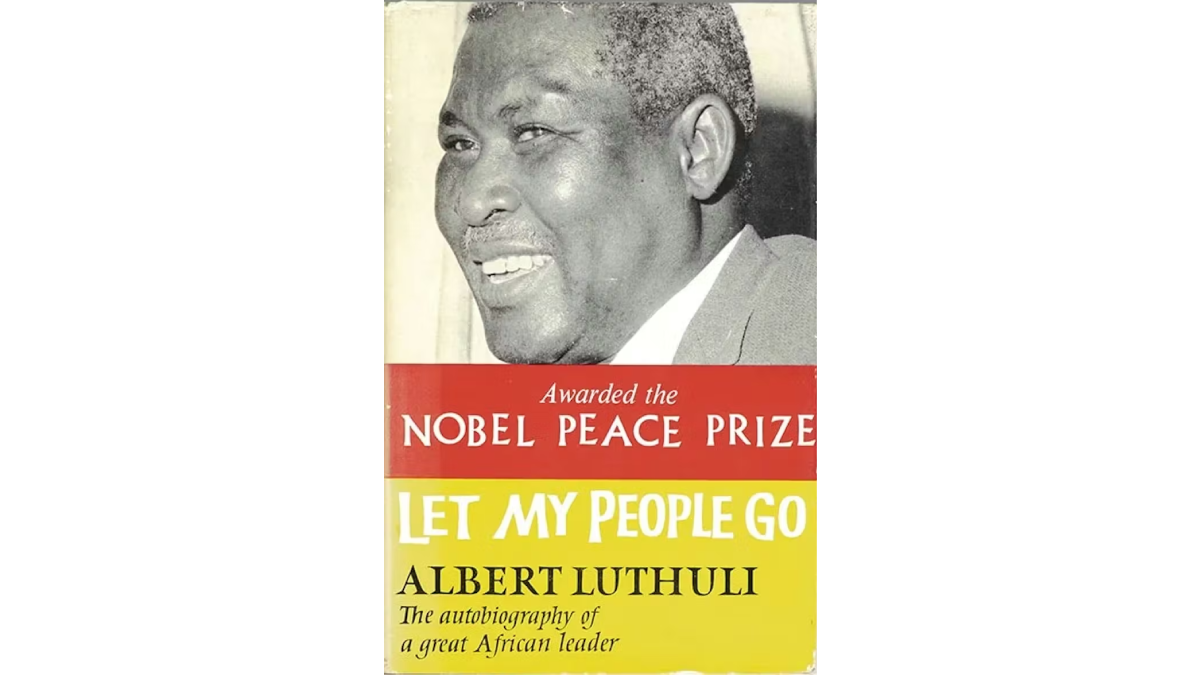
He joined the African National Congress (ANC) in 1945. A year later, he entered the then Native Representative Council. In this council, Luthuli initiated calls upon the government to abolish all discriminatory laws, while demanding new policy towards the African population.
Luthuli was elected provincial president of the ANC in Natal in 1951. From that time, he threw himself into the struggle. As a chief, he was not allowed to take part in politics, but he defied his ban.
When he was called upon by the Government to choose between his chieftainship and the ANC, he opted for the latter. He was deposed in 1952 and elected president-general of the ANC by his people the same year. He led the Defiance Campaign in Natal as provincial president, thus endearing to many for his courageous stand.
Luthuli was a determined and courageous fighter, shaped and steeled in the various political and economic struggles that took place throughout South Africa. It was under the leadership of Luthuli that the ANC adopted its famous Freedom Charter in June 1955, after a lengthy consultation process with the people.
From 1953, Luthuli was the subject of banning orders that preveneted him from leaving his home or publishing or distributing any written material. He was arrested in 1956 and, together with other leaders of the liberation movement, charged with high treason. The trial opened in January 1957 and concluded on 29 March 1961 when all the accused were found not guilty.
On 21 March 1960, unprovoked apartheid police opened fire on thousands of unarmed anti-pass demonstrators in Sharpeville, killing 69 of them and injuring 180. Luthuli and the ANC called for a national day of mourning, and he burnt his pass in public. A few days later, a State of Emergency was declared.
In 1960, Luthuli — together with 2, 000 other leaders who were arrested under the State of Emergency declared by the South African Government on 29 March after the Sharpeville Massacre — was detained for five months.
In December 1961, Chief Albert Luthuli was honoured when he was awarded with the Nobel Peace Prize for his peaceful opposition to apartheid, thus making him the first African to receive such an honour.
While awarding him the Order of Mapungubwe in Platinum posthumously, the South African Government described Luthuli as having “exceptional and outstanding leadership skills, in leading a militant, peaceful struggle for human rights, and a non-racial, non-sexist, free, just and democratic South Africa, which belongs to all who live in it.”
A government website article in honour of Luthuli reads: “It was under his leadership that the ANC became a militant organisation, embarking on numerous campaigns to oppose apartheid laws. The 1950s were known as the Fighting Fifties and the slogan Freedom in our Lifetime captured the imagination of our people, and inspired them to join the struggle. The biggest-ever women’s march against pass laws in 1957 took place under his leadership, so were bus boycotts, and campaigns against forced removals and for better wages. He was also at the helm of the ANC when it changed its methods of struggle and adopted the armed struggle with the formation of Umkhonto we Sizwe. The sanctions and boycotts, which were successfully sold to the international community together with the armed struggle, hit the apartheid regime in the belly and brought it to its knees. It was Luthuli for the ANC and Martin Luther King Jnr who jointly implored the international community to isolate South Africa using the above-mentioned tools.”
Now that is the story of Albert Luthuli, the man behind the name of Luthuli Avenue.