Yesterday I got into an Uber and spent forty minutes being described to my face.
The driver was maybe fifty. Friendly enough at first: the traffic, the price of fuel, the usual Nairobi small talk. Then the conversation turned, the way these conversations always seem to turn, to “you young people.” Gen Z, he said, is rude. Gen Z has no respect. Gen Z smokes bhang like it is breakfast. Gen Z does not know how to work, only how to post.
I said nothing. I nodded at the right places and watched Thika Road go by. Not because I agreed, but because I have learned that there is no winning an argument with someone who has already decided who you are. When I got out, I felt something I did not expect to feel at the end of a cab ride: I felt accused.
I could not stop thinking about it. And I could not stop thinking about the story that has been on every screen in this country for the past few weeks.
In late October, Dorita Macharia, an 86-year-old woman who had come from Jamaica and made Kenya her home for decades, was killed in her house in Loresho. She was the mother of Regina Re, the actress many of us grew up watching on Who’s Smarter Now?
Since then, her 18-year-old granddaughter has been charged with her murder. She has pleaded not guilty, and the court has ordered a mental health assessment for early December. Her mother and uncle have been charged separately with being accomplices after the act, accused of interfering with the scene. They have also denied the charges and are out on bail.
None of them has been convicted of anything. That matters, and I will come back to it.
But I know how this story is being read in matatus, in WhatsApp family groups and probably in the front seat of a certain Uber. It is being read as proof. See? This is what this generation has become. They have no fear of God, no respect for elders, nothing. One girl, one night, one terrible house in Loresho and suddenly an entire generation is in the dock with her.
Here is the thing I wanted to say in that car and didn’t.
Whatever happened in that house, it happened to one family. A grandmother is dead. A young woman’s life has collapsed, whatever the court eventually finds. A mother has buried her own mother while facing charges over her death. That is a horror and it deserves our grief, our patience and our silence while the court does its work. It does not deserve to be turned into a sermon about millions of people who were nowhere near Loresho that night.
We do not do this to any other generation. When a man in his fifties commits a crime and they do, nobody writes columns asking what is wrong with men born in the 1970s. Nobody turns to the nearest middle-aged stranger and says, “You people.” His crime is his. Ours, it seems, belong to all of us.
And notice what happens when we turn a family tragedy into a generational verdict: we stop asking the questions that might actually help. What was going on in that young woman’s mind? What was going on in that home? Who noticed and who didn’t? Those questions are harder than “Gen Z is rotten,” which is exactly why the slogan is so popular.
I want to be fair to my driver, because he was not entirely wrong.
Some of us smoke. Some of us are rude. Some of us are lost. Many of us are struggling in ways our parents never had words for: anxiety, depression, a loneliness that somehow gets worse the more connected we are. We are the first generation to grow up with a crowd of strangers in our pockets judging us every hour of the day. We graduate into an economy that tells us to hustle and then hands us nothing to hustle with. We are told to respect our elders by the same system that left us unemployed.
That is not an excuse. It is context. And if the Loresho case tells us anything, perhaps it is that we are not paying enough attention to the young people in our own houses, not that they are monsters, but that some of them are drowning quietly while we talk about them instead of to them.
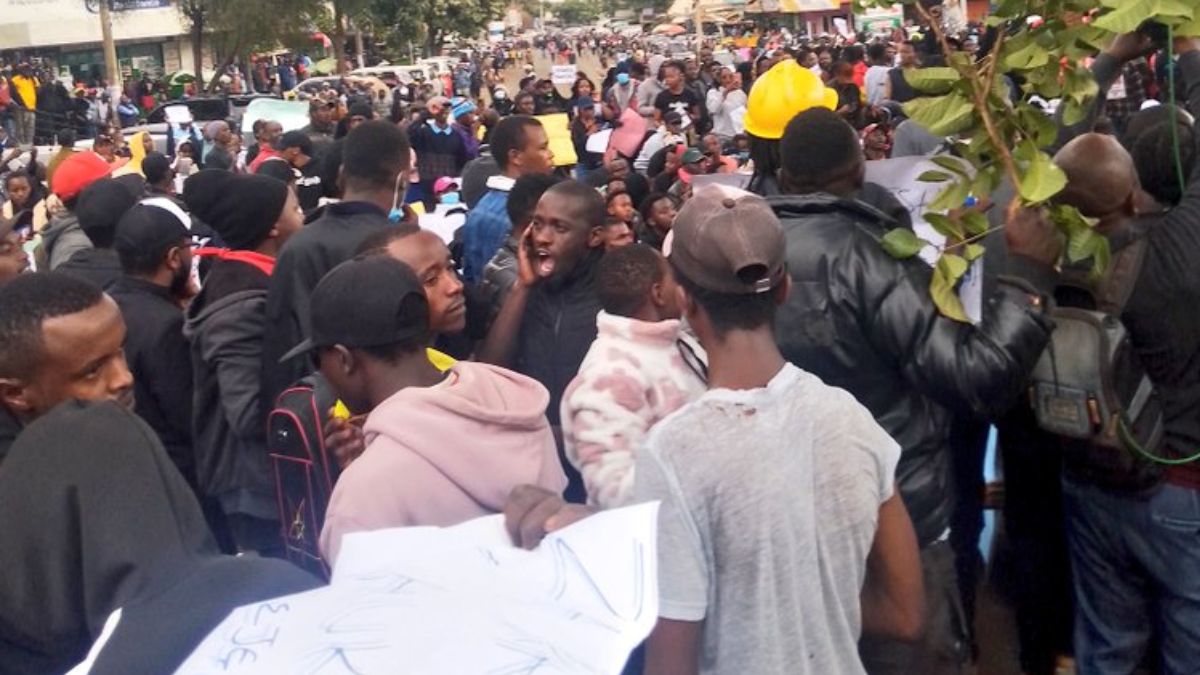
Here is the Gen Z that did not come up in that car. The Gen Z that, in June 2024, filled the streets of this country, organised without leaders, without tribe, without a single politician paying for the buses and made a government stop and listen. The ones who crowdfunded hospital bills for strangers they had never met. The ones who taught themselves to code, to edit video, to build businesses out of a phone and a data bundle. The ones holding down two jobs while sending money home to the very parents who say we don’t know how to work. The young nurse on a night shift. The boda rider studying for his CPA between trips. The girl in Kibera running a tutoring group for kids younger than her because nobody ran one for her.
They do not make headlines because decency rarely does. But they are the majority. They are us.
I would not argue. I would just ask him a question.
Who were you at twenty?
Because every generation was once the generation that was going to ruin everything. His parents probably said it about him: the music, the clothes, the disrespect, the way young people in the eighties and nineties were going to destroy the country. They didn’t. They became the drivers and the doctors and the parents who now worry about us. That worry is love wearing the wrong clothes.
So here is my offer, to him and to everyone who has ever said “you people” to someone my age: talk to us, not about us. Ask your nephew how he is really doing. Ask your daughter what scares her. Grieve with the Macharia family without using their grief as a weapon. And when the next terrible story comes and it will, remember that one person’s darkest night is not a portrait of an entire generation.
We are not the headline. We are the ones reading it, and wondering why you think it’s about us.
Written by Candy Awour