Kenya’s political landscape is undergoing a notable transformation, where performance, visibility, and measurable impact are increasingly defining leadership credibility. The latest Kenyatrack Survey on the Top Performing Women Representatives in 2026 presents a compelling reflection of this shift, spotlighting a new hierarchy of influence anchored on service delivery, grassroots connection, and policy engagement.
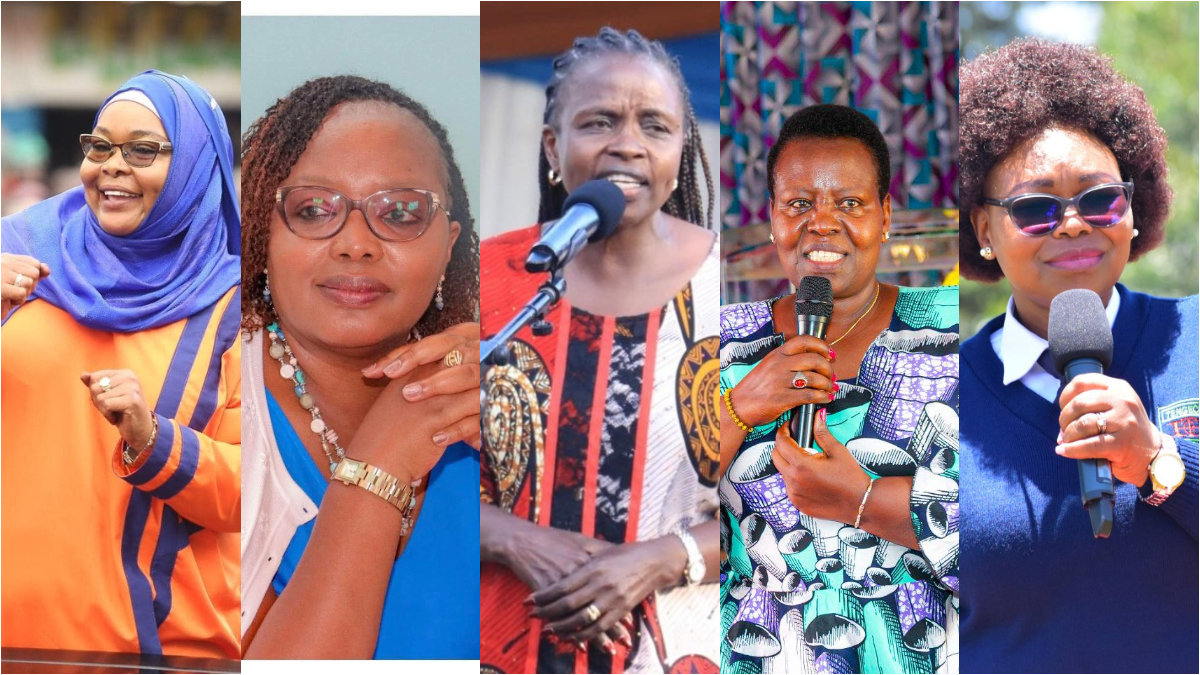
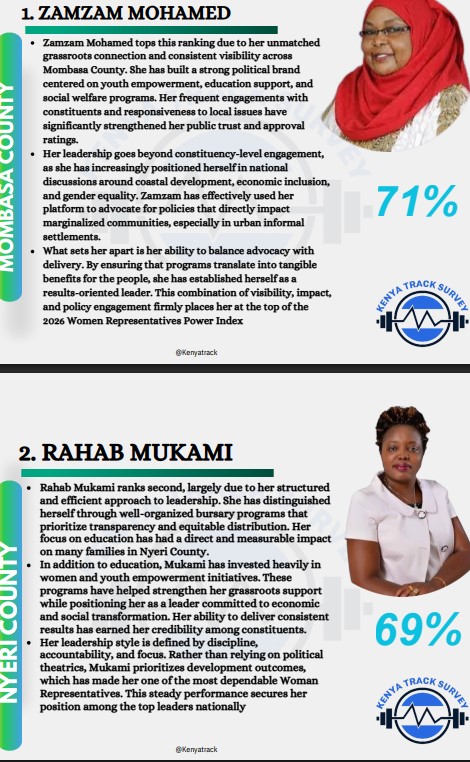
Topping the list in a commanding and undisputed fashion is Mombasa Woman Representative Zamzam Mohamed, who leads the national rankings with an impressive 71 percent approval rating.
Her ascendancy is attributed to an exceptional blend of grassroots mobilization, sustained visibility, and a results oriented approach to leadership. Zamzam has cultivated a strong political identity centered on youth empowerment, education support, and social welfare, while simultaneously asserting her voice in national conversations on coastal development and economic inclusion. Her ability to translate advocacy into tangible benefits has firmly positioned her at the pinnacle of the 2026 Women Representatives Power Index.
Closely following in second place is Nyeri Woman Representative Rahab Mukami with 69 percent. Mukami has distinguished herself through a disciplined and structured leadership style, anchored in transparency and efficiency.
Her well organized bursary programs and sustained investment in women and youth empowerment have delivered measurable outcomes, earning her credibility and trust among constituents.
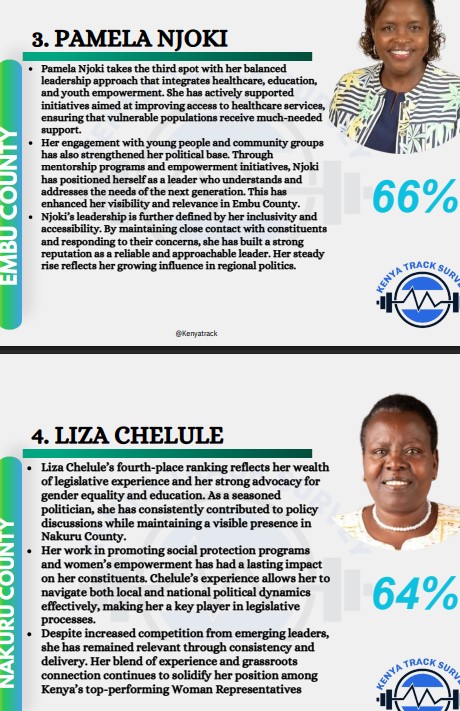
Embu Woman Representative Pamela Njoki, popularly known as Hon Double N, secures the third position with 66 percent, driven by a deeply human centered and transformative leadership philosophy.
Her primary focus lies in restoring hope among vulnerable populations, particularly through full sponsorship programs that enable teen mothers to return to and complete secondary education. By prioritizing education support, alongside women employment and youth empowerment initiatives, she has cultivated a powerful and relatable political identity.
Her approach goes beyond conventional service delivery, positioning her as a symbol of second chances, dignity, and renewed opportunity for many across her constituency.
In fourth place is Nakuru Woman Representative Liza Chelule at 64 percent. A seasoned legislator, Chelule’s enduring influence is rooted in her extensive experience and consistent advocacy for gender equality and social protection programs.
Her ability to navigate both legislative processes and grassroots dynamics has ensured her continued prominence despite rising competition.
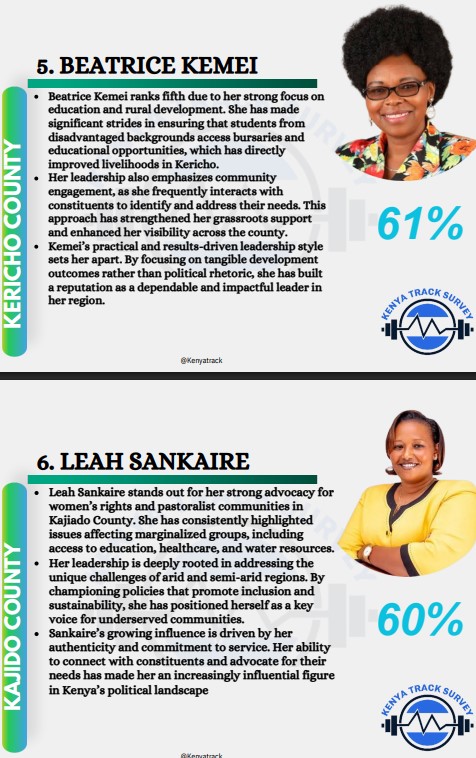
Kericho Woman Representative Beatrice Kemei rounds off the top five with 61 percent. Her leadership is defined by a pragmatic focus on education access and rural development.
Through targeted bursary initiatives and sustained community engagement, Kemei has delivered tangible improvements in livelihoods, reinforcing her standing as a dependable and impactful leader.
Kajiado Woman
Representative Hon Leah Sankaire ranks sixth with 60 percent, emerging as a powerful and consistent voice for marginalized communities, particularly pastoralist populations. Her advocacy on access to education, healthcare, and water resources continues to resonate strongly across arid and semi arid regions. Sankaire’s authenticity, coupled with her unwavering commitment to inclusive development, has significantly elevated her national profile and influence.
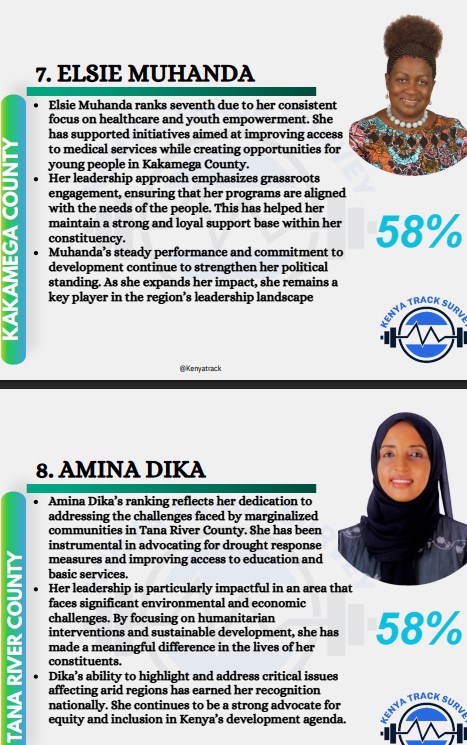
Elsie Muhanda of Kakamega takes the seventh position with 58 percent, recognized for her steady focus on healthcare advancement and youth empowerment. Her grassroots driven approach has enabled her to maintain strong alignment with the needs of her constituents, reinforcing her political stability.
In eighth position is Tana River Woman Representative Amina Dika, also at 58 percent. Her leadership stands out in one of the country’s most challenging environments, where she has championed drought response measures and expanded access to essential services. Her resilience and focus on humanitarian and sustainable development continue to earn her national recognition.
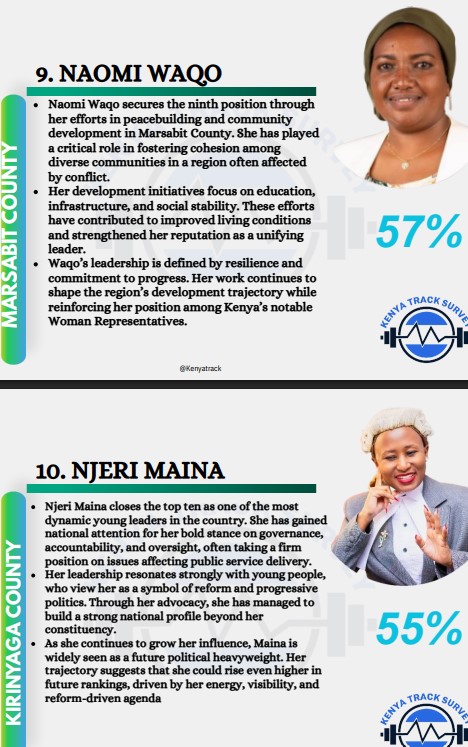
Marsabit Woman Representative Naomi Waqo ranks ninth with 57 percent, largely due to her critical role in peacebuilding and fostering cohesion in a region often affected by conflict. Her initiatives in education, infrastructure, and social stability have contributed to improved living conditions and strengthened her reputation as a unifying leader.
Closing the top ten is Kirinyaga Woman Representative Njeri Maina with 55 percent. As one of the youngest leaders in the ranking, she has rapidly gained national attention for her bold stance on governance, accountability, and oversight. Her growing influence reflects a generational shift toward reform driven leadership that resonates strongly with the youth.
The 2026 Kenyatrack Survey ultimately underscores a decisive transition in Kenya’s political arena, where leadership is increasingly judged by impact rather than symbolism. Women Representatives who demonstrate consistency in service delivery, maintain strong grassroots connections, and actively engage in policy advocacy are emerging as the defining figures of this new era.
As the country edges closer to the next electoral cycle, these leaders are not only consolidating their influence but also redefining the standards of political leadership in Kenya, setting a high bar for accountability, inclusivity, and transformative development.