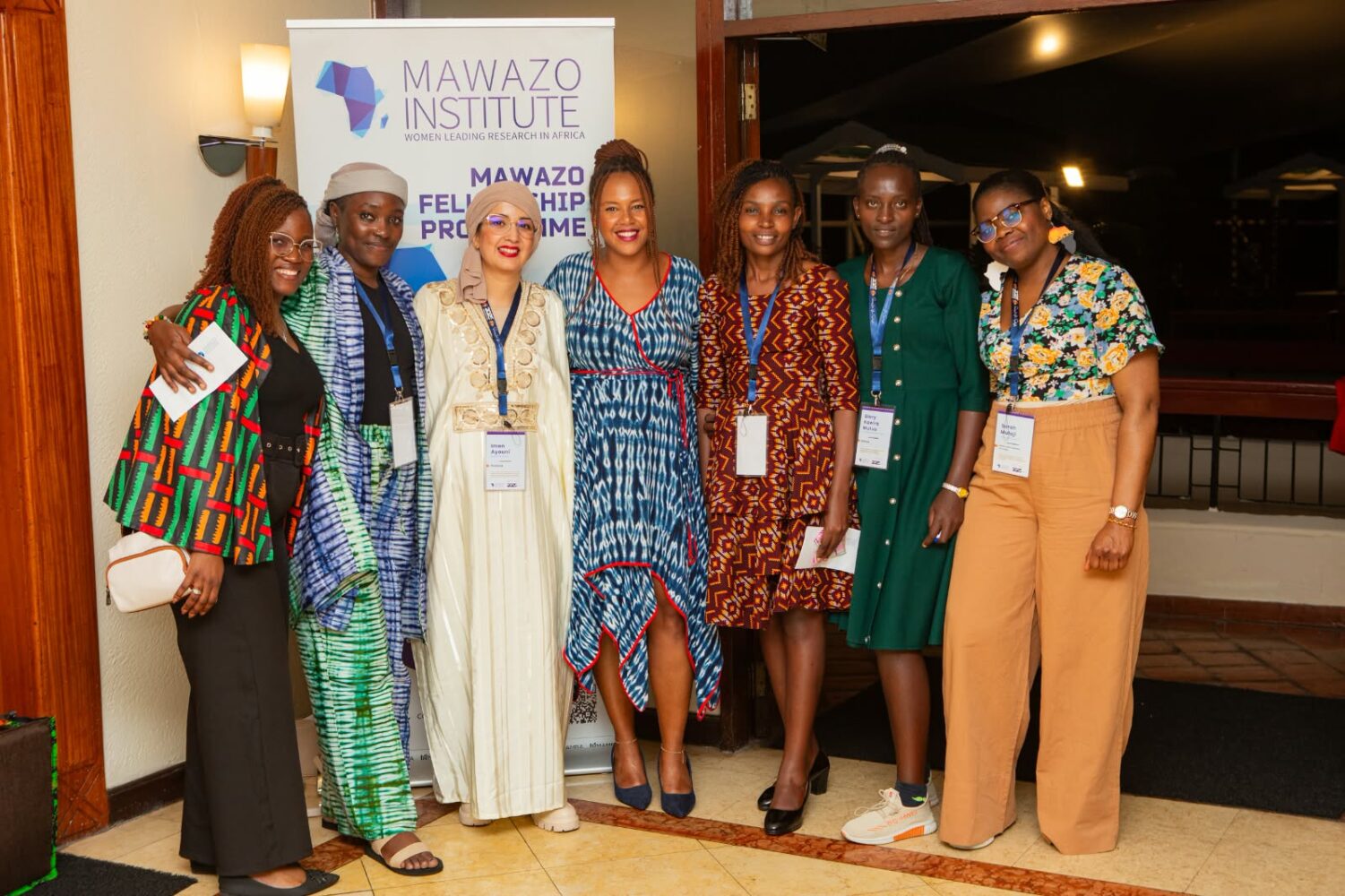
Sixty African women researchers from 28 countries have completed a 15-month fellowship programme by the Mawazo Institute, strengthening efforts to increase women’s representation in research and bring evidence-based solutions to the continent’s challenges.
The researchers graduated on Thursday, October 8, during a virtual ceremony that brought together fellows, alumni, partners, donors, families and friends from across the world.
The 2025 Mawazo Fellows programme equipped early-career women researchers pursuing PhDs with skills, mentorship and leadership opportunities to translate their research into policy and community impact.
Speaking during the ceremony, Mawazo Institute Chief Executive Officer Dr. Fiona Moejes said the graduation celebrated not only the fellows’ academic achievements but also their potential to shape Africa’s future through research.
“Africa does not lack talent, brilliant minds, or ideas. It does not lack curiosity, or ambition, or creativity. And it most certainly does not lack extraordinary women, who are capable of shaping the future of this continent,” she said.
However, Moejes noted that many women researchers continue to face barriers that limit their potential, including inadequate funding, limited mentorship, insufficient professional networks and a lack of recognition and visibility.
“What we have often seen is that the conditions that we need for these ideas to thrive and flourish are missing in the research space,” she said, adding that Mawazo works to improve the research ecosystem and create opportunities for women’s knowledge to be valued.
Research targeting real-world challenges
The fellows are working across diverse disciplines, addressing challenges ranging from climate-related displacement and public health to political communication.
Among them is Cidia from Mozambique, whose research examines the effects of extreme weather and displacement on women’s and children’s food security and health.
Gloria, based in Zanzibar, is exploring how mosquitoes can help detect dangerous viruses before they spread, while Angela from Ghana is investigating the factors contributing to declining public trust in political news and communication.
Moejes said research goes beyond producing academic work, helping researchers develop curiosity, persistence, critical thinking and creativity in an increasingly complex world.
“We live in a world of enormous complexity, uncertainty, and noise. But research asks us to look clearly at what is in front of us, however difficult, and still believe we can understand it better,” she said.
She added that the fellows’ collective achievements demonstrated the value of supporting women to exchange ideas, build networks and pursue solutions to shared challenges.
Bridging Africa’s research gap
The graduation comes amid concerns about Africa’s limited contribution to global research and the underrepresentation of women in the sector.
According to figures cited by the institute, Africa accounts for less than one per cent of global research output, while sub-Saharan Africa has approximately 88 researchers per million people, compared with 4,358 per million in Europe and Northern America.
Mawazo Institute aims to address these disparities by investing in African women researchers and supporting them to become leaders whose work informs public policy, strengthens institutions and shapes public debate.
Beyond helping researchers complete their PhDs, the Nairobi-based non-profit provides skills development, funding, mentorship and platforms to help women conduct policy-relevant research and turn their findings into practical solutions.
The ceremony also featured reflections from Mawazo alumni, who shared how the fellowship had influenced their careers, research and engagement beyond academia. Their experiences highlighted the growing role of African women researchers in influencing policy, leading institutions and driving change within their communities.
Under the theme “The Future is Being Researched: Celebrating African Women Shaping Knowledge and Possibility,” the graduation marked the end of the fellows’ 15-month programme and the beginning of their next chapter as researchers and leaders.
For Mawazo, the milestone reinforces the need to create an environment where African women have the resources, networks and recognition to contribute to the continent’s research agenda and development.