
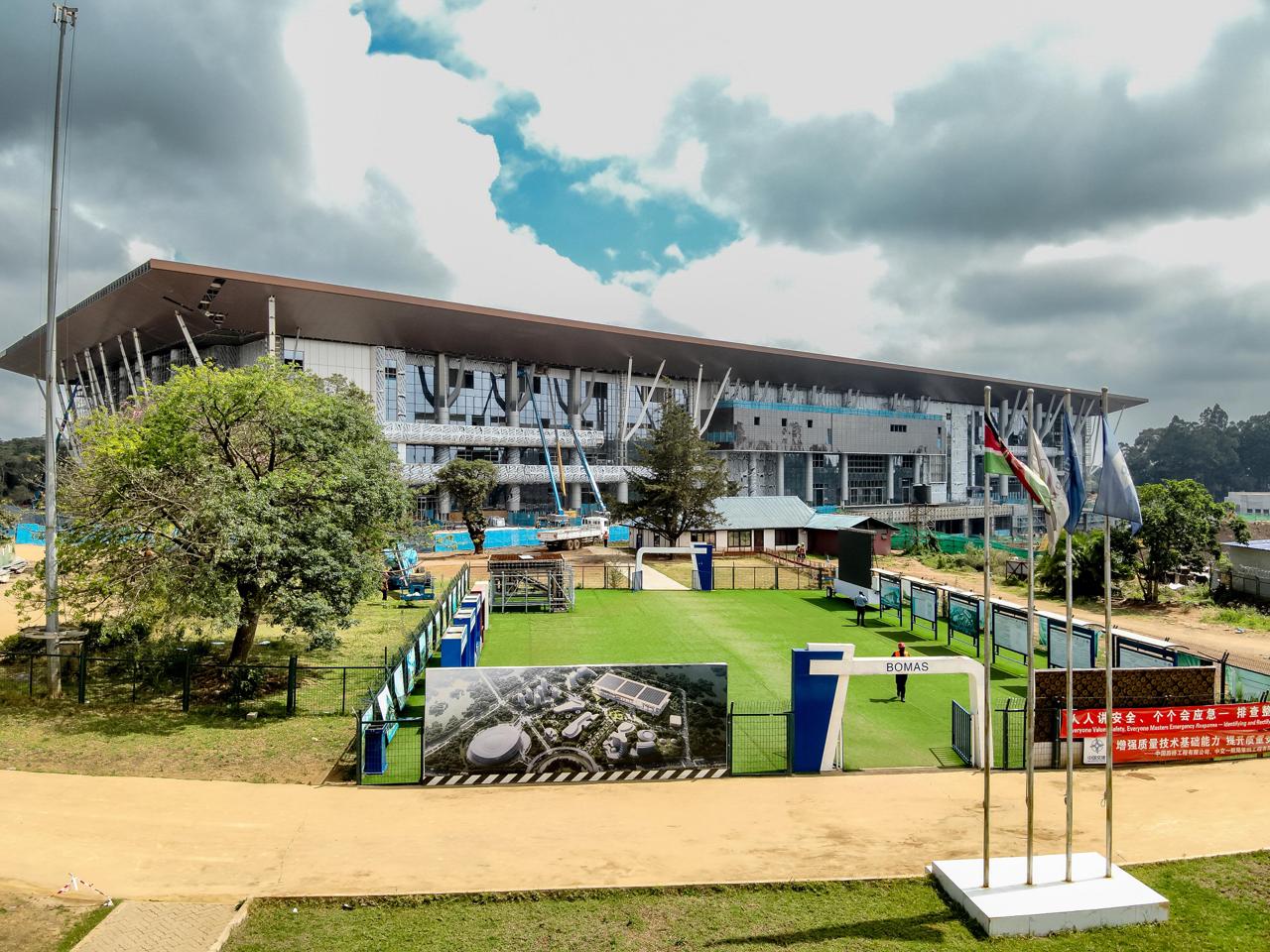
Kenya is positioning itself to capture a larger share of Africa’s growing Meetings, Incentives, Conferences and Exhibitions (MICE) industry through the development of the Bomas International Convention Centre (BICC), a flagship facility expected to expand the country’s capacity to host major international gatherings.
Located along Lang’ata Road, the facility is designed to accommodate up to 11,000 delegates across five functional zones, providing spaces for international conventions, exhibitions, state banquets, bilateral meetings and cultural performances.
Currently 55 per cent complete, the project is transitioning into specialised internal finishes, with approximately 1,800 workers engaged on site.
According to Lieutenant Colonel Wilfrida Amondi, Architect and Project Officer at the Kenya Defence Forces, the project was conceptualised to upgrade the existing Bomas facilities to international standards and accommodate larger conventions.The centre in compacted into five zones comprising a 3,500-capacity auditorium, a 4,600-square-metre convention hall, a ballroom, multiple meeting rooms and a presidential area.
The convention hall will accommodate up to 5,000 people and can be partitioned to host multiple events simultaneously, including exhibitions and banquets.
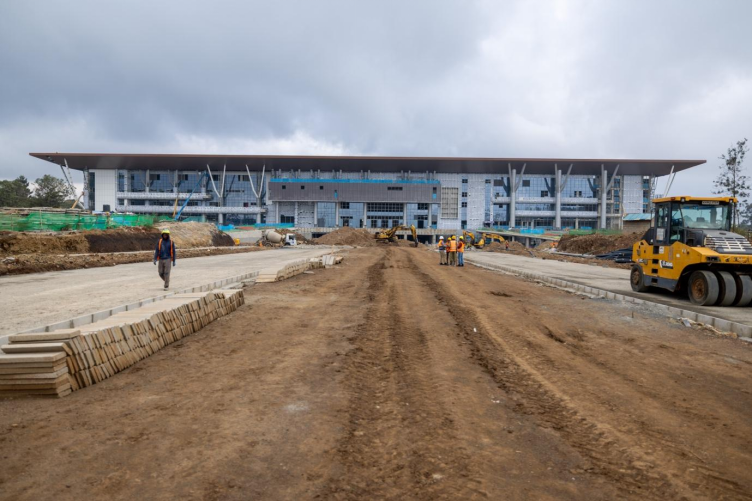
Bomas of Kenya Acting Chief Executive Officer Jimmy Okidiyang said the development was informed by the need to position Kenya competitively within the continental conference tourism market.
“The growing MICE industry across Africa presented an opportunity for Kenya to attract major international events and generate business for the wider tourism sector.” He noted.
The centre’s strategic location further strengthens its potential, with accessibility from Jomo Kenyatta International Airport through connecting road networks. Its proximity to Nairobi National Park and the planned link to Talanta Sports City also creates opportunities to integrate conference tourism with sports, hospitality and nature-based tourism.
The wider development plan, officials say, envisages commercial facilities, star-rated hotels and a 20,000-capacity sports arena in subsequent phases. These investments are expected to establish a broader destination for business, accommodation, sports and entertainment.
The facility will also incorporate modern conference technology, including simultaneous interpretation systems supporting up to seven languages and teleconferencing facilities. Solar installations currently underway are also expected to generate approximately 3.5 megawatts of electricity to support its energy requirements.
Once completed, BICC is expected to complement the Kenyatta International Convention Centre (KICC), expand Nairobi’s conference-hosting capacity and strengthen Kenya’s competitiveness in attracting international business events.