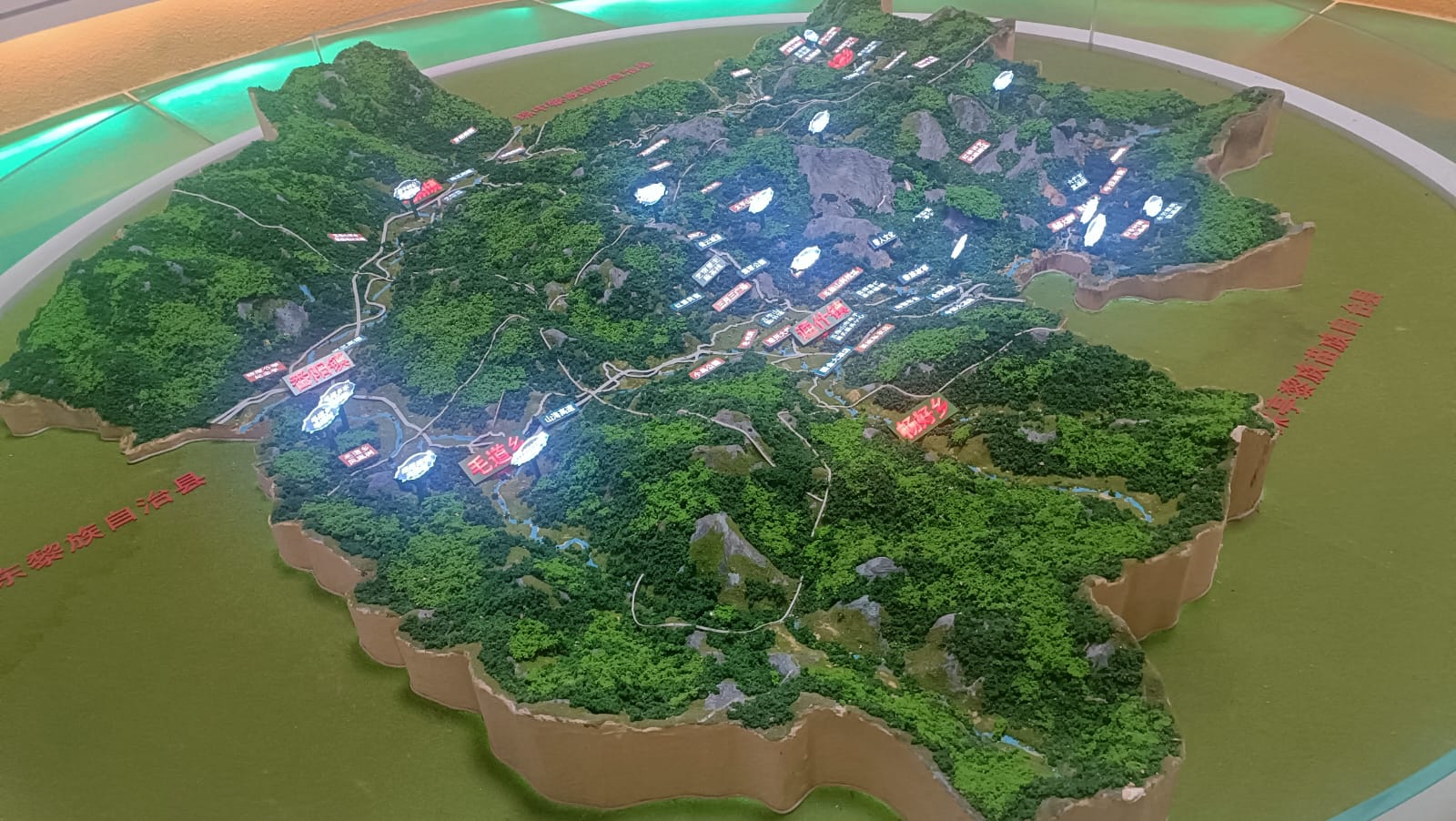
In the mountainous area of Chinese County of Ziyun, Guizhou district stood out. It has no plains. It’s land covered by mountains and cliffs where people stay.
This however did not deter the Chinese government from transforming the area from a poverty stricken region to an area where residents became part of the nation’s development agenda.
The government deployed civil servants not to give relief aid but to collect data on every household and find out why they were poor.
The outcome; isolation, illness and illiteracy were among key contributors to high level poverty. After establishing the root cause, the government had to adopt a systematic approach to deal with poverty.
” Through poverty registration system, China has identified every poor individual in every village, every poor household has the causes of their poverty and their needs registered with the government. The platform provides powerful IT support for targeted measures to realize the set goal.” Says Li Xin Deputy Director General International Poverty Reduction Center in China
The villagers were relocated and given a house, their farms became investments and the government built highways to ease transport challenges. The province also became China’s data valley because caves naturally keep servers cool.
That was in 2015. By 2020, 9.2 million people had exited poverty, a big stride which finally led to the declaration in 2021 that all the 832 counties in China were free from absolute poverty after a seven year targeted campaign.
The Guizhou model was proof that you do not end poverty by giving people money but rather by building the necessary infrastructure to support specific regional needs.
The challenge now is preventing a backslide.
In Wuzhishan City, is Maona village hidden deep in the Hainan rainforest . The village had its turning point when president Xi Jinping visited four years ago and declared ‘Rural revitalization should focus on industry ecology and ecological industrialization’
Maona did not reinvent the wheel. They revitalized their tea farming, their culture and tourism.
The bamboo pole dance, tea art brewing and the rainforest became the stage for economic prosperity. In the first year after the 2022 declaration, 212,600 tourists visited the region.
What was a cultural pastime where grandmothers weave Li brocade became an income generating activity experimenting culture as industry, and making heritage a source of employment.
Maona’s village formula was simple; take what’s there and package it.
From 2013 to 2021, China replaced blanket subsidies with what it called Targeted Poverty Alleviation where the government diagnosed the exact cause of poverty, came up with a plan on how to deal with it and came up with a dedicated cadre to bring that family out of poverty.
Through the model, 26 million rural workers were placed in employment. Millions more were relocated from “inhospitable areas” to new towns with schools, hospitals, and jobs while counties were empowered to develop industries in tea, e-commerce, and tourism. The state also poured billions into roads, power, and internet.
As a result, the rural per capita income in ex-poor counties jumped from 12,588 yuan in 2020 to 17,522 yuan in 2024 accounting for a 7.8% real annual growth.
With what was considered the successful implementation of the first phase mainly due to Political will, data-driven targeting, mass job creation, and infrastructure, the government admits various factors can still push families back. That is why the next phase, 2026-2030 institutionalizes anti-poverty work through high-quality, full employment.
“China’s achievement in poverty eradication is the result of a planned, organized and phased sustainable effort,” says Li.
Kenya has had its plans to fulfil the independence promise to fight poverty on trial since 1963.
For Kenya, a country where poverty eradication was a founding pledge in 1963 , China’s model may offer urgent lessons.
Among major initiatives is the National Poverty Eradication Plan of 1999-2015 and the Poverty Reduction Strategy Paper of 2001-2004 all set targets on how to deal with poverty, unemployment, and ensure no child missed school.
Successive governments from Kibaki’s Youth Enterprise Development Fund and Kazi Kwa Vijana initiatives, to Uhuru Kenyatta ‘s Kazi Mtaani to President William Ruto’s Bottom-Up Economic Transformation Agenda which targets 5.5M people out of poverty by 2027 have tried different strategies to eradicate or at least alleviate poverty.
China proved absolute poverty can end fast with state capacity, jobs, and infrastructure. Kenya’s graduation model is the closest to that approach.
These initiatives may be working but they don’t deliver full escape. Although Kenya’s NYOTA works on graduation over handouts and devolution is driving local industry, adopting targeted poverty eradication methods may work.
“Good policies should be tailored to local conditions. There is no one-size-fits-all solution, each country must tailor strategies based on its unique economic foundations, cultural traditions and development stages.” Says Li.
For Kenya, each county, each village must come up with its own poverty eradication programs tied to their unique strengths rather than adapt to foreign concepts that might not work.
The Kenya National Bureau of Statistics recently opened the doors for public input on a new law designed to completely overhaul how our country handles data. By aligning Kenya’s data practices with the 2010 Constitution and modern global standards, the proposed Statistics Bill of 2026 aims to replace the outdated 2006 framework that originally set up the bureau.
This change could not be more timely. By setting up formal County Statistics Offices, the bill offers a real chance to fix the stubborn data gaps that often exist between national agencies and local realities on the ground. This is where Kenya’s tech sector can step in to connect Nairobi’s policymakers directly with devolved communities.
Imagine developers at Konza Technopolis or Nairobi’s tech hubs building open, easy-to-use digital dashboards tailored for each of the 47 counties. If a local government wants to turn a traditional craft—like artisanal weaving or specialty tea blending—into a thriving commercial industry, a county data hub could make it happen. The platform could map out every skilled artisan through a digital cooperative, track their inventory in real time, and link them directly to international e-commerce markets.
This approach directly mirrors how China successfully transformed local cultural heritage into steady, formal jobs. But while Beijing relied on a massive army of state bureaucrats to track down poverty, Kenya has a smarter, leaner shortcut. By layering smart data tracking onto the mobile money wallets already sitting in the pockets of millions of Kenyans, we can achieve that same surgical precision at a fraction of the cost.