
Kirinyaga killer brew bar owner alongside 4 police officers to be charged with murder

National NewsNewstop
Kirinyaga killer brew bar owner alongside 4 police officers to be charged with murder

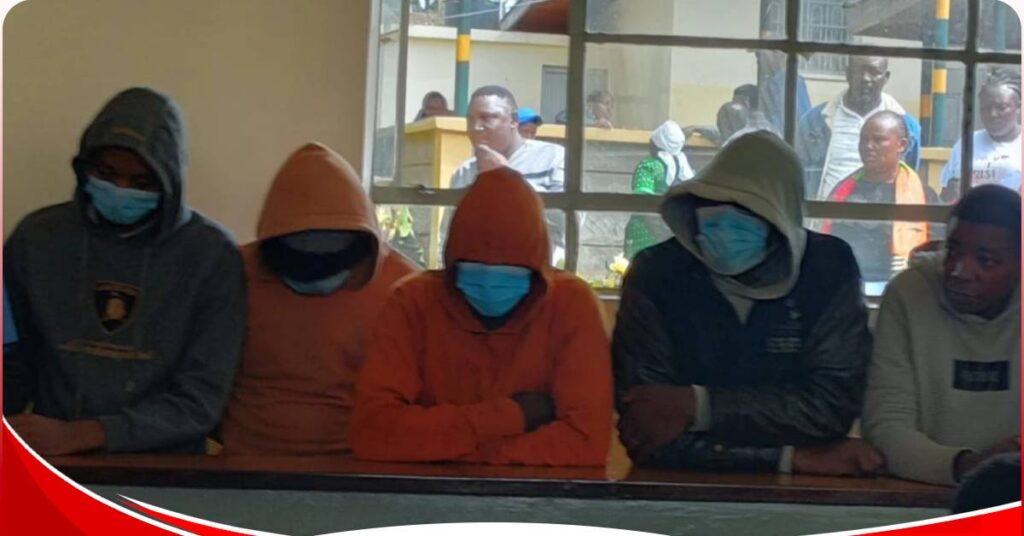
Four Police officers alongside the owner of the Kirinyaga bar owner where 17 people died after consuming illicit alcohol are facing murder charges.

Prosecutors at the Baricho Law Court led by Jane Maari on Thursday filed murder charges against the bar owner John Muriithi, his brother Anthony Muthee, Lydiah Wanjiru and police officers Francis Mutethia, Allan Kimanzi, Brian Kariuki, former Kiamaciri commanding station officer Kennedy Mugambi.

While preferring the charges, the prosecution also called for a mental assessment test to be done on the suspects including the bar owner.

The 17 people who died after consuming the deadly liquor at  Kangai and Kandongu villages in Mwea-West Sub-County, Kirinyaga County were buried on February 17.

Investigations uncovered that the alcohol consumed by the 17 individuals and several others who lost their eyesight was confiscated liquor stored at the Kiamaciri police station as exhibit.

The lethal brew is reportedly said to have been stored at the station before four rogue officers allegedly sold it to a member of the community. The four officers were subsequently arrested and arraigned at the Baricho Law Courts.

ALSO READ: Gilgil police officer arrested while selling alcohol in Kirinyaga

Trending Now


Claims that the Finance Bill 2026 introduces a new tax on mitumba clothing have sparked heated debate, prompting Kenya Kwanza leaders to come out and explain what the proposed law actually says.  At the centre of the debate is Clause 31(a)(ix)(169), which deals with the Value Added Tax (VAT) treatment of worn clothing, commonly known as mitumba, sold within the country.   According to the clause, the Finance Bill proposes to simplify the VAT treatment of the mitumba sector by ensuring that VAT is charged only at the point of importation, while domestic sales of the same goods are exempt from further VAT.  In effect, VAT will be paid once when second-hand clothes enter Kenya. After that, traders selling the clothes in local markets will not be required to charge VAT on their sales.  The proposal is intended to reduce the compliance burden on traders by ensuring that VAT is collected at a clear and verifiable point. It also removes the possibility of double taxation, making business easier for traders while reducing paperwork and helping them retain more of their earnings. Read AlsoFinance Bill heads to Ruto’s desk after National…


Subscribe to Our Newsletter

*we hate spam as much as you do

More From Author


Related Posts

See all >>

Latest Posts

See all >>