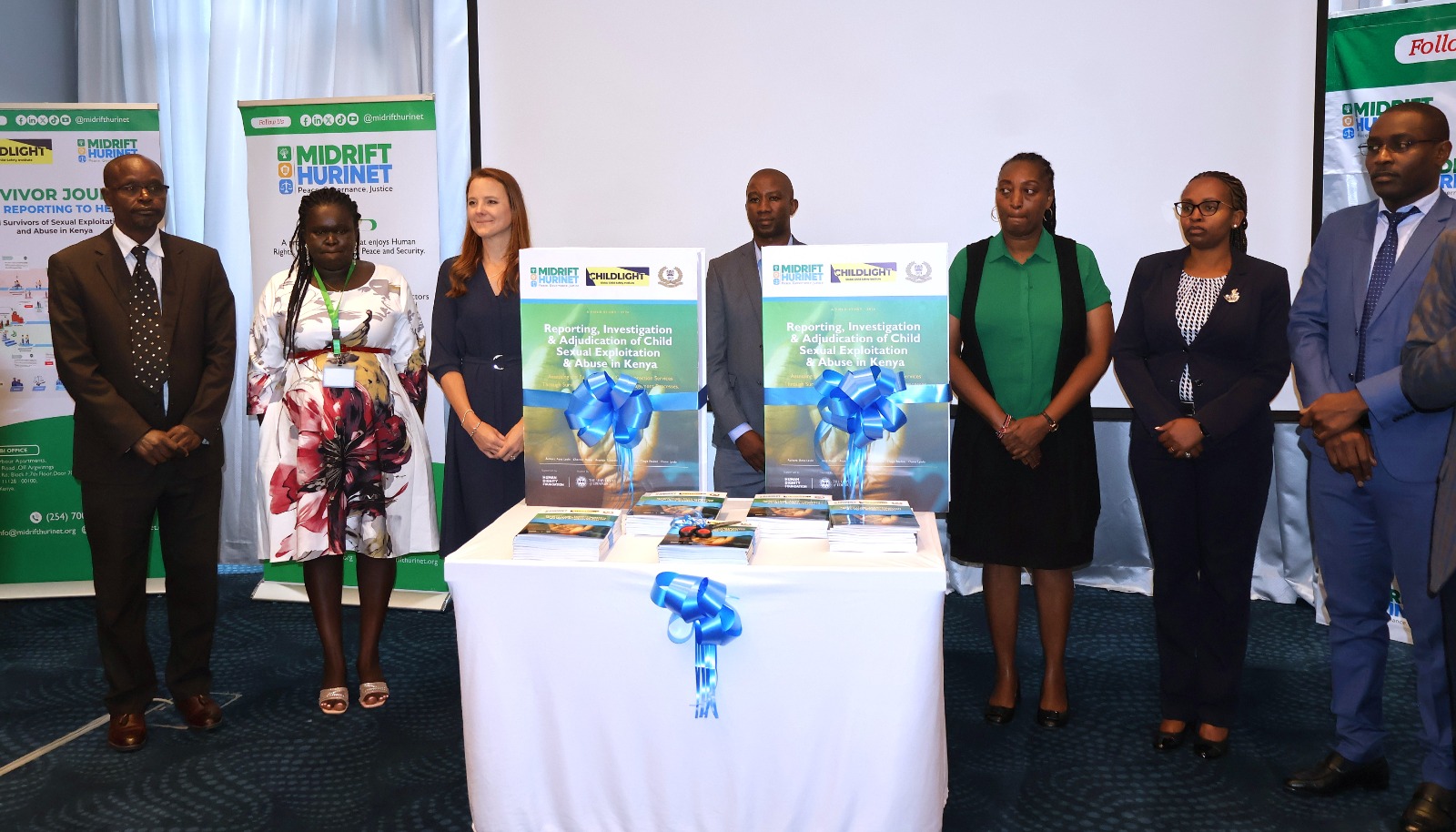
A disturbing new study has revealed that most child sexual abuse survivors in Kenya are girls aged between six and eleven years old, with perpetrators in most cases being people already known and trusted by the child.
The report, launched on Tuesday June 16, 2026 by MIDRIFT HURINET in partnership with the Global Child Safety Institute (Childlight) and the Anti-Human Trafficking and Child Protection Unit (AHTCPU), paints a troubling picture of a child protection system struggling to keep pace with abuse cases despite years of legal and policy reforms.
Researchers found that 79 per cent of survivors were girls aged between 6 and 11 years, while 54.7 per cent of perpetrators were male and well known to the child, challenging the widespread perception that children are primarily at risk from strangers.
The findings come amid growing national concern over child abuse cases, including a string of recent incidents reported in schools, homes and communities across the country that have sparked outrage and renewed calls for stronger child protection measures.
The study, titled Reporting, Investigation and Adjudication of Child Sexual Exploitation and Abuse in Kenya, examined child sexual exploitation and abuse cases in Nairobi, Mombasa, Kisumu, Nakuru, Kisii, Busia and Garissa counties.
Researchers reviewed 57 closed case files, observed 56 child protection institutions and conducted in-depth interviews with 58 stakeholders working within Kenya’s child protection sector.
Despite Kenya’s legal framework, including the Sexual Offences Act of 2006 and the Children’s Act of 2022, researchers found significant weaknesses in how cases are handled once reported.
The report cites poor coordination between agencies, inconsistent implementation of child protection policies, delays in accessing survivor support services and gaps in case management that can undermine access to justice.
“If there’s one thing that needs to change, it’s how we respond to survivors,” said MIDRIFT researcher Leslie Rono during the launch. “Systems must be faster, more sensitive and more coordinated.”
Another researcher, Elizabeth Anyango, said many Kenyans still misunderstand the nature of child sexual abuse.
“Many people believe that child abusers are strangers, but the reality is very different,” she said.
“Across the seven counties where MIDRIFT conducted the study, most perpetrators were people the child already knew.”
She described many of the cases reviewed as “disheartening”, noting that the majority of survivors were very young girls in their formative years.
The study found that timely access to medical care, psychosocial support and coordinated government services significantly improved survivor outcomes and increased the likelihood of cases progressing through the justice system.
Lydia Davenport of Childlight’s Global Child Safety Institute said Kenya has made notable progress in building child protection systems but must now focus on making them work more effectively for survivors.
“This study shines a light on the lived experiences of survivors and identifies opportunities to strengthen trauma-informed support, improve coordination across services and ensure cases are resolved as effectively and efficiently as possible,” she said.
Researchers are now calling for stronger integration of child protection data systems, stricter enforcement of existing laws and better coordination among police, healthcare providers, social workers, prosecutors and courts.
They also warned against the continued use of informal or traditional settlements in child sexual abuse cases, arguing that such practices can deny survivors justice and allow perpetrators to evade accountability.