Something fundamental is shifting in Kenya. It is difficult to capture in opinion polls or political rallies, but it is increasingly visible in everyday conversations. Listen in matatus, markets, universities, offices, farms and family WhatsApp groups. Beneath the familiar complaints about politics is something more consequential: Kenyans are questioning the political system itself and the people who have benefited from it.
If this mood survives until the next General Election, 2027 could produce one of the largest political turnovers in our history. It would not surprise me if an overwhelming majority of today’s elected leaders were rejected.
Three developments help explain why. The first was June 2024. For decades, Kenyan politicians perfected the art of organising citizens along ethnic and partisan lines. Political mobilisation normally required a party, a tribal kingpin, money, buses, branded T-shirts and a collection of local brokers.
Then a generation appeared that refused to follow the script. Young Kenyans organised through digital platforms, interrogated legislation for themselves and turned public frustration into collective action. Many had never attended a conventional political rally. They did not wait for instructions from opposition headquarters.
Whatever one’s interpretation of the protests and their aftermath, June 2024 demonstrated something politically revolutionary: citizens could organise outside the traditional political establishment. That discovery cannot easily be reversed. A generation that has discovered its political agency does not simply surrender it because an election campaign begins.
The second disruption was the death of Raila Odinga. For decades, Raila occupied an extraordinary position in Kenyan politics. He was simultaneously politician, opposition leader, coalition builder and symbol of resistance for millions of citizens. His influence extended far beyond his own electoral contests. His death therefore represented more than the disappearance of one politician. It disrupted an entire political architecture.
Millions of voters who historically looked towards Raila for political direction must now make choices in a landscape without him. Anyone imagining that these voters can simply be inherited is making a serious mistake. Voters are citizens, not property. No politician owns a community’s votes forever. Raila’s supporters will listen to those seeking their support, examine their records and ultimately make their own decisions. The political vacuum created by his absence may therefore accelerate something Kenya desperately needs: the transformation of citizens from political followers into independent voters.
Then came Ol Kalou. The numbers deserve attention. The DCP candidate received 35,440 votes against UDA’s 5,450. Whatever explanations political strategists may offer, the scale of that result carries a message extending far beyond one constituency. It showed that incumbency is not invincibility.
Governments possess enormous advantages during elections: visibility, powerful networks, access to influential personalities and the psychological weight that accompanies proximity to state power. But there is one place where all this machinery eventually meets its limit: the ballot box. A voter enters that booth alone. There are no convoys inside. No Cabinet Secretaries. No governors. No political brokers. No cheering crowds. Just a citizen and a ballot paper. Ol Kalou demonstrated what can happen when citizens become determined enough to exercise that sovereignty.
Put these three developments together and an extraordinary picture emerges. June 2024 broke the fear. Raila’s death disrupted the old political map. Ol Kalou demonstrated that political anger can become electoral action.
That combination should worry every elected leader. For too long, politicians have assumed that Kenyans have short memories. They disappear after elections, return shortly before the next contest, distribute money, invoke ethnicity and suddenly rediscover ordinary citizens. That formula may be approaching its expiry date.
The Kenyan who will vote in 2027 has endured years of economic pressure. Families know what food costs. Traders understand taxation not as an economic theory but as money disappearing from already thin margins. Farmers know the price of inputs. Graduates know the humiliation of sending hundreds of applications without receiving employment. These experiences accumulate. And accumulated frustration eventually becomes political judgement.
This is why 2027 may not be an ordinary contest between government and opposition. It could become an election between citizens and the political establishment. That distinction matters. Opposition politicians should therefore resist celebrating too early. Public anger against government does not automatically translate into support for the opposition. The same voter questioning the President may also question their governor, senator, MP, woman representative and MCA.
Some politicians may discover too late that the protest vote has no party membership card. The coming political mood could punish incompetence wherever it finds it. That is why even the figure of 97 per cent, while obviously not a scientific forecast, captures the scale of vulnerability facing the political class. Every incumbent should behave as though their seat is genuinely at risk.
The era when politicians could survive purely because of party affiliation, ethnic arithmetic or proximity to powerful leaders may be weakening. A party certificate will not feed a hungry family. A motorcade cannot employ a graduate. A campaign handout cannot repair five years of neglect. A slogan cannot indefinitely substitute for competent government. And ethnicity cannot permanently silence the arithmetic of an empty pocket.
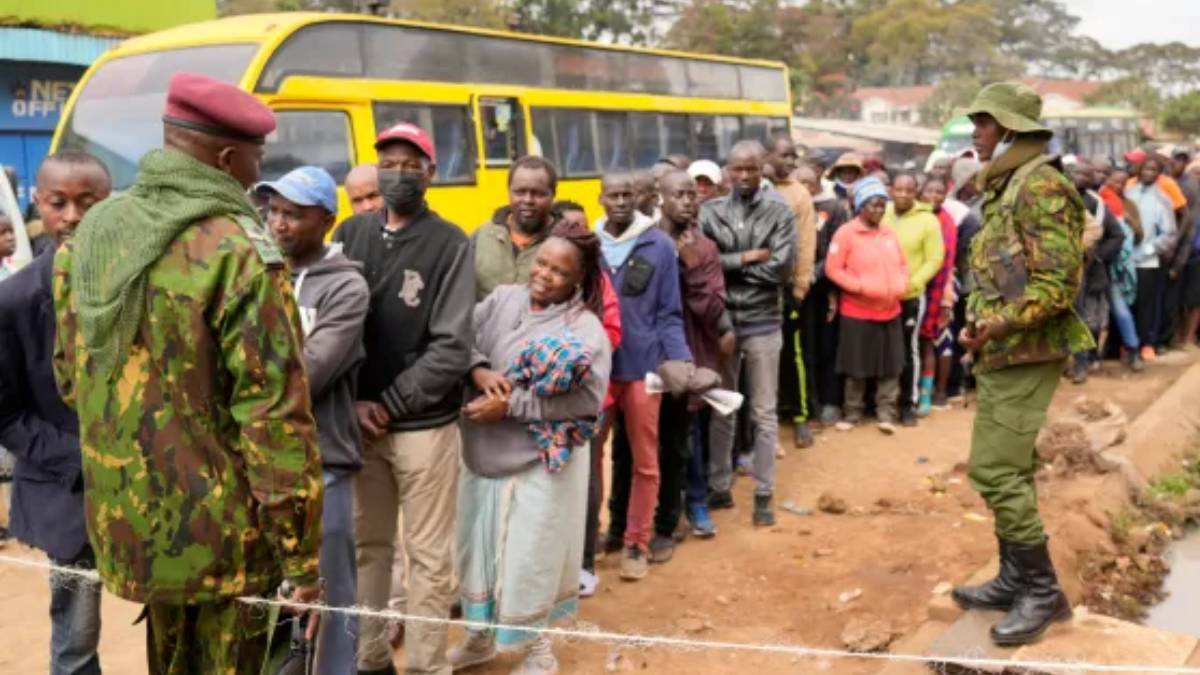
The woman struggling to educate and feed her children will enter the polling station. The boda boda rider calculating fuel costs will enter. The small trader fighting to keep a business alive will enter. The farmer counting losses will enter. The graduate carrying certificates from office to office will enter. And so will the young Kenyan who discovered in June 2024 that citizenship is not spectatorship.
Kenya’s political establishment should pay attention. Something has changed. The voter is watching more carefully, questioning more aggressively and becoming increasingly difficult to control through the traditional instruments of Kenyan politics.
The greatest mistake politicians can make between now and 2027 is to assume that Kenyans will eventually forget. They may not. Because when millions of frustrated citizens independently arrive at the same conclusion, political power can change with astonishing speed. In 2027, the Kenyan voter may no longer be content merely to be counted. The Kenyan voter intends to decide.