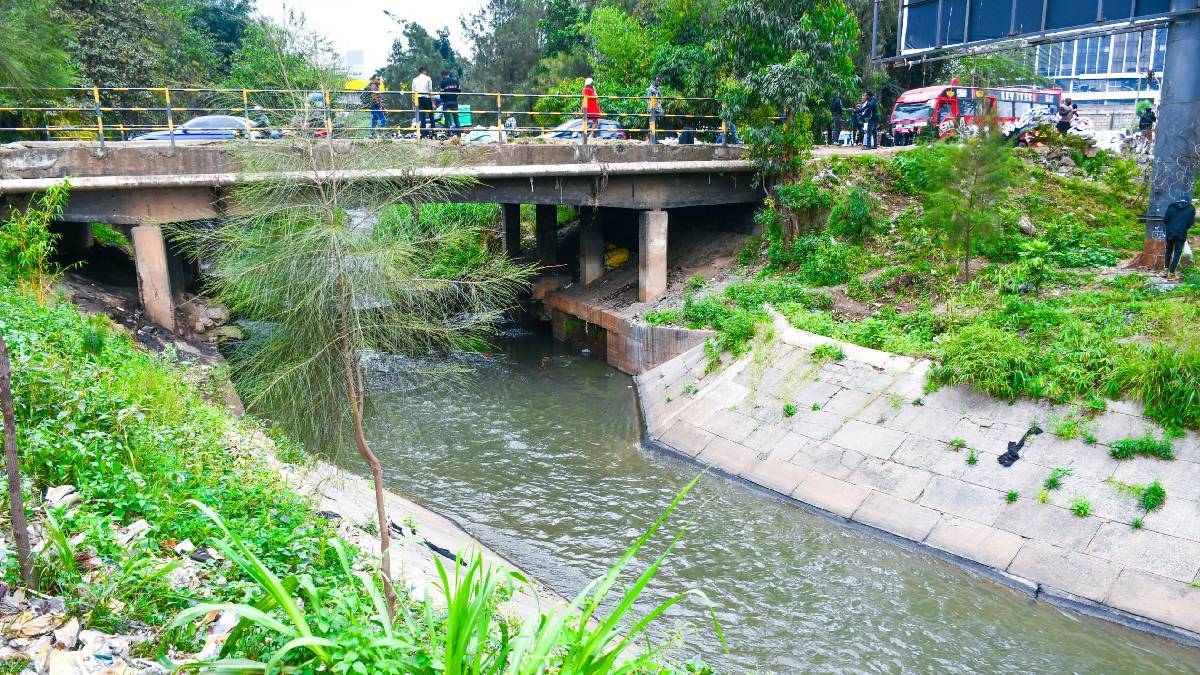
Since Nairobi City was founded in 1899, Nairobians have been waking up every dawn of morning to a thin mist that rises above the waters of Nairobi River… this as the city slowly wakes up. From PSV vehicles (matatus) and crews starting their daily routine, to traders and other workers hurriedly walking across bridges without a second glance.
Nairobi River, a 70 kilometer plus waterway flowing through Kenya’s capital, has been known for all the wrong reasons. Instead of clean water and green banks, it became a place filled with garbage, sewage and bad smell. The river that once gave life to communities slowly turned into a literal dumping site.
The Nairobi River, flowing quietly beneath bridges, settlements and towering skyscrapers, has long mirrored the story of Nairobi itself—from growth, neglect and now a hope for renewal. The name ‘Nairobi’ was derived from the Maasai phrase “Enkare Nyrobi”, which translates to “cool water”.
Unfortunately, the river that historically acted as a natural drainage and ecological corridor, supporting biodiversity, peri-urban agriculture and early industrial activity as Nairobi expanded, has become an eyesore. For decades it has carried the weight of rapid urbanisation, poor management and weak enforcement of environmental laws. Once a fresh water source surrounded by wetlands and indigenous vegetations gradually transformed into one of the most polluted waterways in Kenya.
KSh50 billion Nairobi River revival drive
But, all hope is not lost. Nairobi’s long-polluted waterways are edging closer to a dramatic rebirth after Governor Johnson Sakaja-led Cabinet, in February 2026, endorsed continued implementation of the Nairobi River Regeneration Programme, a sweeping environmental and urban renewal initiative aimed at transforming the city’s rivers from dumping grounds into vibrant community assets.
“This regeneration is about people as much as it is about the environment safer homes, better markets and decent livelihoods for our communities,” Sakaja said after the Cabinet approved the continued implementation of the programme.
The project, which has been targeted to conclude in January 2027, include construction of a 60-kilometre trunk sewer line – the first large-scale sewer upgrade in decades, stabilization of riverbanks, expansion of storm-water drainage systems, and remediation works at the Dandora dumpsite to curb pollution and restore the surrounding environment.
Plans are also underway to develop green riverfront parks, pedestrian walkways and cycling lanes, as well as modern markets expected to host up to 20,000 informal traders.
Affordable housing projects and flood-mitigation wetlands are also part of the blueprint, while more than 40,000 jobs have already been created for youth engaged in cleanup and construction efforts.
“A clean river is not a luxury it is a lifeline for public health, jobs and the dignity of our city. We are turning the Nairobi River from a symbol of neglect into a backbone of green growth and opportunity,” Sakaja added.
The Nairobi River Regeneration today stands as one of the most ambitious environmental restoration efforts in the country, a reflection of governance, sustainability and responsibility.
The river tells a story of growth without planning, cleaning it is not just about removing garbage it’s about changing behaviour of opportunity mixed with oversight. But it also tells a story of possibility because real regeneration requires collective responsibility from factories treating their waste, to households managing trash properly, to prioritizing environmental pollution.
Standing on a bridge overlooking the river, it is hard to imagine the clear waters that once defined this place. And yet, beneath the pollution, the river still flows, it carries not only water but history and perhaps hope. If Nairobi would truly honour its name, the ‘cool waters’ must return. The rebirth of Nairobi River would not only restore an ecosystem; it would signal a city ready to correct its past and protect its future
For a city often described as ‘the green city in the sun’, restoring Nairobi River is more than an environmental project, it’s a symbolic reclaiming of identity. If fully realized, the river could shift from being an eyesore to becoming a centerpiece of urban renewal. The vision is bold; clean flowing water, green corridors, cycling paths and a safe recreational space.
As the water slowly clears in certain stretches, the real question now is not whether the river can recover, but whether the city can sustain the will to protect it. For now the river waits, moving steadily and quietly through the heart of a city slowly learning to care again.
Story by Melissa Migare, a Journalism Student At Mount Kenya University