
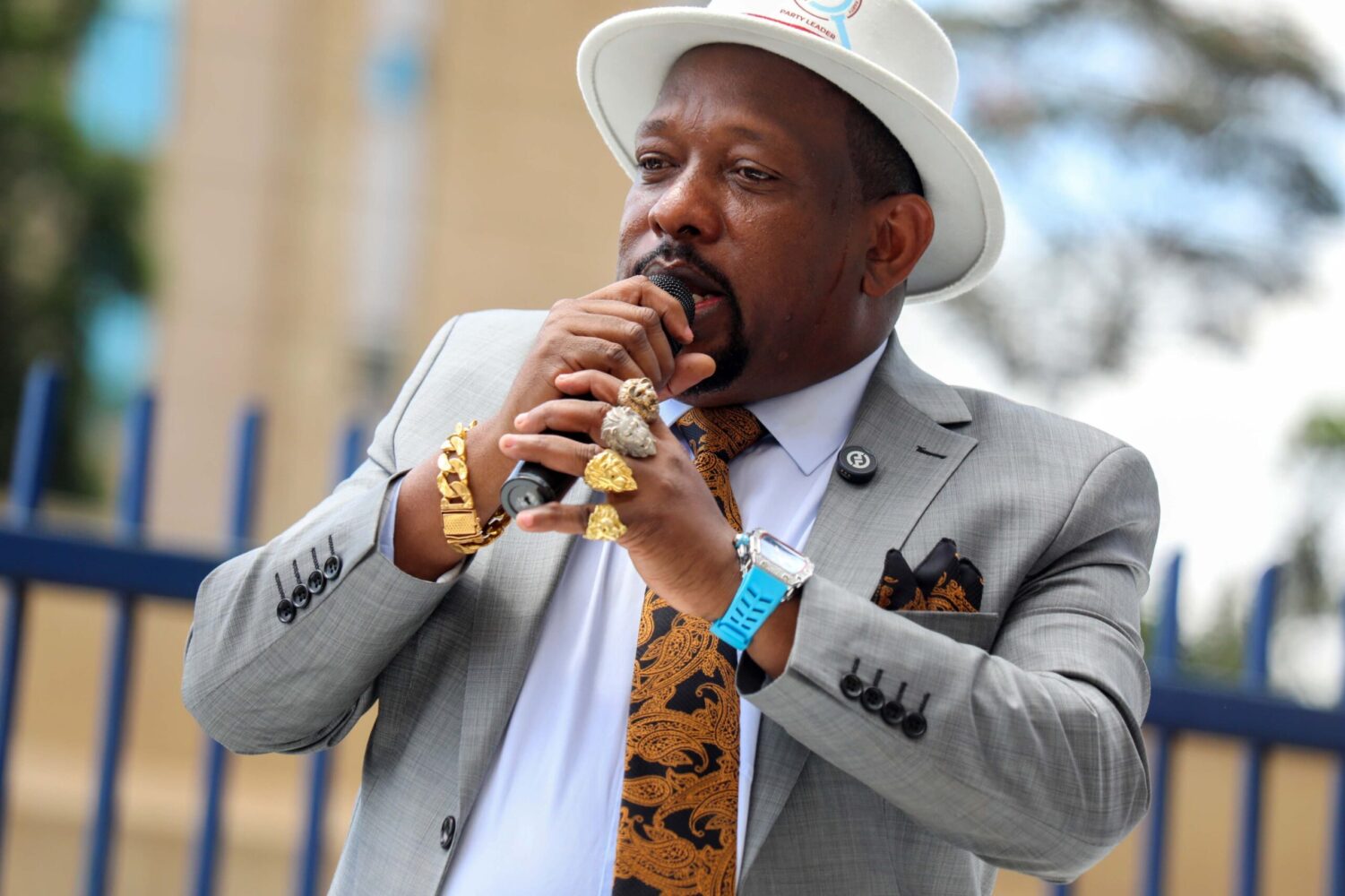
A fresh public spat has erupted between former Nairobi Governor and leader of the National Economic Development Party (NEDP), Mike Sonko, and Kileleshwa MCA Robert Alai, following a series of explosive social media exchanges involving allegations of corruption, criminality, and land grabbing.
The latest confrontation began after Alai posted a message on X questioning why some individuals facing criminal allegations appeared to enjoy privileges not afforded to ordinary citizens.
“Wash wash and drug gangs allowed to roam freely as everyone else gets arrested. Ask the police why impeached criminals have police lights. Why?” Alai wrote in a post that many observers interpreted as a reference to Sonko after the former governor shared a video of his luxury convoy on the road.
Sonko responded with a strongly worded statement, accusing Alai of repeatedly insulting innocent Kenyans and engaging in conduct that has allegedly landed him in court on numerous occasions. Sonko further claimed that electing Alai as an MCA had been a mistake, citing concerns over his conduct and integrity.
The former governor also accused the Kileleshwa MCA of abusing public office and attempting to grab private property.
Sonko alleged that he had previously thwarted an attempt by Alai to take over a house in Runda and vowed to oppose what he described as further attempts to acquire land in Kileleshwa and Lavington.
“Public office is not a licence to steal people’s property,” Sonko said, while warning that he would continue exposing and resisting what he described as land-grabbing schemes.
The latest exchange has reignited the long-running rivalry between the two politicians, who have frequently clashed on social media and in public forums.
Alai has previously found himself at the centre of controversies arising from his outspoken online commentary, often engaging in public feuds with prominent political figures, celebrities, and business leaders. His critics accuse him of using social media to provoke confrontations, while his supporters argue that he raises legitimate questions about accountability and the abuse of power.