International criticism is mounting over the detention and prosecution of Chairman Lee Man-hee, the 95-year-old leader of Shincheonji Church of Jesus and over recent public remarks by South Korea’s Minister of Justice, Jeong Seong-ho.
On June 30, Minister Jeong announced on his social media account that Chairman Lee had been indicted while in detention, writing that “strict criminal punishment corresponding to its responsibility is inevitable.” He closed the post by quoting Matthew 7:15: “Beware of false prophets.” Shincheonji Church of Jesus is a Christian denomination founded in South Korea in 1984.
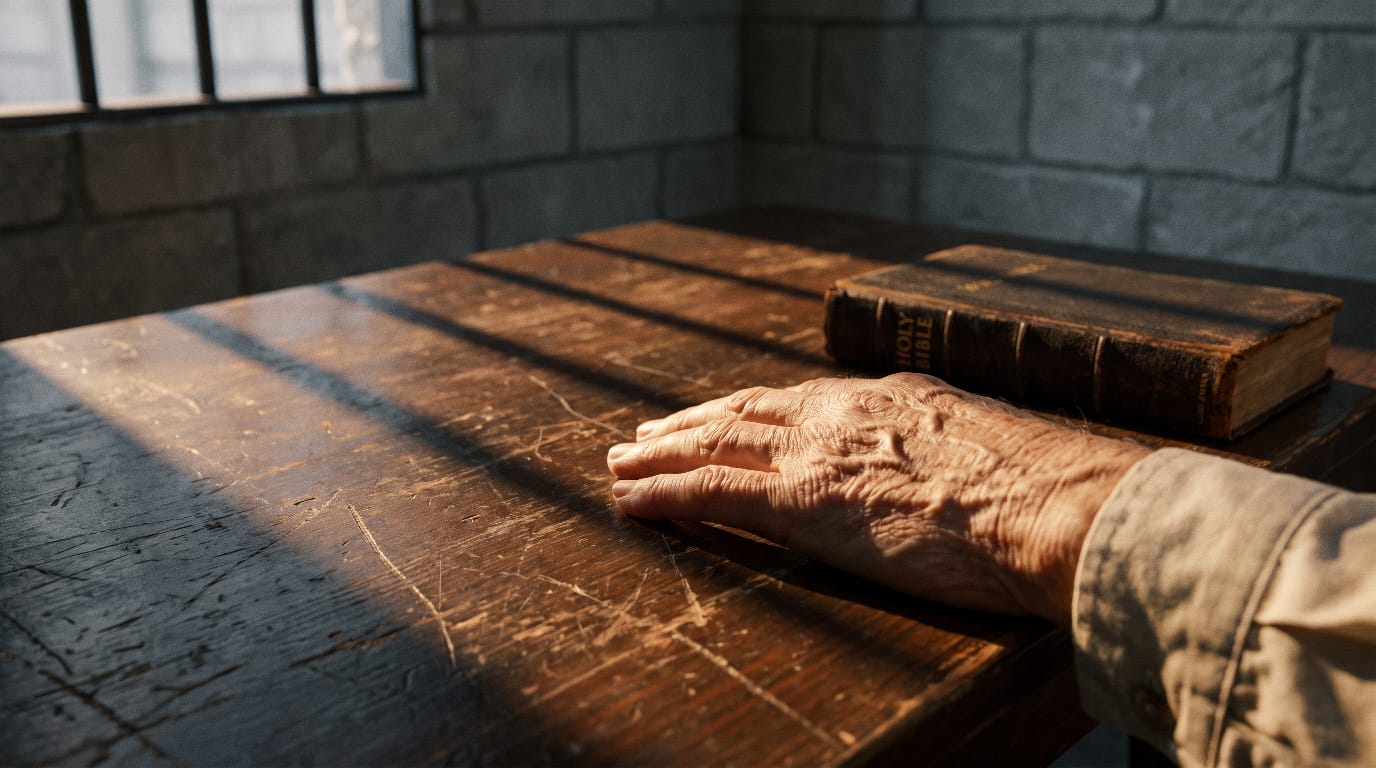
Dr. Massimo Introvigne, an Italian sociologist of religion, has published two articles in the religious-freedom and human-rights outlet Bitter Winter addressing this situation: the first on June 24, 2026, criticizing the detention of Chairman Lee at the time of his arrest and a second on July 2, 2026, raising detailed criticism of Minister Jeong’s public remarks.
“Detention of the 95-Year-Old Chairman: ‘Jailing an Elderly Religious Leader Violates International Standards’,” Introvigne said.
Chairman Lee was taken into custody on June 24, 2026 on charges including violation of the Political Parties Act and was formally indicted while still in detention on June 30, 2026.
Investigators allege that between July 2021 and January 2024, Lee organized the enrollment of roughly 50,000 Shincheonji members into the People Power Party (PPP) in an effort to influence the party’s presidential and parliamentary primaries.
Dr. Introvigne argued that placing an elderly religious leader in detention over a case that does not involve violence or other serious crimes falls short of the proportionality standards required under the UN Standard Minimum Rules for the Treatment of Prisoners (the “Mandela Rules”) and the principles articulated by the UN Working Group on Arbitrary Detention.
He further linked the case to that of Han Hak-ja, the 83-year-old leader of the Unification Church (the Family Federation for World Peace and Unification) who was being held in a separate case, warning that “this is not an issue confined to a single religious group a pattern is emerging in which physical detention is repeatedly used against elderly religious leaders.

Immediately after the detention, Shincheonji Church of Jesus responded that “Chairman Lee and the church have fully cooperated with every stage of the investigation, including the search and seizure operations,” calling the detention “in effect a physical punishment imposed on a 95-year-old suspect.”
“Justice Minister’s public remarks targeting a specific religion: ‘A Conflict with State Neutrality’,” he said.
What Dr. Introvigne found particularly troubling was the timing of Minister Jeong’s statement. Jeong made his public call for “strict criminal punishment” on the very day Chairman Lee was formally indicted while in detention.
Introvigne noted that when the official who oversees the justice and prosecution system publicly declares the need for punishment just as a case is beginning, it risks being seen as prejudging the outcome.
Dr. Introvigne also pointed out that a public official’s use of a Bible verse that could cast the defendant in a negative light may conflict with the state’s principle of religious neutrality.
Because a sitting Minister of Justice’s public statements are likely to be read as more than personal opinion effectively as the government’s official position he argued that such remarks warrant far greater caution.
The legal question at the heart of the case is not that members joined a political party, but whether they were coerced into doing so.
Prosecutors say the evidence points to an organized, forced-enrollment campaign, while Shincheonji Church of Jesus maintains that members were not compelled by force or directive.
Dr. Introvigne predicted that the trial will hinge on what evidence and legal reasoning are used to prove coercion. He argued that “these charges risk criminalizing ordinary civic participation simply because the individuals belong to a religious minority,” adding that “Shincheonji members, like any other South Korean citizens, have the right to join a political party and support a candidate.”
Dr. Introvigne said the case is being closely watched in international religious-freedom circles not simply as a question of guilt or innocence for one religious group, but as a test of “whether a democratic state applies the same standards of rule of law and human rights to religious groups that are controversial or classified as minorities.”