Millers and aggregates who supply grains have revealed challenges that led to massive losses due to lack of means to test aflatoxin on grains.
They were forced to take samples of grains to laboratories that were far away leading to losses when aflatoxin was detected from maize that had already been ordered.
Kizito Odhiambo the Founder and Chief Executive officer of Agri Bora an Aggregate in the milling industry that supply maize to Millers said some companies required a certain level of aflatoxin and if it exceeded that they would not accept it.
In an interview he said in such circumstances the stock would end up being sold to other companies at a lower price which led to losses as it was difficult for them to detect the level of aflatoxin early.
“One of the main Challenges we have been facing as an aggregate has been the challenge of assessing the quality of the grain during aggregation at the field level,” he said.
Odhiambo said after aggregating the commodity they have to wait until it gets to the lab for them to be able to test the results.
He said over the years they did not have the means of testing the Aflatoxin on the ground and would aggregate from the farmers, pay them and then go test them after two or three days of aggregation.
“And that is when you realise that this maize has high Aflatoxin which means the intended client has to be a different one because there are different clients with different level of aflatoxin that they accept, so you see what that does to the business, it reduces our revenue because the cost is higher you take it to another customer and you need to also get a lower price because of the infected grain,” he said.
However, with the invention of Aflabox, a system that is able to scan agricultural products using artificial intelligence and provide real-time screening results for aflatoxin directly from the field and along the supply chain he said there was hope that the challenges would soon be a thing of the past.
He said they would be able to test aflatoxin on the ground directly at the farm level and determine the aflatoxin level.
To him being able to test on the ground reduces the risk of spending money and ending up getting low revenue for late detection of Aflatoxin level in the grain.
“Normally I was paying the farmer before knowing the aflatoxin content. Now I can pay the farmer after I know the results,” he said.
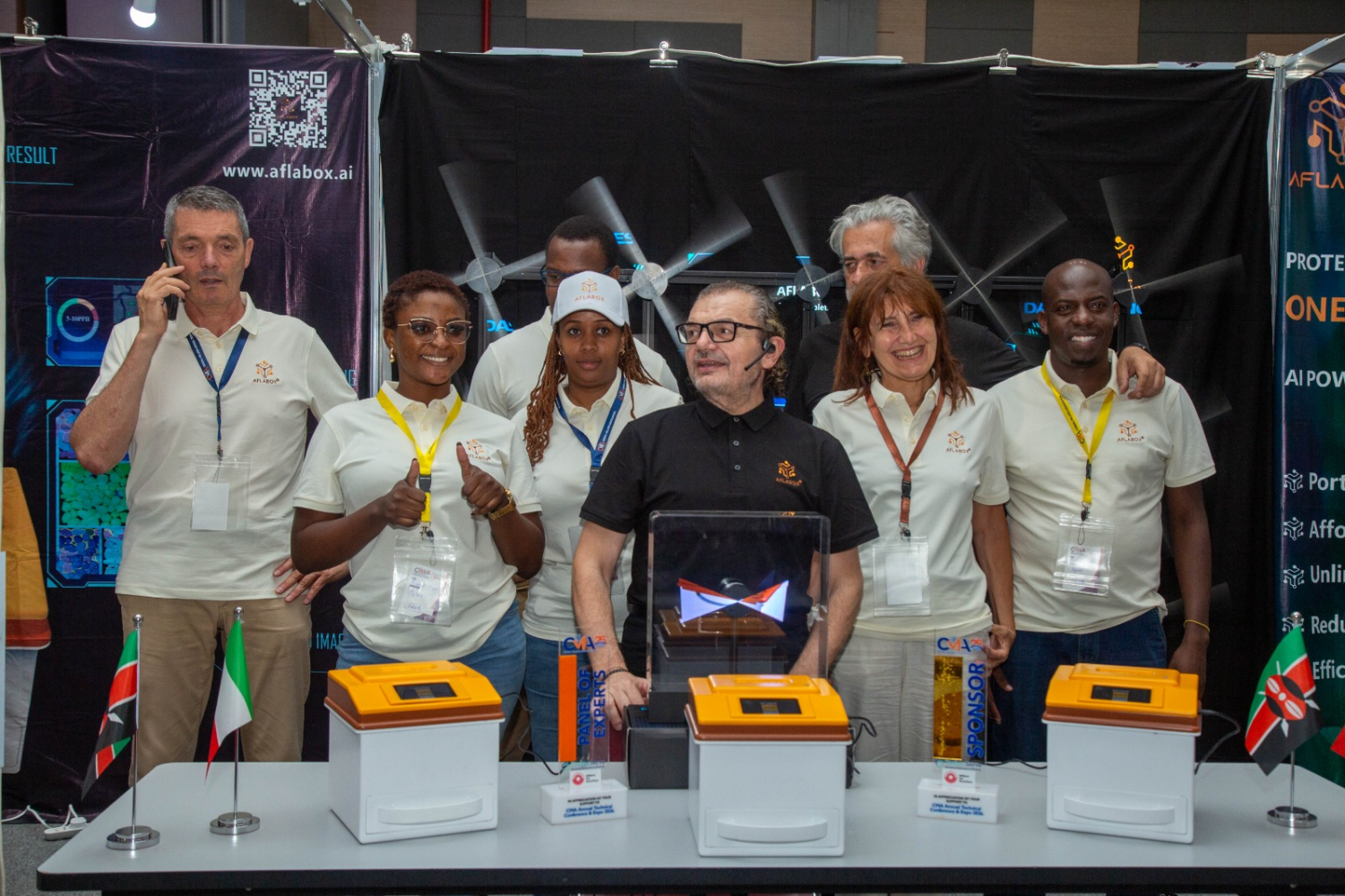
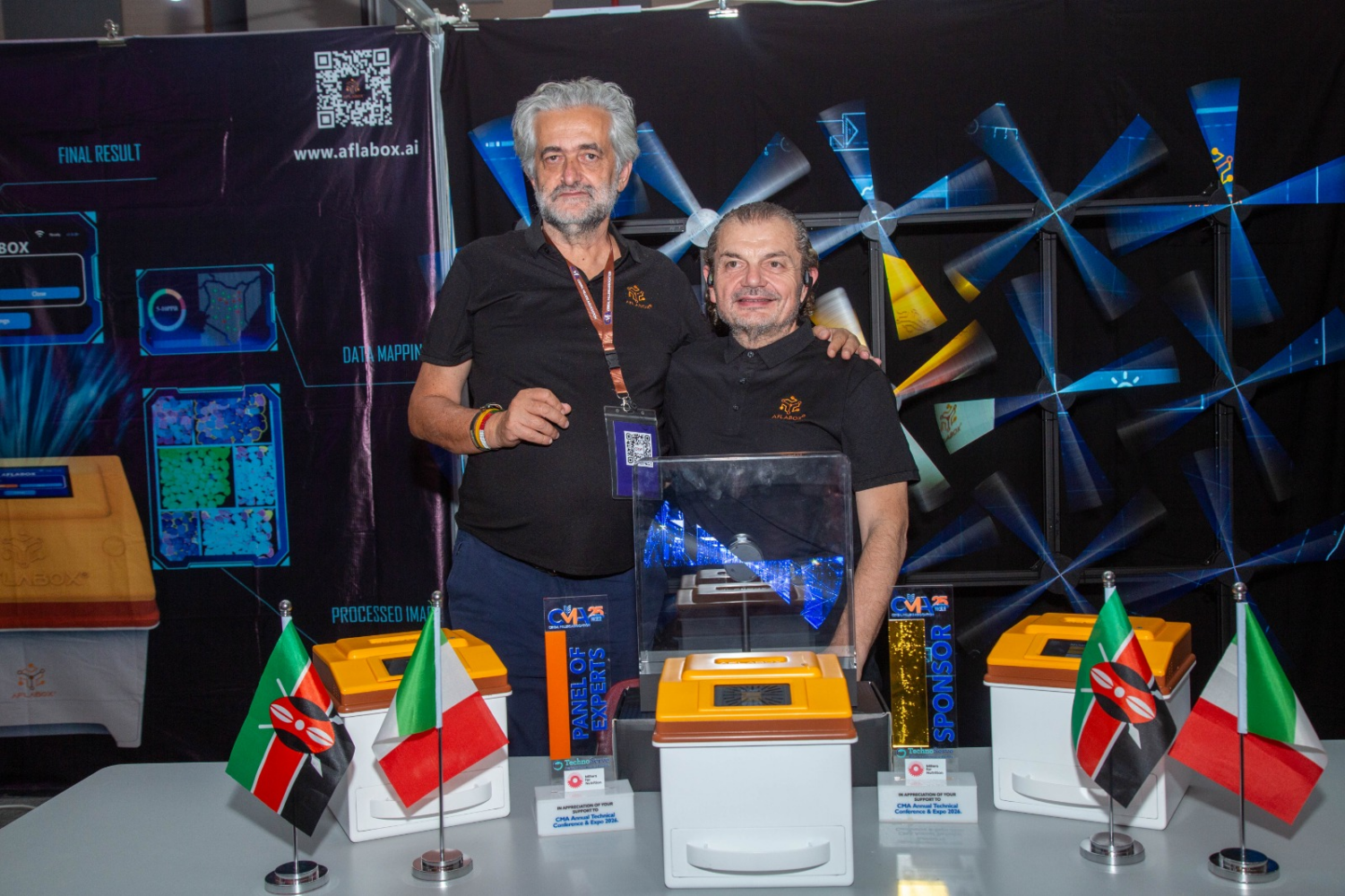
Aflabox was co-founded by Luca Alinovi and Fabrizio Cardillo from Italy and is not only a rapid screening tool, but as a data acquisition, data management and mapping system that can support decision-making for private operators and institutions.
Beyond testing, the Aflabox system is built to collect, manage and map data from every screening carried out.
Each screening generates real-time information that can be geolocated through the system’s integrated GPS and organised through dashboards, making it possible to understand where contamination is detected, where products are coming from, how quality varies across territories and how risks move through the agricultural chain.
Fabrizio Cardillo the President of Aflabox said they were happy as a company to be part of the Cereal Millers Association (CMA) Annual Technical Conference and Expo 2026, organised by CMA and bringing together more than 70 companies.
He said their product and service has been welcomed and are getting orders from millers and aggregators who are keen to get solution to the Aflatoxin crisis.
“The response that we have from the millers, aggregators, the real operators in the market, the people are really facing the problem of aflatoxin everyday we are getting a positive answer,” he said.
Cardillo said since the Aflabox has GPS it will also enable them to map out the areas that have high aflatoxin and the quality of the products in the country.
Further he said the Aflabox will manage all the value chain from the farmer, aggregate, to the company up to the final user.
Dr Luca Alinovi the CEO and Co-Founder Aflabox said they had an incredible experience at the CMA Expo as they were well welcomed and proved to be having the best solution to aflatoxin which was a major problem in Kenya
“We seem to be the one solving one of the largest problems in this organisation which is making simple the problem of aflatoxin,” he said.
Alinovi said there are several millers and aggregates who have already pre booked so as to get the Aflabox.
He said at the end of May they will be having the equipment ready for supply.
“We intend to sell around 200 to 300 boxes this year to private sector in Kenya and we also intend to engage with the government to make sure that if there is need from the government side to provide to them,” he said.
He said the government needs to have a simple solution to test Aflatoxin without them spending weeks or months and make sure it’s reliable adding that they were the perfect partner for them and look forward to support them to get controls in place in a way which is simple easy to handle and all in the same database for them to make the analysis they need around the country.
Each Aflabox he said cost 5000 US Dollars and an additional annual subscription of 100 dollars.