Nairobi Governor Sakaja Johnson has outlined how the Dishi Na County school feeding programme is creating a large and predictable market for farmers while supporting efforts to improve food and nutrition security.
Speaking at the Agriculture and Food Security Summit at Jamhuri Park on Thursday, Sakaja said the programme has created a significant institutional market for agricultural produce, with Dishi Na County kitchens buying and cooking about 37 tonnes of food every school day for learners in Nairobi’s public schools.
According to Sakaja, the programme’s daily food requirement translates to approximately 740 tonnes of food every month, creating consistent demand for cereals, pulses, vegetables and fruits.
“The largest single commodity is rice, with 13.5 tonnes cooked every school day, which we get from our farmers. This is followed by 5.6 tonnes of Mwitemania beans, while cabbages and kales account for 4.8 tonnes. Yellow beans, cowpeas and ndengu (green grams) each contribute about 2.8 tonnes, with the legumes rotated across different days.
“Overall, rice and legumes account for 27.5 tonnes, or 74 per cent of the programme’s daily food volume, demonstrating the scale of the market created for cereal and pulse farmers,” Sakaja explained.
He added that the programme also generates substantial demand for fresh produce.
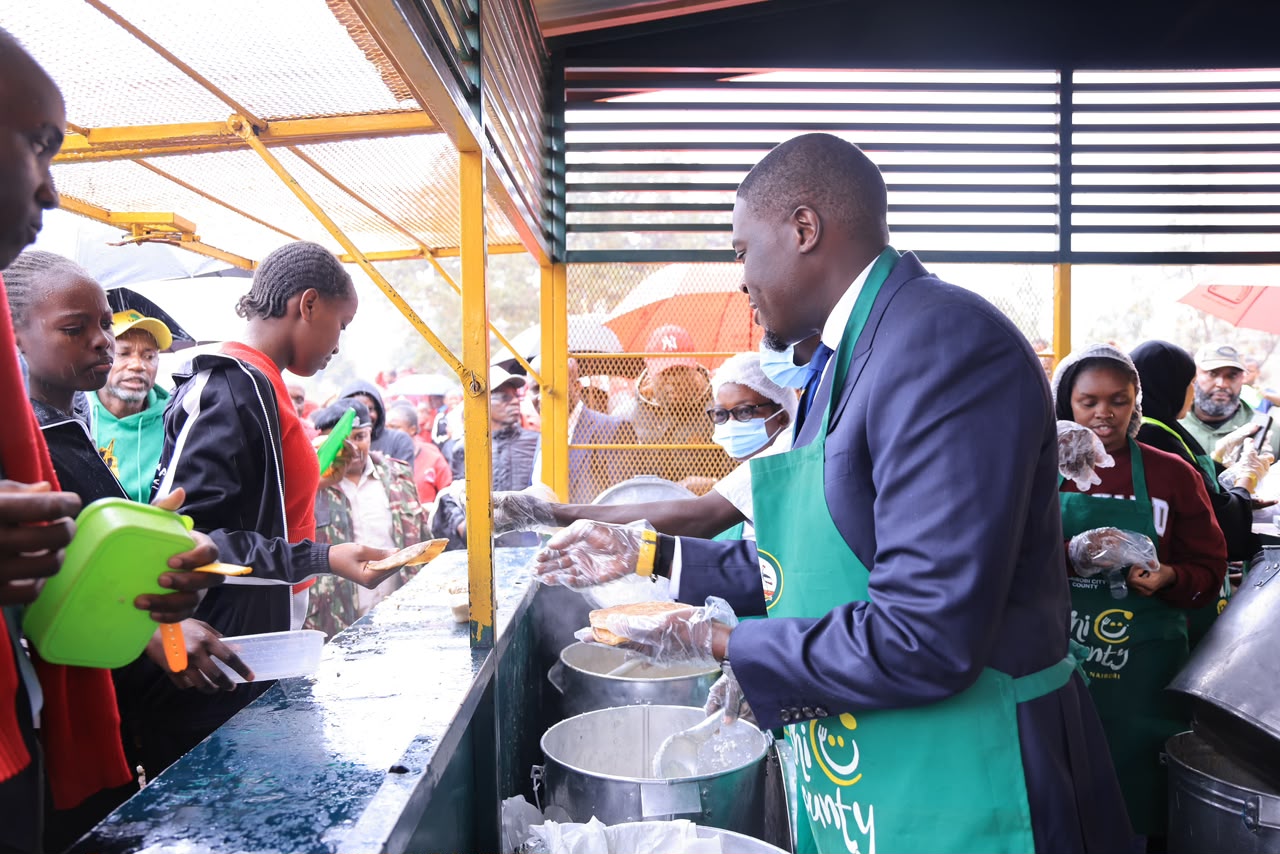
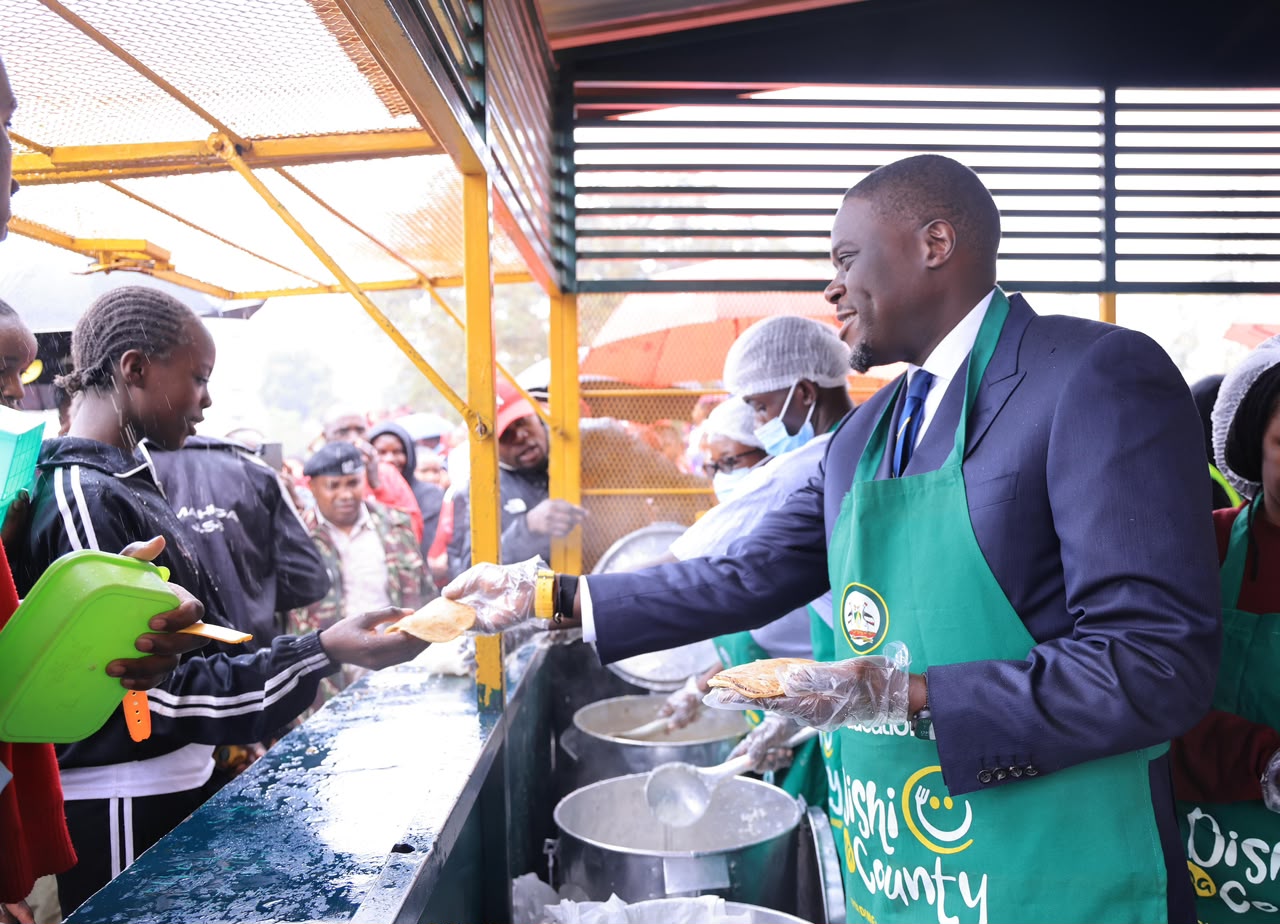

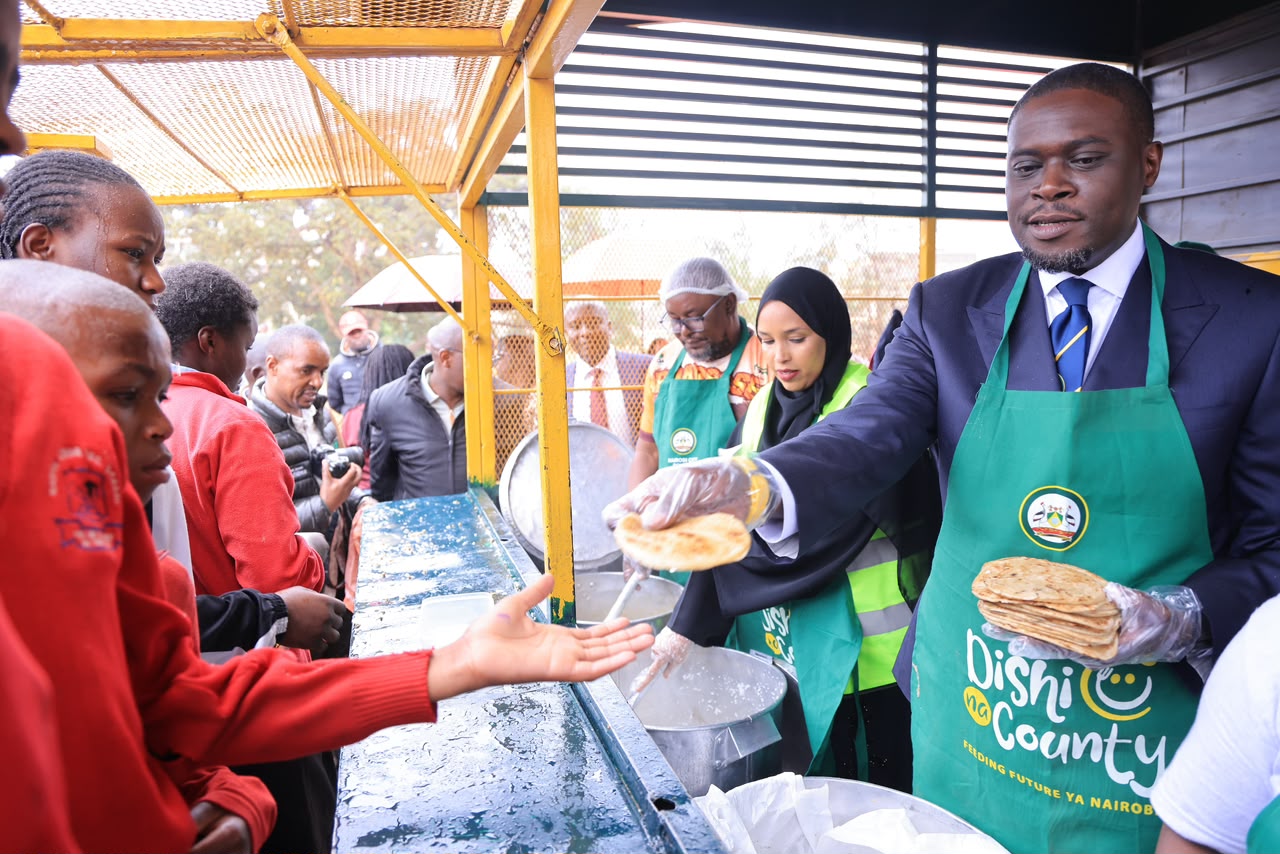
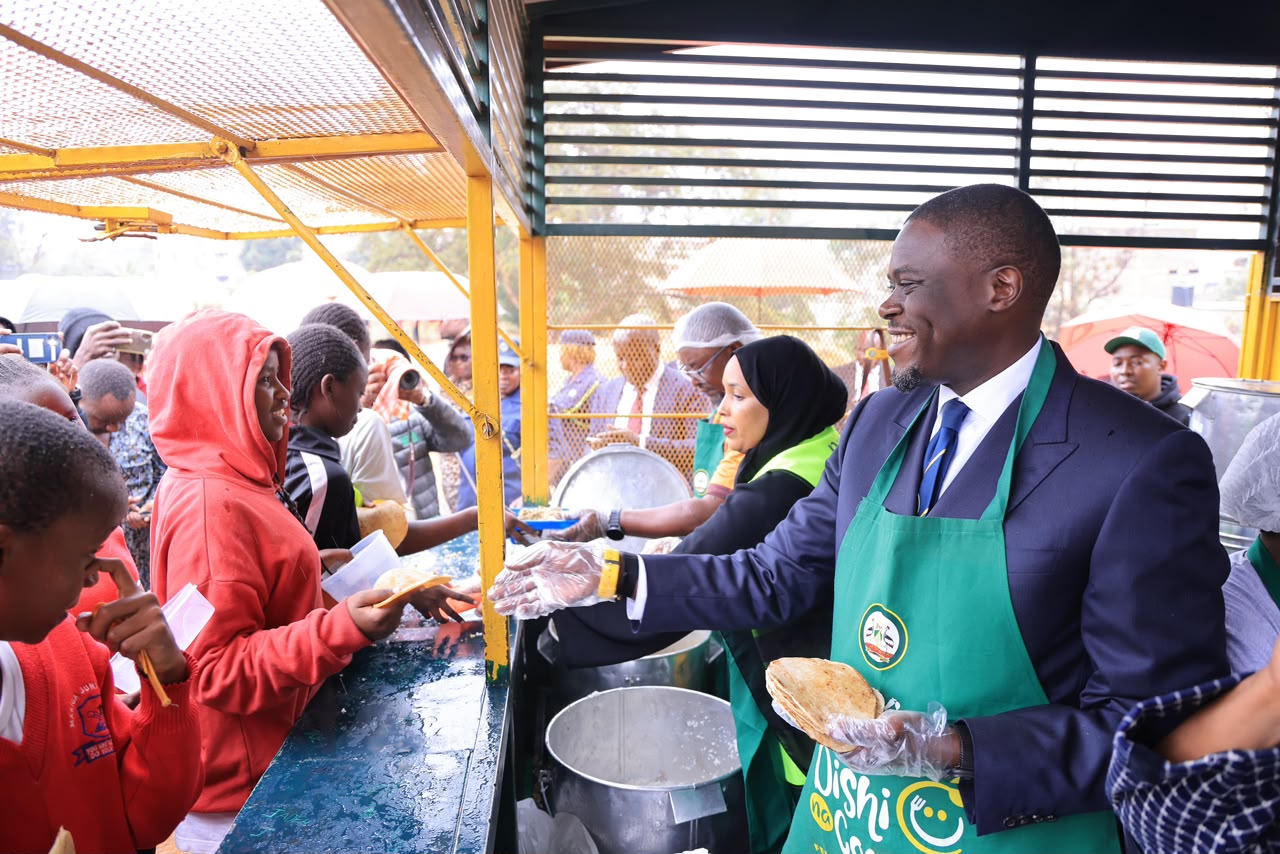
Dishi Na County kitchens use approximately 8 tonnes of fresh vegetables every day, comprising 4.8 tonnes of cabbages and kales, 1.2 tonnes of tomatoes, 1.1 tonnes of carrots and 0.9 tonnes of onions. In addition, the programme requires about 25,000 pieces of fruit every day, mainly bananas and oranges.
Sakaja said the scale of the programme demonstrates how public programmes can be deliberately used to create reliable institutional markets for farmers.
He said farmers and cooperatives that understand the quantities required by large programmes such as Dishi Na County can organise production, aggregation and supply around predictable demand.
The market created by the programme already stretches beyond Nairobi, with food supplies coming from 27 counties across Kenya.
Sakaja confirmed 24 counties supply vegetables and fruits, while nine supply cereals and pulses, with six counties supplying both categories.
This effectively connects Nairobi’s school feeding programme to agricultural value chains in different parts of the country, giving farmers an institutional market for their produce.
For farmers, the significance is therefore not only the volume of food consumed by Nairobi’s schoolchildren, but also the predictable demand created by the programme.
With about 37 tonnes of food bought and cooked every school day, Dishi Na County has created a substantial institutional market that links Nairobi’s school feeding programme with farmers and agricultural value chains across the country.