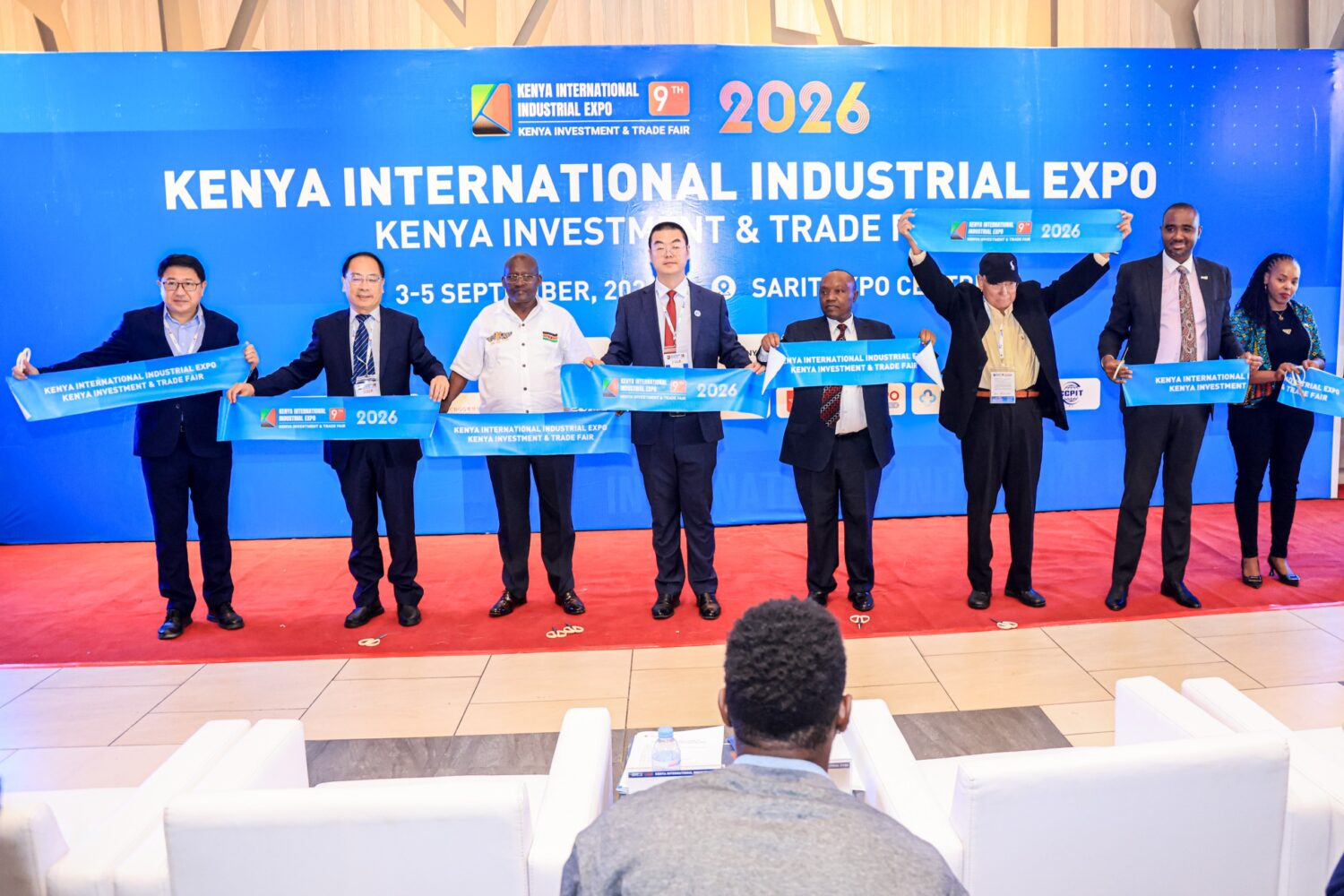
Kenya and China’s long-standing commercial relationship is set to enter a new phase this week as manufacturers, investors and technology companies converge in Nairobi for the 9th Kenya International Industrial Expo and Kenya Investment & Trade Fair 2026.
The three-day exhibition, which opens on September 3, and runs until September 5 at the Sarit Expo Centre, comes at a time when Kenya is seeking to move beyond traditional trade in finished goods and attract greater investment, technology transfer and local manufacturing capacity.
Organised by Afripeak Expo Kenya Ltd in partnership with the Kenya National Chamber of Commerce and Industry (KNCCI) and InvestKenya, the Expo bring together businesses from Kenya, China and other international markets across manufacturing, machinery, construction, energy, electronics, healthcare, hardware and industrial technology.
Afripeak Expo Kenya Managing Director Gao Wei said the exhibition had evolved from a conventional trade fair into a platform for industrial cooperation, investment and technology exchange.
“This year we are expecting more participation of industrial equipment and laser-processing companies which reflects the growing importance of technology and manufacturing cooperation.”
He also pointed out that for decades, China has grown into one of Kenya’s most important trading and investment partners, with Chinese companies involved in infrastructure, manufacturing, construction, energy, logistics, retail and technology.
The relationship has also been shaped by major infrastructure projects under the broader Kenya-China economic partnership, including the Standard Gauge Railway and other transport, energy and construction projects.
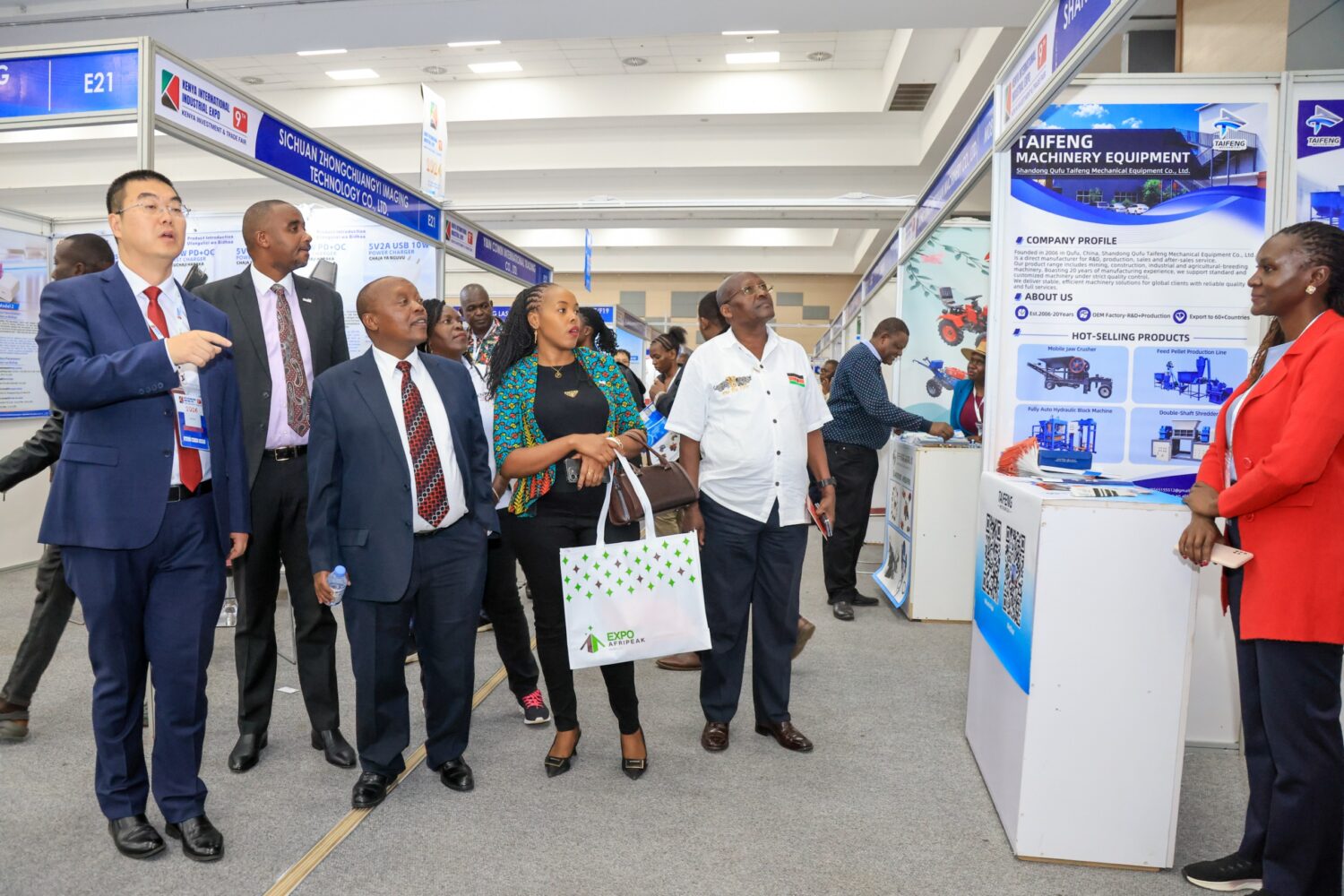
But as Kenya seeks to expand manufacturing and strengthen its position as a regional production and distribution hub, the emphasis is increasingly shifting from trade alone towards investment, industrial cooperation and technology transfer.
Gao added that , “The 2026 Expo provides a platform for that transition.One of the most significant features of this year’s exhibition will be the increased presence of industrial technologies, including laser engraving, laser cutting and other advanced processing equipment.”
Such technologies have practical applications across furniture manufacturing, metal fabrication, construction, packaging, advertising and other industries.
For Kenyan manufacturers and small and medium-sized enterprises, access to modern production equipment could help improve productivity, product quality and efficiency while enabling businesses to increase production and compete in domestic, regional and international markets.
Technology transfer can enable Kenyan companies to acquire technical knowledge, production expertise and new manufacturing processes while creating opportunities for local technicians and engineers to develop specialised skills.
Guangdong delegation opens new opportunities
A major attraction at this year’s Expo will be the first organised participation of a business delegation from Guangdong, one of China’s leading manufacturing and export centres.
The delegation is expected to create opportunities for Kenyan companies to connect directly with Chinese manufacturers and explore sourcing, distribution, manufacturing and investment partnerships.
Guangdong’s industrial base gives the participation added significance. The province is home to extensive manufacturing and technology ecosystems, making its companies potentially important partners for Kenyan firms seeking to modernise production.
For Kenyan SMEs, direct business-to-business engagement could also reduce dependence on intermediaries and provide access to manufacturers, industrial inputs and technologies at source.
According to Dr Erick Rutto, president of KNCCI, said the Expo should be viewed as more than a conventional product exhibition.
“The Kenya International Industrial Expo is more than a showcase of products and technology; it is a platform for business growth, innovation and industrial transformation,” Rutto said.
He said the event would provide manufacturers, investors, buyers and suppliers with an opportunity to establish partnerships, access markets and identify trade and investment opportunities.
Dr Rutto also urged MSMEs and local manufacturers to use the Expo to showcase their capabilities and build strategic partnerships, noting that KNCCI would continue supporting businesses through its market and investment networks.
That focus reflects Kenya’s broader industrialisation agenda, which seeks to increase local value addition, create employment and strengthen domestic enterprises.
The Expo’s investment component is therefore expected to encourage foreign companies to look beyond Kenya as an export market and consider establishing manufacturing, assembly, distribution and other long-term operations in the country.
“China provides access to machinery, technology, industrial inputs, finance, consumer goods and a huge market. Kenya, meanwhile, offers Chinese businesses access to East Africa’s wider consumer market and a strategic location for regional operations,” Dr Rutto concluded.