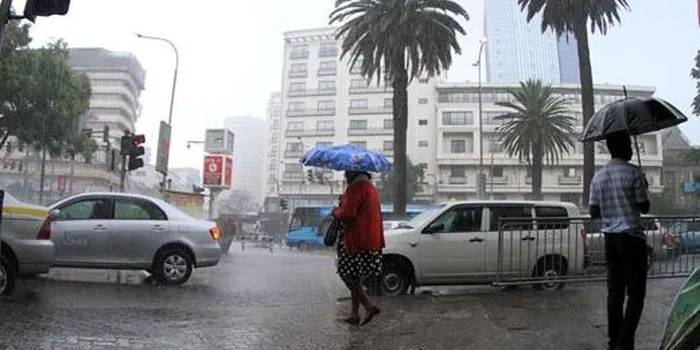
The Kenya Meteorological Department has issued a fresh weather advisory, warning of rainfall across parts of the country as the October–December short rains season progresses.
In its latest forecast released on Thursday, October 8, the department identified several counties likely to experience showers within the following 24 hours.
Residents have been encouraged to stay informed through official weather updates and remain alert to changing conditions.
The areas expected to receive rainfall include; Mandera, Wajir, Marsabit, Garissa, Tana River, Lamu, Kilifi, Mombasa, Kwale, Kakamega, Vihiga, Busia, Bungoma, Kisumu, Kisii, Nyamira, Migori, Siaya, Homa Bay, Kericho, Nandi, Bomet, Nakuru, Elgeyo-Marakwet, West Pokot, Baringo, Uasin Gishu, Trans Nzoia, Nyeri, Murang’a, Kirinyaga, Embu, Meru, Kiambu, Tharaka Nithi, Laikipia and Nyandarua counties.
The forecast spans the western region, parts of the Rift Valley, northern Kenya, the Central Highlands and the Coast.
The distribution of rainfall is expected to differ from one location to another, with some areas potentially receiving more precipitation than others.
Meanwhile, residents in Turkana, Samburu and Marsabit have been cautioned about strong southerly and southeasterly winds. According to the forecast, wind speeds in the affected areas could rise above 25 knots, or approximately 46 kilometres per hour.
The anticipated showers could provide relief to farmers preparing their land for planting and those already cultivating crops. Rainfall may also encourage pasture regeneration, offering livestock keepers an opportunity to improve grazing conditions.
Additional precipitation could replenish water sources and support households in areas where access to water remains a challenge.
Despite these potential benefits, the weather outlook also presents concerns for communities exposed to flooding. Heavy rainfall can cause rivers to overflow, damage roads, destroy crops and interfere with normal movement, particularly in areas with poor drainage.
People living near rivers, in low-lying settlements and in locations that frequently experience flooding have been urged to exercise caution as weather conditions evolve.
Motorists and pedestrians should also remain careful during periods of heavy rain, while residents are advised against attempting to cross flooded roads or rivers. Following official safety guidance could help minimise exposure to weather-related dangers.
The rainfall advisory comes amid wider regional attention on the October–December rainy season, which is an important period for agriculture and water resources across East Africa.
Climate forecasts have raised the possibility of changing rainfall patterns associated with El Niño, a climate phenomenon linked to variations in ocean temperatures across the tropical Pacific.
El Niño can influence weather conditions in different parts of the world, including rainfall patterns in East Africa. However, its effects are not uniform, and the amount of rain received can vary significantly between neighbouring regions.
Periods of above-normal rainfall, where they occur, can improve agricultural production and water supplies. At the same time, prolonged or intense downpours may increase the likelihood of flooding, damage infrastructure and disrupt economic activities.
For farmers, the timing and distribution of rainfall will be particularly important in determining how effectively the season supports crop production and livestock farming.
The latest outlook highlights the importance of preparing for both the opportunities and risks associated with the rainy season.
Households in vulnerable areas should pay attention to local weather warnings, while communities and relevant authorities need to remain prepared for possible disruptions caused by heavy rainfall and strong winds.
The Kenya Meteorological Department continues to provide forecasts to help the public make informed decisions based on expected weather conditions.
Residents are encouraged to check the department’s latest advisories regularly, as forecasts may change with new observations.
While the rains could support farming and improve water availability, effective preparation, timely warnings and adherence to safety guidance will remain important in limiting potential damage during the season.