
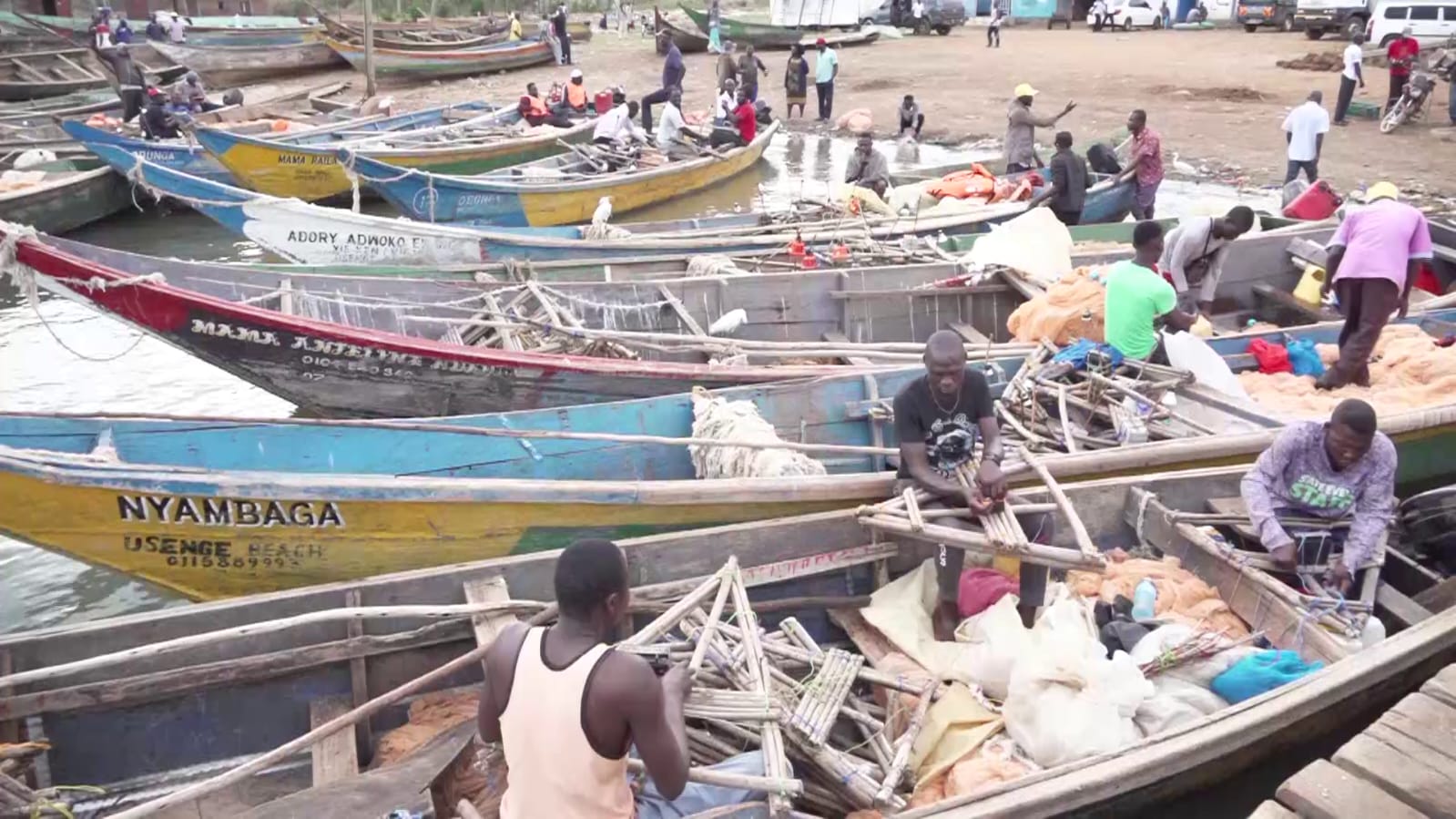
Along the shores of Lake Victoria, what should be a routine morning launch for artisanal fishermen has increasingly turned into a contest for survival.
Across landing sites in Siaya County including around Luanda Kotieno, South Uyoma, and Rarieda fishermen, enforcement officers, and an elected leader warn that illegal fishing gear is depleting stocks while fuelling violent confrontations across county lines.
At the heart of the crisis is a sharp divide: compliant fishermen say they are being squeezed out and attacked on the water, enforcement teams say high-cost illegal gear is being bankrolled by deep pockets, and a lawmaker argues that overlapping jurisdictions and grey areas in the law are making consistent enforcement difficult.
For Mzee Hamisi Abdalla of South Uyoma, fishing with legal six-inch nets approved by the government no longer guarantees safety or a steady catch.
Abdalla alleges that fishermen from Siaya face harassment, damaged gear, and physical confrontations on the lake involving fishers from Homa Bay.
”They hold us again and beat us on the lake,” Abdalla said. “We suffer out on the lake,” he added, speaking of the pain and hardship fishermen endure on the water.
Other Siaya fishermen echo those frustrations, pointing to the spread of small-mesh bungulu nets and kapengle.
“Bungulu fishing makes us lack fish,” Kennedy Ochieng said, arguing that bungulu fishing leaves local fishers without catch and calling for wider mesh sizes that let them harvest larger fish instead of small ones.
Haward Odhiambo, fisherman from Homa Bay County while noting support from Siaya residents, said clashes have escalated around patrols and net-cutting operations.
“This fight has come about because of those people with bungulu,” Odhiambo said, pointing to confrontations when patrols move to cut nets and accusing some groups of throwing stones, carrying pangas (machetes) and bottles, and threatening fishermen. At the same time, he credited Siaya residents with standing with them and guarding their gear during disputes.
Fishermen say much of this gear originates from Homa Bay, Kisumu, and across the border in Tanzania, and they are urging county administrations including Homa Bay and Siaya to step in.
Enforcement officers say the volume and cost of illegal nets point to organized investment rather than casual rule breaking.
Mark Odhiambo, a sub-county fisheries officer in Rarieda, said his team recently carried out an operation destroying 15 illegal bungulu nets confiscated from Homa Bay and Kisumu, placing their estimated value at about Sh4.5 million.
”This nets so far they have been destroying our lake because they are catching the juvenile fish together with the breed stock,” Odhiambo said.
Where enforcement has been sustained, he noted signs of recovery at landing sites.”Currently there is a bit of catch, there’s an increase in the kilograms that we are catching,” Odhiambo said, while urging Homa Bay and Kisumu to join Siaya in curbing the nets.
Crucially, Odhiambo said interviews with people caught using bungulu nets point toward wealthier backers who can afford gear priced at roughly Sh300,000 a piece.
“They are telling us some powerful individuals, both politicians and those people who have high net worth, are the people who are supporting them,” Odhiambo said.
He also noted that some retirees who receive lump sums invest in the lake without knowing how to protect it, alongside cross-border supply from neighboring countries sharing Lake Victoria.
While gear seizures make headlines, Bondo MP Gideon Ochanda argued in an interview that the enforcement standoff is tangled in legal contradictions and administrative friction.
”This idea of using gears that catch fish minus or without regard to fish sizes that’s the biggest problem that we have in terms of the illegal fishing gear,” Ochanda said.
Rules targeting small mesh sizes are meant to protect young fish, with a four-inch mesh generally recommended for larger species like Nile perch and tilapia targeting fish roughly above 400 grams, or mesh size three upwards for larger catches.
Yet Ochanda pointed out that some mature fish, such as omena or wiu (described as a smaller tilapia type), naturally remain small, creating friction when enforcement struggles to separate juveniles from naturally small species.
Beyond small-mesh nets, Ochanda flagged gear such as otenda or orimba that sweeps up fish regardless of size, poison used to daze fish, and even mosquito nets. Monofilament nets which blend into water and are banned on the lake also pose a dilemma because some buyers purchase them for legitimate farm use, such as keeping birds off crops.
On the water, Beach Management Units (BMUs) manage beach-level operations, yet there are no clear physical markers showing where one BMU’s waters end and another’s begins. When one beach enforces gear rules strictly and a nearby beach does not, resentment and clashes follow.
Although fisheries functions are constitutionally devolved, Ochanda noted that proposed legislation linked to Kenya Fisheries Services risks creating a parallel track from Nairobi down to BMUs, potentially duplicating roles rather than fixing day-to-day enforcement.
“We have enough law in my view. We have enough regulation. But if they are enforced and forced to some level that is standard, then these problems can be sorted out,” Ochanda said.
Scarcity itself is part of the cycle. With fish stocks strained and prices rising, higher demand and potential profits can tempt investors and fishers to take shortcuts.
For Ochanda, passing more laws alone will not settle the lake.The more urgent test is whether counties, BMUs, and fisheries authorities can enforce shared, clear standards evenly across borders protecting Lake Victoria’s fish stocks so fishermen have a future on the water tomorrow, not just a catch today.