
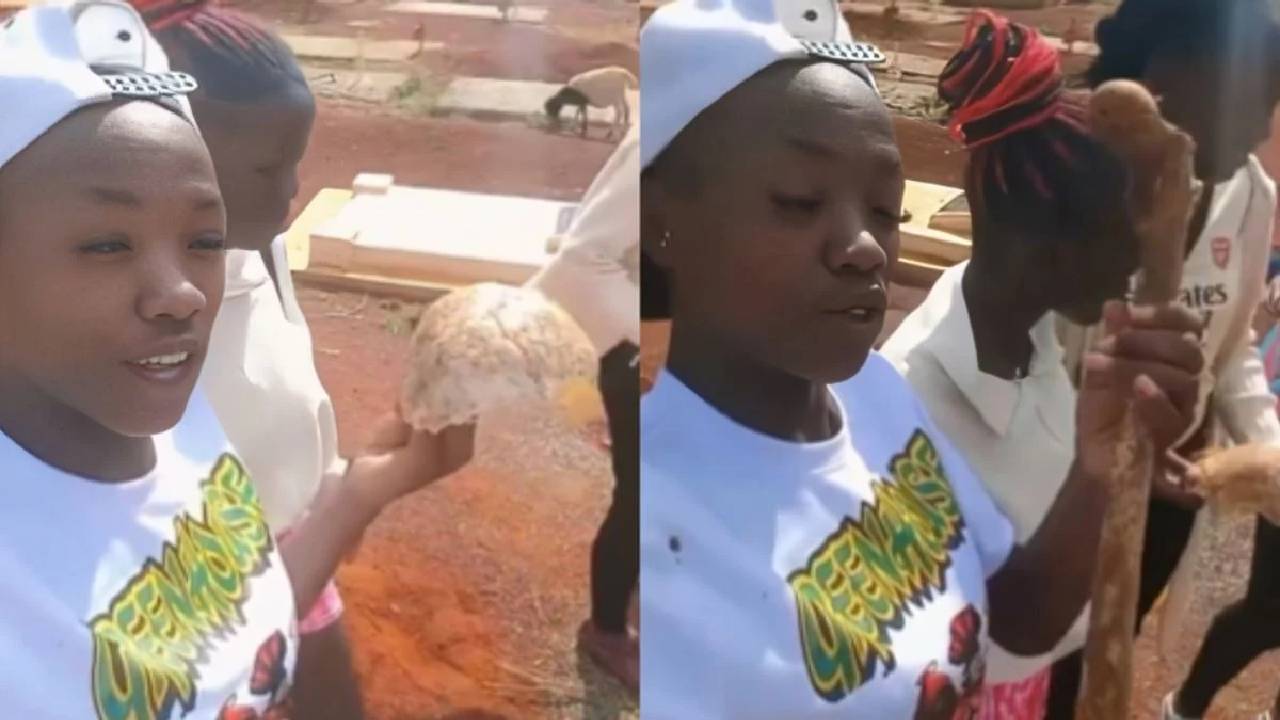
A cemetery, for most people, is a place of grief, remembrance and final respect for loved ones. But for a group of young ladies whose visit to Nairobi’s Lang’ata Cemetery has since gone viral, the burial ground became an unexpected backdrop for a video that has sparked a nationwide debate about decency, social media culture and the dignity of the dead.
The video, which began circulating on November 7, 2026, shows the ladies walking between graves, picking up what appear to be human skeletal remains and displaying them to the camera.
One of the lady can be heard identifying different body parts, including a skull, hip bones, ribs and leg bones, as she directs her companion to look at the remains.
“Tuko huku Lang’ata, ndo hii skull ya mtu. Ndio hii hip, ndio hii ingine ya mguu, tuko makaburini, ndio hii mbavu,” she says in the video.
At one point, she tells viewers they have yet to show them everything they have encountered, before signing off with the words, “That’s the Lang’ata tour, bye.”
The lady continued filming as she pointed out more objects that appeared to resemble human remains. She also made a remark about the depth at which someone is buried, before directing the camera towards what she described as a skull.
“Just imagine, wewe ukishaingia foot sita. Ebu hiyo skull..ndio hii..mnaona?” the lady recording said.
When the pursuit of online attention meets the dignity of the dead
The video has divided social media users, with some expressing disbelief at the ladies’ apparent comfort around the remains, while others have questioned how anyone could turn such a sensitive encounter into entertainment.
The incident has also attracted the attention of comedian and media personality Dr Ofweneke, who questioned the lengths content creators were willing to go in pursuit of online attention.
“Are we going to sit down and ignore the facts and make it look like it is very much okay?” he posed.

Ofweneke argued that freedom of expression should not give content creators permission to disregard the dignity of others, particularly the deceased and their grieving families.
“People have buried their children, their mothers, fathers, sisters, husbands and wives. The least we can do is have some humanity and respect some of those places,” he said.
However, focusing exclusively on the women’s conduct risks overlooking an equally disturbing question: why were skeletal remains accessible in the first place?
The uncomfortable reality behind Lang’ata Cemetery
Lang’ata Cemetery is a public burial facility spanning approximately 100 acres. Its management and capacity have been subjects of concern for years.
In August 2023, Lang’ata MP Phelix Odiwuor, popularly known as Jalang’o, raised concerns in Parliament over the continued use of the cemetery despite it having been declared full approximately two decades earlier.
According to the motion reported by The Star, continued burials had resulted in overcrowding, double allocation of burial sites and shallow graves.
The situation was also linked to instances of graves being disturbed by wild animals from the neighbouring Nairobi National Park, exposing remains and causing distress to bereaved families.
The report further indicated that graves in some sections of the cemetery were flattened after several years to create room for additional burials.
These concerns raise serious questions about the management of the facility and the conditions under which the remains of deceased Kenyans are preserved.
The viral video has therefore brought renewed attention to a problem that lawmakers had already highlighted years before the ladies recorded their visit.
It is a troubling contradiction that families are expected to entrust their loved ones to a public burial facility, yet concerns about overcrowding and exposed remains continue to emerge.
What does the Kenyan law say about handling human remains?
Beyond the public outrage, the incident could also raise legal questions depending on what investigations establish about the ladies’ actions.
Section 136 of Kenya’s Penal Code addresses trespassing on burial places and offering indignity to a human corpse. However, the offence requires proof of the circumstances and intention or knowledge specified in the provision.
Section 137 also criminalises unlawfully disinterring, dissecting or harming a dead body without lawful authority.
Under Section 36 of the Penal Code, a misdemeanour for which no specific punishment is prescribed attracts a maximum prison term of two years, a fine or both.
Additionally, Section 146 of the Public Health Act requires a permit for the exhumation of bodies or human remains from authorised cemeteries and other burial grounds.
Importantly, the video alone does not establish that the ladies dug up any graves or unlawfully exhumed the remains. Any potential criminal liability would depend on the evidence and findings of an investigation.
A question of respect, accountability and public responsibility
Ultimately, the Lang’ata Cemetery video presents two issues that should not be treated as mutually exclusive.
The ladies must be held accountable for their actions if investigations establish that they violated the law. At the same time, the authorities responsible for managing the cemetery must answer questions about how skeletal remains came to be exposed and accessible to visitors.
The deceased cannot speak for themselves, but their dignity should not depend on whether someone is watching, recording or mourning them.
Perhaps the most unsettling part of this incident is not simply that a group of young women filmed themselves handling suspected human remains. It is that a place meant to offer families a final resting place has become a setting where such a scene could unfold.
The search for online attention should never come at the expense of human dignity. Equally, the responsibility to protect the dead should not end once a burial takes place.