A Kenyan Scholar has proposed a solution to the current higher education crisis that has hit the country to enable students access quality and affordable learning across the nation.
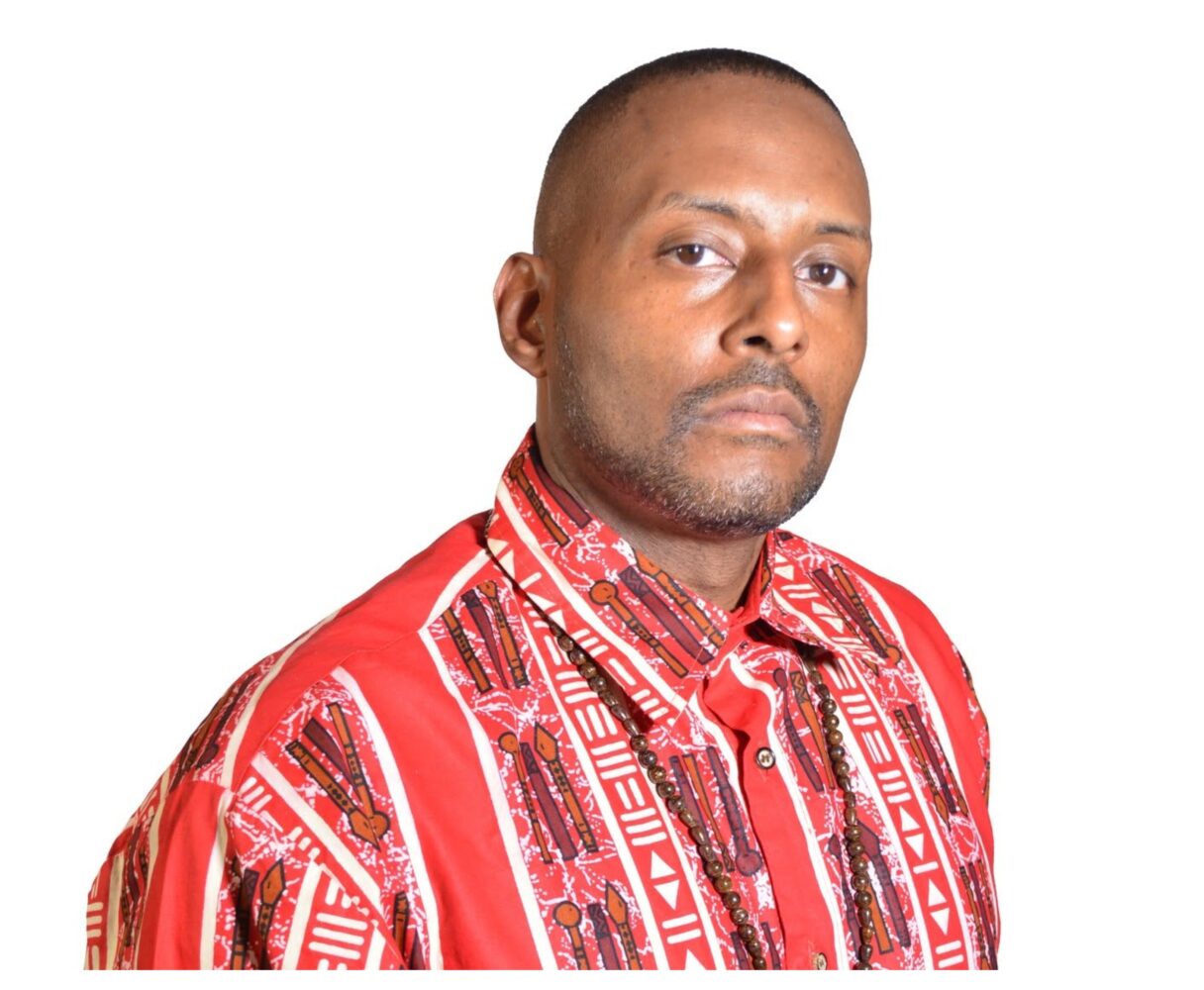
Dr James Mulli the Academic Dean of European Business Institute of Luxembourg (EBU) has said Kenya needs to adopt technology-enabled learning which shall eliminate the cost structures associated with Physical infrastructure including large campuses, residential facilities , high fixed overheads that make traditional universities expensive.
In a press release Mulli said technology based learning was not a diminished form of education; it is education delivered through the channels that twenty-first-century learners increasingly inhabit.
He said institutions, as the evidence increasingly shows, must evolve into learning hubs of interaction and experiential engagement, enabled by technology rather than constrained by the limitations of a single physical site.
“EBU, the institution at which I serve as Academic Dean, was built precisely around this problem. The mission is straightforward: making higher education affordable, accessible, and equitable, particularly for populations in rural and underserved communities who have been systematically excluded by the cost and geography of traditional university models,” he said.
The EBU Dean said in August 2026, three Principal Secretaries from the Ministry of Education appeared before the National Assembly Education Committee to defend the proposed Tertiary Education Placement and Funding Bill.
He said their core argument was that Kenya needed a new financing model to support its target of 100 per cent transition from secondary school to tertiary institutions.
Mulli said the projected cost was staggering putting annual funding requirements for universities and TVET institutions expected to reach KSh 230 billion.
“The immediate gap is already KSh 100 billion. About eleven public universities are technically insolvent. Moi University and the Technical University of Kenya are in critical financial condition; the latter has been unable to pay gross salaries since 2013. HELB loan recoveries, at around KSh 650 million per month, are not keeping pace with the system’s demand,” he said.
He said the current costs are real and represent real institutions where real lecturers go unpaid, where laboratories lack equipment, where students queue for resources that were never adequately provisioned in the first place adding that they represent a system that expanded access without building the financial architecture to sustain it.
Mulli said the Tertiary Education Placement and Funding Bill proposes to capitalise a KSh 100 billion fund through a combination of government grants, capital market borrowing, parental savings, student loan repayments, and concessional or soft loans.
He said the government argues this diversifies the funding base and creates sustainability.
However Mulli said Critics, including commentators writing for Education News Kenya, argue that it does something rather different: it shifts financial risk from the State onto families, graduates, and future taxpayers.
On Capital market borrowing he said it means Kenya will issue bonds to finance education, repaying coupons every six months at an estimated KSh 5 billion per cycle.
“HELB CEO Geoffrey Monari told lawmakers the bond programme would not draw on the Exchequer. That framing, however, obscures what repayment actually means: it means Kenya’s future taxpayers, the very graduates this system is meant to produce, inherit the debt alongside their degrees. Countries that borrow indefinitely to finance recurring educational expenditure do not build systems, they defer their bills,” he said.
Mulli said human connection and mentorship remain at the heart of the learning experience, but they do not have to be confined to a lecture hall in Nairobi to be real or effective.
“Demand-driven curricula, programmes built around what the economy actually needs rather than what universities have historically offered, address the quality-access gap at its source. A graduate with a credential the labour market can use is not a burden to a loan recovery system; she is a productive citizen who repays both her loans and the broader social investment made in her education,” he said.
The EBU Dean said even though the Ministry of Education was right about Kenya requiring a new model for higher education finance but the new model it has proposed was largely the old model with more complicated plumbing.
He said the proposed government model moves money around without answering the fundamental question: who is the State prepared to protect?
“If the answer is every Kenyan young person who qualifies for higher education, then the financing model must reflect that commitment, not distribute the risk of that commitment onto parents, graduates, and taxpayers while the State congratulates itself on expanding access,” he said.
Mulli said EBU’s argument, is that sustainable, affordable, quality higher education can be delivered at scale through a reimagined institutional model not by telling parents to save more, or by issuing bonds that the next generation will repay, and by sending more students into underfunded universities and calling it reform.
“Kenya’s children are too important for another decade of financial gymnastics. They deserve a system that is built for them, not built around the limits of what their government is willing to fund.The problem is visible. The evidence is available. The model exists,What remains is the will to build it,” he said.
The EBU Dean said expanding enrollment without proportionately funding the institutions that receive those students does not produce a better education system but rather produces a larger one.
He said a larger but worse-resourced system puts more lecturers in front of more students with fewer tools, thinner research budgets, older laboratories, and programmes that may have little connection to where the labour market is actually moving. The measure of a successful education system is not how many young people enter its institutions; it is what happens to them after they leave.
“This crisis is not unique to Kenya, though Kenya’s scale and ambition make it particularly consequential. Africa faces a demographic reality that no education system on the continent has yet fully reckoned with. The United Nations has estimated that by 2050, the continent’s population will have doubled to approximately 2.4 billion people, with annual increases exceeding 42 million per year. The median age will be 25.4 years, making Africa the youngest continent on earth,” he said.
Mulli said only 6 per cent of children in Sub-Saharan Africa currently enroll in any form of tertiary education, compared to approximately 80 per cent in OECD countries. UNICEF identifies direct costs, fees, uniforms, books, transport, as the single most significant barrier to education access in developing countries. Of the nearly 128 million school-aged children on the continent, 17 million will never attend school at all.
The convergence of rapid population growth, massive youth demographics, and chronically underfunded education systems creates an urgent imperative. If Africa’s young people cannot access quality education, the demographic dividend that economists have long promised for the continent will become a demographic burden instead.
He said the government’s dilemma is real, but it is not without precedent or solution. Across the world, countries have made deliberate policy choices to make higher education either free or highly subsidised, and the evidence on their approaches is instructive.
“Norway funds university attendance through tax revenue, making it free for citizens and international students alike. Germany offers free education at most institutions to all students, including international students. Finland provides free education to EU students and charges only modest fees to others. Brazil offers free university education to all students, including international ones. Panama makes higher education free regardless of nationality,” he said.
Mulli said in Africa, Morocco and Egypt offer free tuition to all citizens, framing the policy explicitly around poverty reduction.
He said the common thread in all these cases is a political commitment to treat higher education as a public investment rather than a private transaction.
“ The State absorbs the cost because the State captures the return, through the productive capacity of educated citizens, through taxes on their employment, and through the economic dynamism that skills and knowledge generate,” he said.
He said Kenya’s proposed model moves in the opposite direction: reducing the State’s share of the cost while increasing the share borne by individuals.
“The question for Kenya is not whether it can afford to invest in higher education. It is whether it can afford not to. And critically, it is whether the structure of that investment can be redesigned to genuinely serve access and quality rather than simply moving students from one part of the system to another,” he said.