

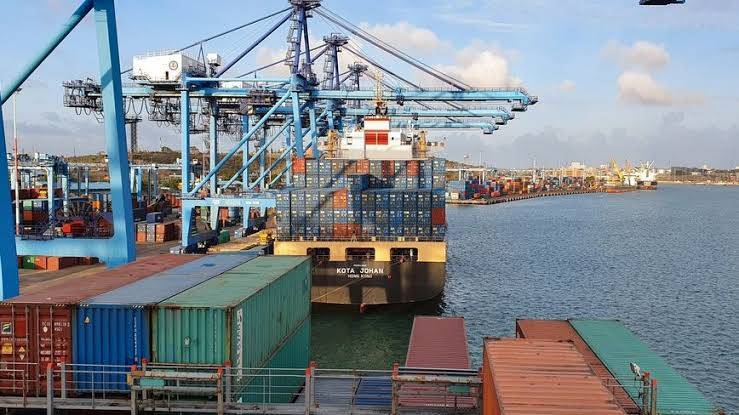
Kenya bought far more from the world in September than it sold, and the gap grew sharply. The Kenya National Bureau of Statistics (KNBS) says the merchandise trade deficit widened from KSh166.7 billion in August to KSh214.9 billion in September. That is an increase of KSh48.2 billion in a single month, or about 28.9%.
Imports did most of the damage. They climbed from KSh284.8 billion to KSh344.2 billion, while exports rose from KSh118 billion to KSh129.2 billion. Exports did improve, but not by enough to keep pace. Fuel, industrial inputs and machinery were the main imports outpacing export earnings, adding pressure on the shilling.
The numbers were also historic in other ways. Total monthly trade hit a record KSh473.4 billion, with imports up 38.5% and exports up 33.7% from a year earlier. The September shortfall was the second-largest monthly gap in the historical series, behind May 2026’s KSh219.4 billion.
There was good news for exporters. The United States became Kenya’s top export market in September, with shipments upping sharply year on year. At the same time, China became the first tracked supplier to cross KSh100 billion in monthly shipments to Kenya. In short, Kenya is selling more, but it is also buying a great deal more, especially manufactured goods.
A pattern, not a one-off
September is part of a longer trend.
Between January and September, imports rose 24.3% to KSh2.56 trillion, outpacing a 19.8% rise in exports to KSh1.01 trillion, so the cumulative deficit grew 27.4% to KSh1.55 trillion.
Earlier in the year, the deficit reached KSh998.2 billion in the first six months, the fastest first-half widening in four years, even as exports hit a record KSh632.3 billion.
The same report noted that imports of machinery and capital equipment rose 19.5%, transport equipment 19.6%, and food and beverages 20.6%.
Some of that spending is investment, which can build future capacity. But a large share is fuel and food, which are bought and consumed rather than invested.
A trade deficit is not just an accounting figure, it is a widening gap that drains foreign currency reserves, which are used to cushion the shilling in the forex market. When the shilling weakens, imported goods become more expensive. That affects fuel at the pump, the cost of cooking oil and the price of electronics and machinery that businesses rely on.
Economists have pointed out for years that Kenya relies on traditional farm exports such as tea, horticulture and coffee, which are largely sold raw and fetch lower earnings.
Adding value locally, by processing and manufacturing before export, is the long-term answer, but it takes investment and time. The government has also been promoting crop diversification. President William Ruto recently pushed coffee and dairy as the next income frontier for Western Kenya.
We watch whether exports to the US keep growing and whether fuel costs ease.
The next KNBS Leading Economic Indicators report, covering October, is scheduled for December 31.
It will show whether September was a spike or the start of a new, higher level for Kenya’s import bill.