
- Despite farming on smaller plots with fewer resources, women smallholders lead in productivity returns as FtMA marks nine years of impact, reaching over 400,000 farmers across 13 counties in Kenya.
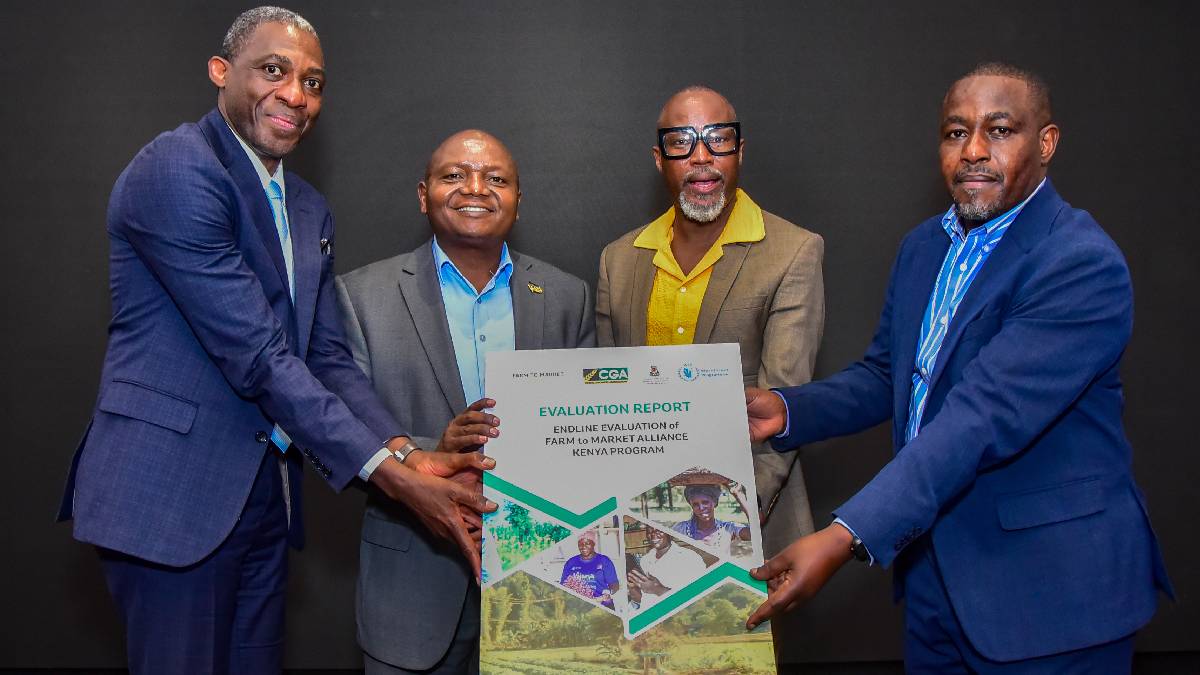
The Farm to Market Alliance (FtMA) on Thursday, November 19 released the findings of a nine-year Endline Evaluation, showing that women smallholders in its network earn more per hectare than men, despite working smaller plots with fewer machines and less access to capital.
Women farmers also hold the highest level of trust in rural agricultural hubs, at 52%, yet gaps in equipment, credit and market access still limit how much of that progress translates into income.
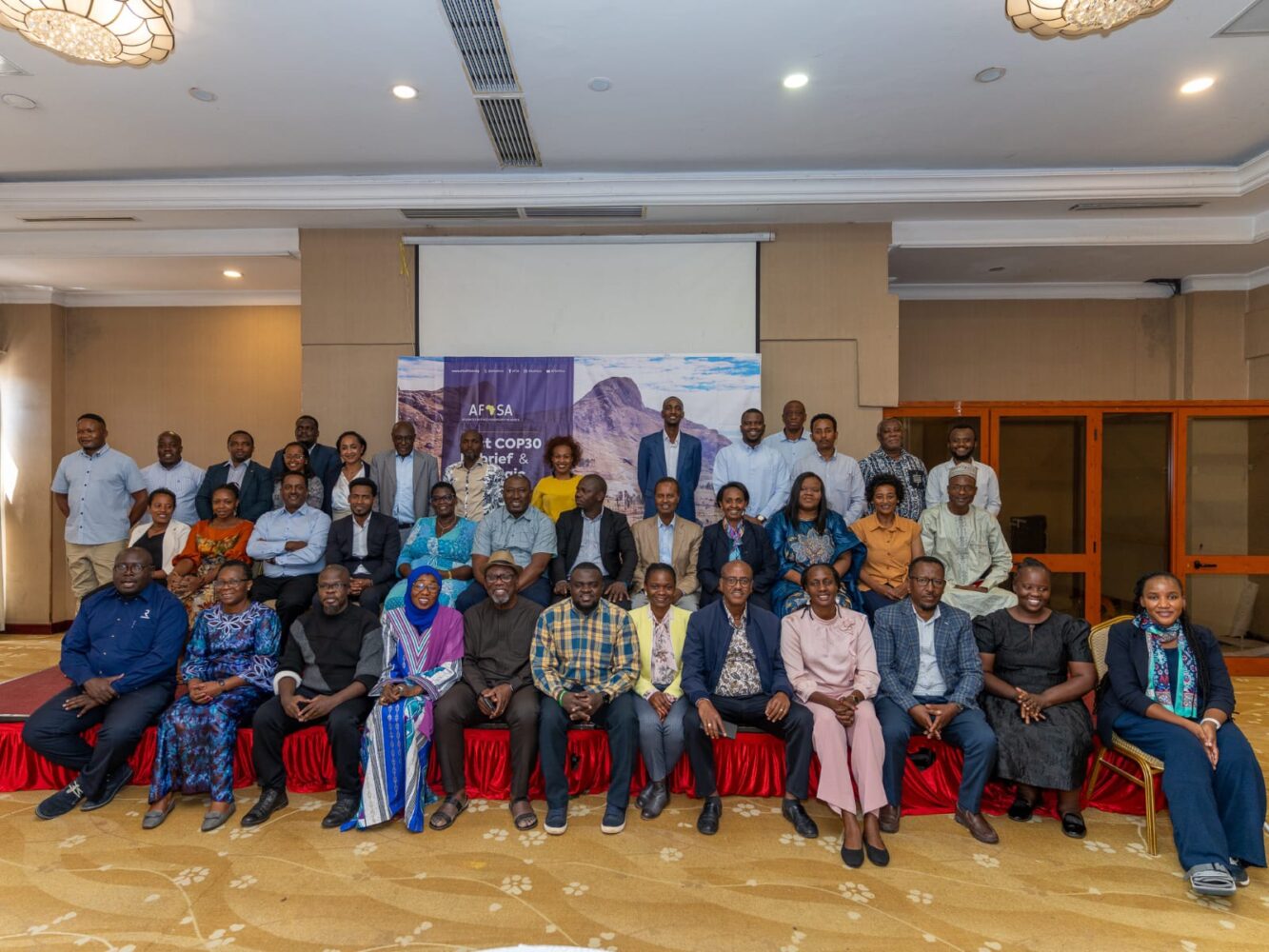
The findings were launched at the FtMA National Stakeholder Forum 2026 in Nairobi, held under the theme “Strengthening Local Food Systems: The FtMA 9-Year Journey.”
The forum brought together national and county leaders, financial institutions, private off-takers, and agripreneurs to discuss the next phase of Kenya’s food systems transformation.
FtMA has been implemented on the ground since 2017 by the Cereal Growers Association (CGA), with support from the World Food Programme (WFP), NORAD, the Government of New Zealand,, the Mastercard Foundation, Bayer, Yara, Syngenta, OCP and Greenlife.
Overall, the evaluation shows a network that has grown from two counties to thirteen (13), with 2,126 Farmer Service Centres (FSCs) reaching about 401,955 farmers and marketing 664,009 metric tonnes of produce, alongside gains such as 88.0% certified seed adoption and a 60% maize yield increase among farmers practising Conservation Agriculture.
It also finds that women and young entrepreneurs are among the strongest performers, even as limited equipment, credit and formal market contracts continue to hold back centres and farmers, with roughly 70% of FSCs projected to remain viable once programme support ends.
Women Farmers and Youth Earn More From Less Female farmers in the network earn an average of KES 82,494 per hectare in main-season revenue, compared with KES 69,833 for men.
They achieve this on average landholdings of 1.9 acres against 2.8 acres for men, and while 45% of surveyed women have no formal education, compared with 26% of men.
Among Farmer Service Centre (FSC) operators, 37.1% of women say business is their main occupation, against 25.2% of men.
“The data from our nine-year journey proves beyond doubt that when women and young farmers are connected to reliable inputs, agronomic training, and structured markets, they deliver the highest returns per acre in Kenyan agriculture,” said George Njoroge, FtMA Kenya Country Coordinator. “We must move beyond helping farmers produce more towards enabling them to produce profitably, market competitively, and build resilient livelihoods.”
A Network Built Close to the Farmer
FtMA began in Meru and Migori counties and now operates in 13 counties chosen for their agricultural potential and dense smallholder populations.
Its 2,126 community-run FSCs have reached about 401,955 farmers and marketed 664,009 metric tonnes of produce.
The evaluation links this reach to clear gains on the ground:
- 95.2% of surveyed farmers access an FSC within an average of 2.0 kilometres.
- Certified seed adoption stands at 88.0%.
- 98.4% of surveyed households have an “Acceptable” Food Consumption Score.
- Farmers practising Conservation Agriculture raised main-season maize yields by 60%, from 2.83 to 4.53 MT/Ha.
With Kenya’s population at over 55 million, over 75% of it under 35, and agriculture supporting more than 70% of rural livelihoods, these local hubs are becoming central to national food security.
WFP Kenya Deputy Country Director Bai Mankay Sankoh said the real measure of the programme is whether its gains outlast donor support, noting that sustainability has to be built in from the start rather than considered as a programme winds down.
Speaking at the forum, he said: “Because the ultimate test of our work is not whether a programme can function while we are funding it. It is whether the people, businesses and institutions we have supported can continue to succeed when that funding ends.”
He described the projected 70% viability of Farmer Service Centres as an estimate of potential rather than proof that they have survived without support, pointing to continuing struggles with working capital, unreliable buyers, limited financing, weak business management and access to mechanisation.
On the market gap, he said farmers need buyers as well as better yields, adding: “We are not trying to create a permanent network of project-supported centres. We are trying to help build viable rural enterprises that can continue serving farmers because doing so makes commercial sense.”
Government Outlines Priorities for the Next Phase Represented at the launch, Mutahi Kagwe, Cabinet Secretary for the Ministry of Agriculture and Livestock Development, traced the programme’s origins to a gap in how smallholder farmers were being served.
The remarks noted that FtMA was conceived to address limitations in traditional agricultural procurement systems and the need for sustainable market access for smallholders, building on the experience of the World Food Programme’s Purchase for Progress initiative.
On why the model can outlast donor support, the Cabinet Secretary’s remarks noted: “One of the strongest features of the farmers service centres model is its commercial orientation. By earning commissions through input distribution, aggregation and market linkages, the centres have an economic incentive to continue operating beyond direct project support.”
The CS cautioned that this depends on continuous capacity development, access to finance, reliable business partnerships and a favourable operating environment, and encouraged the programme to strengthen the centre network through improved business standards, performance monitoring, peer learning and private-sector investment.
Reflecting on the nine years of implementation, the remarks set out the Government’s priorities for what comes next, saying: “As we reflect on nine years of Farm to Market Alliance implementation, I wish to emphasise several priorities for the next phase of agricultural transformation. First, we must strengthen and consolidate the Farmer Service Centre network as an effective last-mile agricultural service delivery model. Second, we must deepen market-led production by improving market intelligence, aggregation, structured market linkages and investment in storage and processing.”
The remaining priorities the CS listed were expanding climate-smart agriculture and productivity-enhancing technologies, increasing investment in youth and women-led agribusinesses through better access to finance, technology, mentorship and markets, and accelerating digitalisation through practical solutions that improve access to information and reduce transaction costs.
The CS also called for stronger public-private partnerships to mobilise investment and expand opportunities for smallholders, and for greater evidence, learning and accountability, measuring not only programme outputs but also productivity, farmer incomes, employment, enterprise profitability and resilience.
The closing remarks also reaffirmed the Government’s position, saying: “These achievements provide a strong foundation for further growth and impact. As Government, we remain committed to strengthening collaboration with all stakeholders to expand agricultural productivity, improve market access, promote youth and women participation, enhance climate resilience and create sustainable opportunities for our farmers.”
Where the Gaps Remain
Women-led FSCs own fewer assets than male-led centres, at 2.0 pieces of equipment compared with 3.2, and earn an average annual profit of KES 143,989 against KES 515,253.
Only 8.5% of FSCs across the network own shelling or threshing equipment, which means women can lose up to 50% of their bean harvest during manual drying, shelling and bagging.
Finance and market access are the other pressure points. While 97% of FSCs and 89.4% of farmers hold bank accounts, 70% of FSCs have no formal institutional credit because agricultural loans often require land as collateral.
Centres rely instead on informal borrowing at 20%, with direct credit from buyers or input suppliers reaching just 1%. Although 88.9% of farmers sell their produce, only 3.8% hold formal off-taker contracts, and just 18.5% are paid promptly.
Young Entrepreneurs Find Their Footing Youth under 35 make up 10% of the surveyed farmer sample and 5% of female farmers, yet the evaluation finds that land access is no longer their main barrier to entering agriculture.
Across 1,015 youth-run FSCs, each employing an average of 6.1 young people, the work centres on mechanisation, spraying, aggregation and digital services. About 91.0% of youth farmers sell into structured markets, and their main-season maize yields reach 3.6 MT/Ha, against 2.9 MT/Ha for older farmers.
Youth FSCs lead on digital adoption at 96%, compared with 92% overall. However, 73.7% of centres cite the cost of mobile data, and 43.4% cite poor network coverage as barriers to using specialised AgriTech apps.
Training and Mentorship at Scale As FtMA’s lead last-mile implementing partner, CGA directly trained 98.0% of all FSCs across the 13 counties. Its peer mentorship model has 61% of centres actively mentoring an average of five neighbouring hubs.
“Working alongside FtMA over the past nine years, we have seen women-led and youth-led Farmer Service Centres become the most resilient anchors in rural communities,” said Anthony Kioko, CEO of the Cereal Growers Association (CGA). “Closing the equipment, credit, and digital gaps for these entrepreneurs is the single fastest way to cut post-harvest losses and boost rural household incomes.”
Farmers Speak from Experience
Evelyne Munyasa, an FSC operator in Bungoma County, described the change climate-smart practices brought to her farm.
“Before I embraced climate-smart techniques, my maize farm was at the mercy of unpredictable rains, and we barely harvested enough to eat,” she said. “Now, by using clean seeds, proper spacing, and mulching, the soil holds moisture even during dry spells, giving us a bumper harvest and surplus income to pay school fees without worry.”
Migori farmer Esther Luvai said, “Moving from just selling raw nuts to producing my own premium peanut butter turned my small farm into a thriving business and secured my financial freedom.”
Testimonials from FSC leaders Hannah Njeri Kamau and Sylvia Akoli and farmer Charles Gakuo were also featured at the forum. Roughly 70% of FSCs are projected to remain viable after programme support ends.
The Call to Action
To sustain this progress, FtMA and its partners are calling on banks, donors, telecoms and county governments to:
- Establish ring-fenced asset financing for women-led FSCs.
- Unlock collateral-free business-to-business supply chain credit backed by buyer forward contracts.
- Negotiate zero-rated data, paired with voice-enabled local language interfaces for digital extension.
- Formally integrate FSCs into county extension systems.