Malindi-based environmental activists are now demanding urgent action from both government and private sector players, warning that pollution originating from Nairobi River is wreaking havoc hundreds of kilometres downstream along the coast.
The activists are calling on authorities, including the Nairobi Rivers Commission, to take full responsibility for what they describe as a growing environmental disaster affecting communities along the Sabaki River and the Indian Ocean coastline.
At the heart of the crisis is a toxic mix of industrial discharge, untreated sewage, and agricultural waste flowing from Kenya’s capital into the Nairobi River.
This pollution travels over 400 kilometres downstream, eventually emptying into the ocean through the Sabaki Estuary. Experts and conservationists warn that the river now carries dangerously high levels of heavy metals, plastics, and raw sewage posing serious health risks and devastating marine ecosystems.
Environmentalists in Malindi say the impact is already visible. Increased human activity, siltation, and pollution have contributed to the receding shoreline, destruction of mangrove forests, and loss of critical marine habitats. The once-thriving ecosystem is now under threat, directly affecting fishing communities and the region’s tourism-dependent economy.
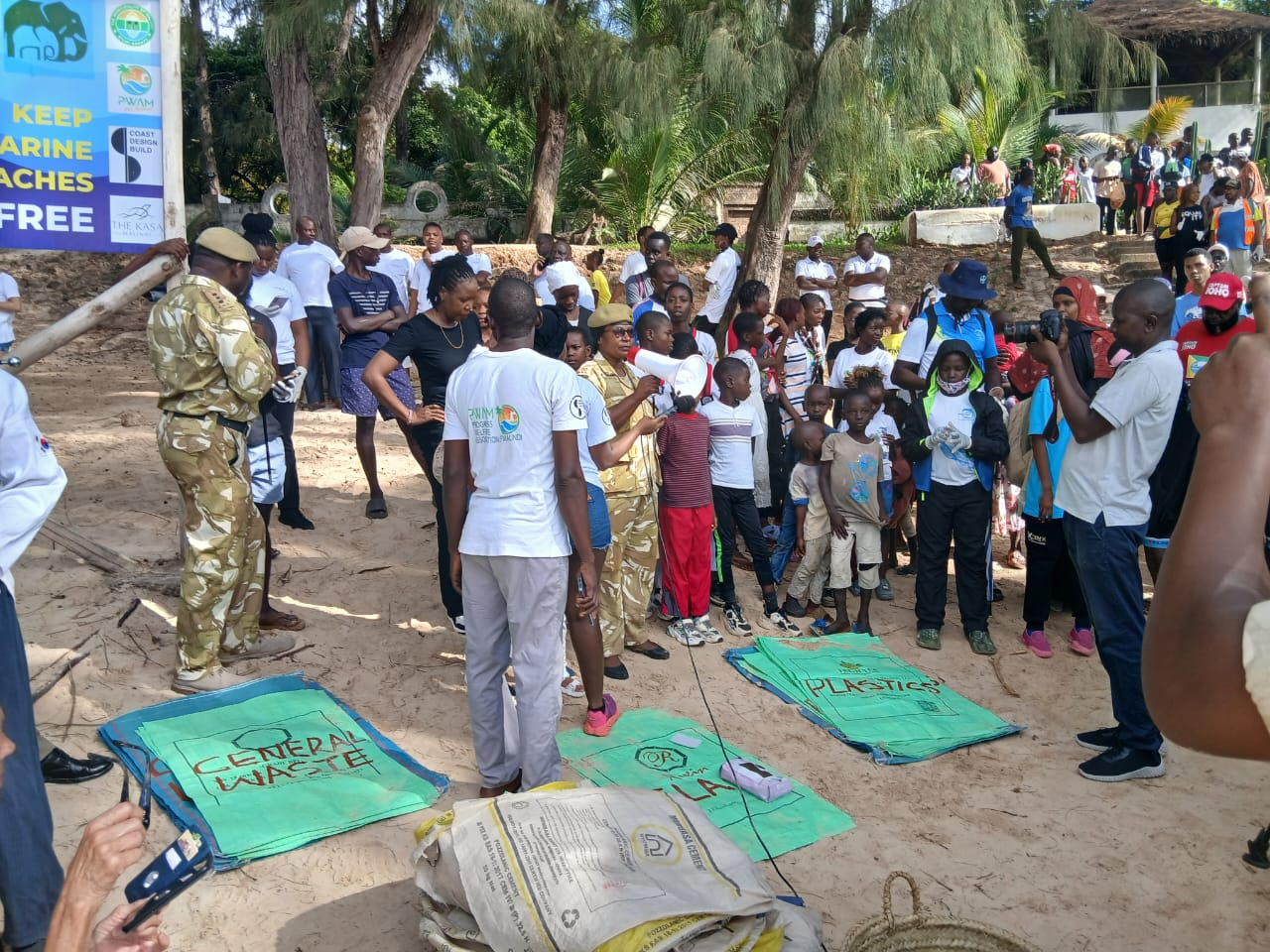
Speaking during the monthly beach clean-up at Silver Sands Beach, Cate Mwikali, Chairperson of Malindi Progressive Welfare Association (PWAM), said the community has resorted to activism to draw global attention to the crisis.
She announced plans for a high-profile marathon dubbed “Running Against Plastic Pollution” aimed at raising awareness and mobilizing resources to restore the polluted waters.
Mwikali revealed that the Sabaki River discharges between 6.6 million and 614 million pieces of plastic waste into the Indian Ocean annually—an alarming statistic that underscores the scale of the crisis.
She emphasized that the initiative will also push for enforcement of Extended Producer Responsibility (EPR), ensuring companies are held accountable for plastic waste traced back to their products.
The marathon will also serve as a fundraising platform to establish a plastic recycling hub in Malindi. The proposed facility will double as an environmental education centre and a tourism attraction, while creating employment opportunities for youth and women in the region.
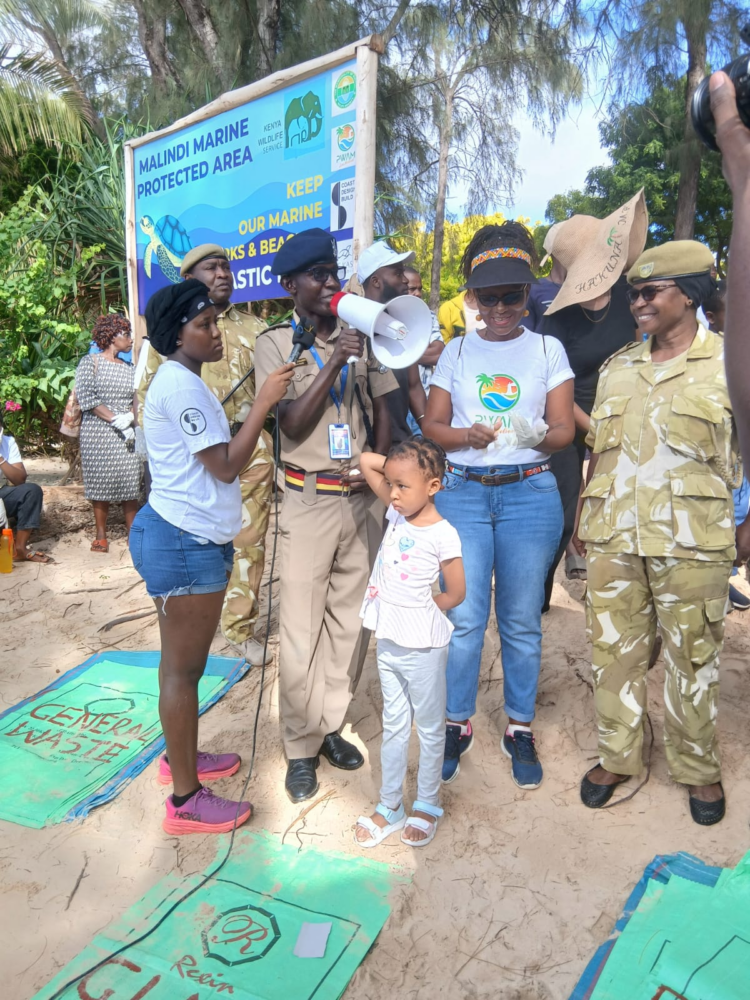
Tindi Kassim, Senior Warden at the Malindi Marine National Park, highlighted ongoing conservation efforts, noting that regular clean-ups are essential not only for protecting marine biodiversity but also for sustaining tourism and food security for coastal communities dependent on fishing.
Meanwhile, Kimani Mwangi, Vice Chair of Kithurai People’s Urban Smart Park, pointed to upstream negligence as a key driver of the crisis.
He warned that the Nairobi River continues to accumulate untreated sewage from informal settlements, industrial effluent, and agricultural chemicals, turning it into what he described as a “catastrophic channel of pollution” for downstream communities. He urged stricter enforcement of environmental regulations to safeguard vulnerable populations.
International partners are also stepping in. Ralph Kilondu, Chairman of Capital Compass Group (USA), who participated in the clean-up exercise, called for collective action in addressing environmental challenges.
He noted that initiatives like those in Malindi are positioning the coastal town not only as a tourism hotspot but also as an emerging investment destination. His firm, he revealed, has already invested in real estate aimed at attracting African American investors to the region.
As pressure mounts, stakeholders say the time for action is now warning that failure to address upstream pollution could permanently damage Kenya’s coastal ecosystems and livelihoods. Sentiments echoed by Fatma Shee and Victor Musuo.