Political leaders have praised President William Ruto for what they described as unprecedented courage in apologising for historical injustices and spearheading a process aimed at compensating victims of human rights violations across the country.
Speaking during the presentation of the framework for reparations for victims of human rights violations, leaders from across the political divide commended the President’s commitment to restorative justice and national healing.
Council of Governors Chairperson and Wajir Governor Ahmed Abdullahi lauded President Ruto’s national apology issued during this year’s Madaraka Day celebrations in Wajir County, describing it as a landmark moment in Kenya’s history.
“You became the first President in history to say sorry, and as a person who has lived through atrocities, I know how important it is. Your actions have changed Kenya, and your actions will change how we treat each other,” said Abdullahi.
The Governor’s remarks referenced President Ruto’s emotional apology to the people of northern Kenya, where he acknowledged decades of exclusion, infrastructural neglect and policy failures by successive administrations.
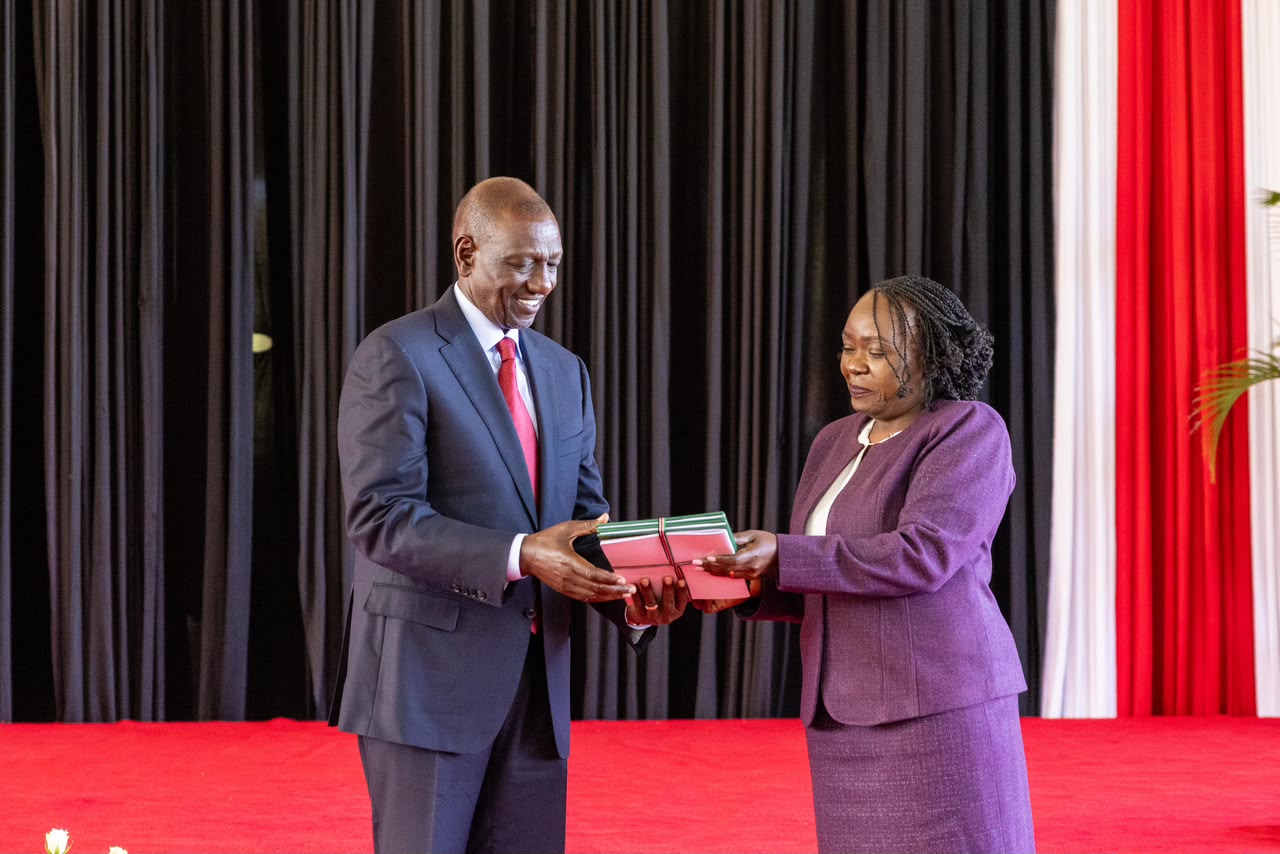
The reparations framework was presented by a panel led by constitutional scholar Makau Mutua, who described the initiative as a significant step towards national atonement.
According to Mutua, the panel has so far received approximately 1,100 names of victims of human rights violations.
A further 200 names have been submitted and include names of police, National Youth Service and prison officers, while 160 cases involve individuals who suffered property damage and economic losses.
He said all the names are currently undergoing a verification process before compensation can be effected.
On his part, the National Assembly Majority Leader Kimani Ichung’wah said the initiative is not merely about monetary compensation but about restoring dignity and ensuring every Kenyan feels included in the country’s future.
“There is no amount of money that you can give to compensate for human life or loss of property. It is about restorative justice and making every Kenyan feel part and parcel of our country moving forward,” he said.
Ichung’wah hailed President Ruto’s leadership, noting that the same courage demonstrated in launching the reparations process was evident when he apologised to residents of Wajir and northern Kenya for historical injustices and marginalisation.
The Majority Leader also acknowledged the role played by former Prime Minister Raila Odinga in steering the National Dialogue Committee (NADCO) process, which provided a framework for constitutional, legal and policy reforms arising from the 2023 bipartisan talks.
He further pledged that Parliament would support any legislative proposals arising from the Kenya Human Rights Commission’s recommendations.
National Assembly Minority Leader Junet Mohamed welcomed the initiative, noting that both his political party and his region had experienced the effects of human rights violations.
Junet, who said he has participated in demonstrations advocating for freedoms since 2003, committed that leaders would ensure future demonstrations are conducted within the confines of the law.
The reparations programme is expected to mark a major milestone in Kenya’s efforts to address historical injustices, promote national reconciliation and provide long-awaited recognition to victims of human rights abuses.