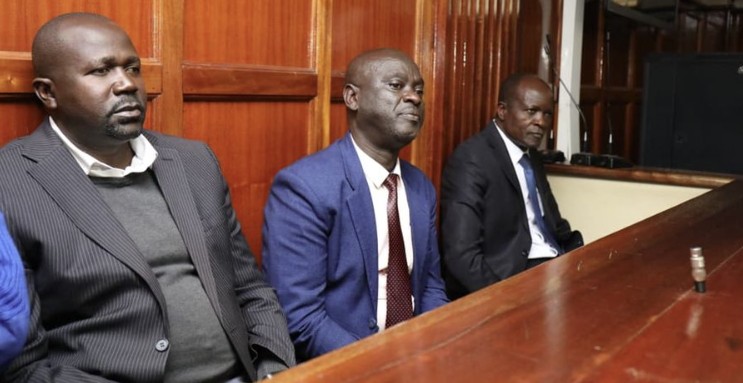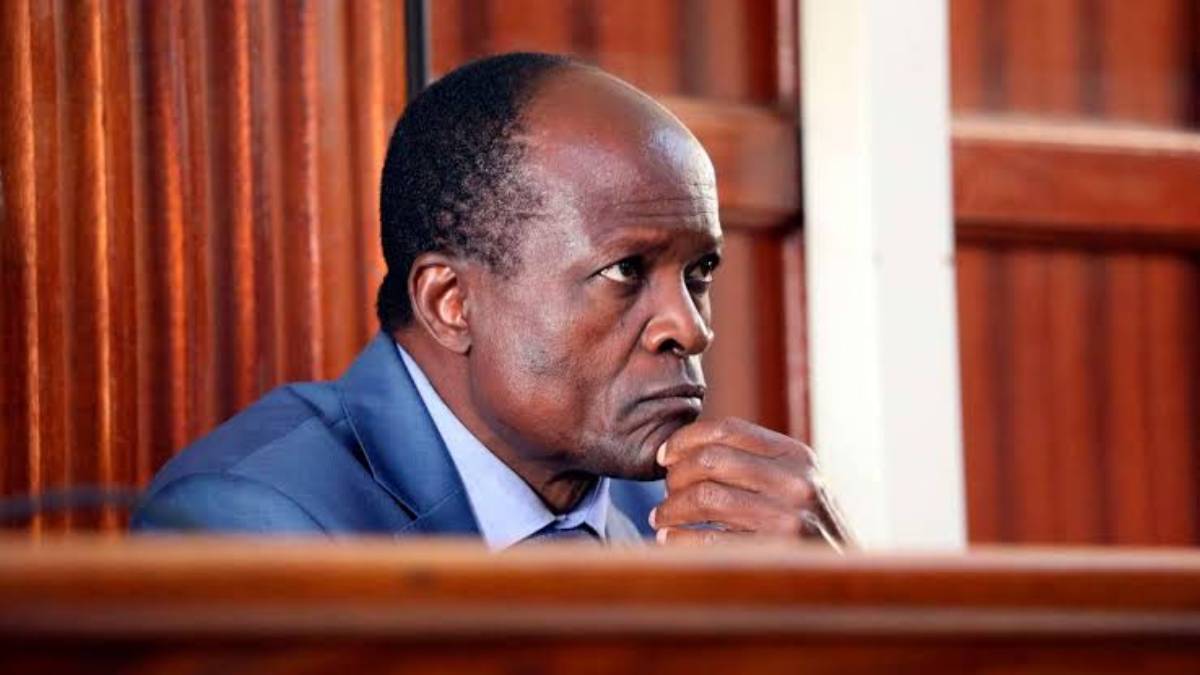

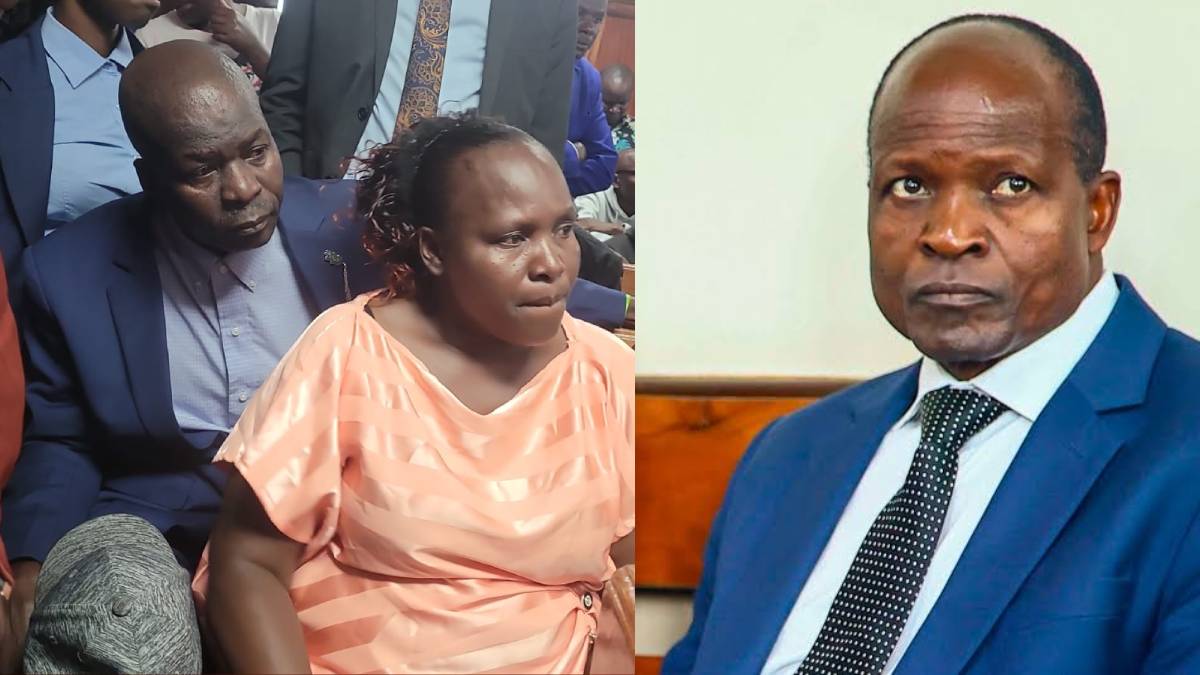
In a packed Milimani High Courtroom on Friday, November 27, an extraordinary collision between traditional reconciliation and constitutional justice reached its final verdict.
Eight years after seven-month-pregnant Rongo University student Sharon Otieno was abducted and murdered, Lady Justice Cecilia Githua sentenced former Migori Governor Okoth Obado and his former personal assistant, Michael Juma Oyamo, to 25 years in prison each. A third co-convict, former Migori County Clerk Caspal Ajwang Obiero, was handed an 18-year prison term.
Yet the defining story of Friday’s ruling was not just the dramatic fall of a two-term county chief, it was the court’s firm refusal to let private forgiveness override public accountability.
Key takeaways
- The sentences: Okoth Obado (25 years), Michael Oyamo (25 years), and Caspal Obiero (18 years), with time already spent in lawful custody factored into their terms.
- The rejection: Justice Githua dismissed both the prosecution’s demand for the death penalty and Obado’s push for a three-year non-custodial sentence.
- The precedent: The court ruled that while victims have a right to be heard under the Victim Protection Act, a family’s pardon cannot tie a judge’s hands in a capital offense.
When survival meets the State
In the months leading up to sentencing, Sharon’s parents made an emotional, unexpected pivot. Having reconciled with Obado’s relatives, they urged the court to spare him prison time so he could financially support Sharon’s three orphaned children, even as they demanded harsh punishment for his two co-accused.
It was a painful calculation rooted in economic survival: trading a demand for retributive justice in hopes of securing material upkeep for their grandchildren.
Lady Justice Cecilia Githua, however, drew a clear legal boundary. While commending the family’s capacity for forgiveness, the judge emphasized that murder is not merely a private dispute between two families, it is an offense against the State.
“Genuine support motivated by compassion cannot be conditioned upon avoiding a custodial sentence.” – Lady JustCecilia Githua
Dismantling the defense’s plea that jailing Obado would unfairly punish Sharon’s children, the judge noted that a non-custodial sentence would trivialize a “cold-blooded and barbaric” crime.
Unmasking the “principal architect”
Justice Githua also refused to treat the former governor as a peripheral figure deserving greater mercy than his subordinates. Mapping out a clear hierarchy of culpability, the court broke down each convict’s role in the common design to kill Sharon:
- Okoth Obado (25 Years) — The Architect: Found to have supplied both the motive, stemming from his personal relationship with Sharon and paternity of her unborn baby and the financial resources that funded the murder.
- Michael Oyamo (25 Years) — The Operator: Deemed equally culpable for operationalizing the plot, arranging meetings, and luring Sharon into the hands of her killers.
- Caspal Obiero (18 Years) — The Facilitator: Assessed as bearing lesser culpability than his co-accused, having provided logistical cover by hosting planning meetings at his residence and procuring forged medical records to mask the crime.
No backdoor settlements
The ruling also shut the door on informal financial demands masquerading as state restitution. Sharon’s family had sought statutory compensation under Section 24 of the Victim Protection Act alongside millions of shillings in unmet promises and legal expenses. Justice Githua declined to issue a compensation order, ruling that statutory claims must be backed by strict documentary proof of loss rather than emotional appeals.
In a political culture where wealth, status, and community elders are frequently deployed to settle grave crimes outside courtroom walls, Friday’s judgment draws a line in the sand. Forgiveness may help a grieving family heal and perhaps spare a convict from the gallows but in the eyes of the High Court, it cannot purchase immunity from the law.