

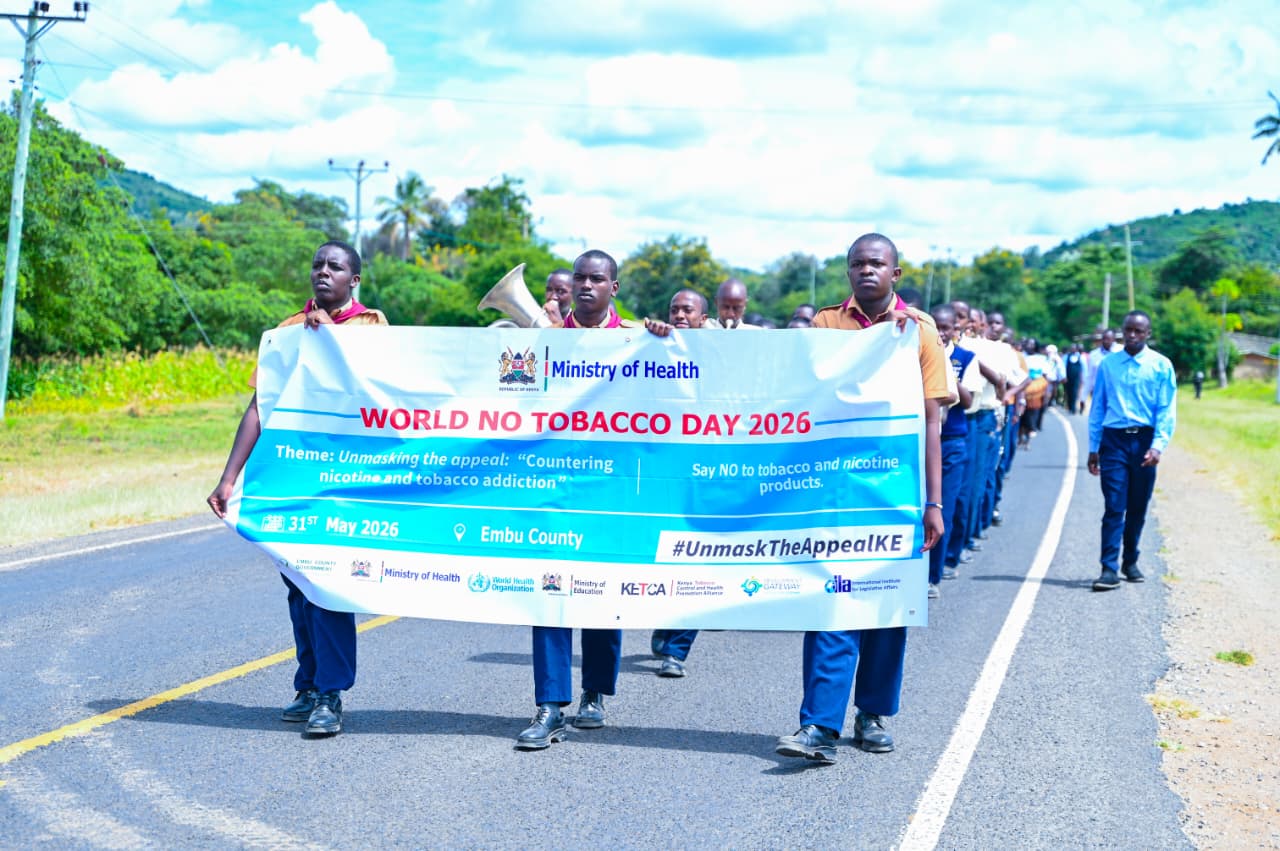
Public health advocates, youth organizations, healthcare professionals and civil society groups are calling on the government to tighten tobacco and nicotine regulations amid growing concerns over rising youth addiction and the mounting economic costs of tobacco use in Kenya.
The appeal was made during the commemoration of World No Tobacco Day 2026 in Embu county, marked under the theme “Unmasking the Appeal: Exposing Industry Tactics on Tobacco and Nicotine Products.” Stakeholders warned that tobacco and nicotine companies are increasingly targeting young people through flavoured products, digital marketing and influencer campaigns, exposing a new generation to addiction and long-term health risks.

The Tobacco Control Civil Society Organizations (CSOs) coalition said Kenya is witnessing an alarming rise in the use of tobacco and emerging nicotine products among young people despite years of tobacco control efforts.
Recent studies indicate that about 244,000 Kenyan adolescents currently use tobacco or nicotine products. Health experts further note that the average age at which children begin smoking is 11 years, while some are introduced to tobacco products as early as six years old.
National Cancer Institute representative Linet Kosgei warned that tobacco use remains one of the leading causes of preventable cancers in Kenya.
“A significant proportion of cancers affecting the lungs, throat, mouth and other parts of the body are directly linked to tobacco and nicotine use. That is why prevention must remain a public health priority,” she said.
The Ministry of Health reports thatTobacco use remains a major public health challenge in Kenya, contributing to an estimated 12,000 deaths annually.
The growing popularity of flavoured nicotine pouches, e-cigarettes and shisha among young people has become a major concern for public health advocates.
Research shows many young users are drawn to sweet flavours, attractive packaging and online advertisements that portray nicotine products as trendy, harmless and socially acceptable.
World Health Organization Country Representative Dr. Neema Rusibamayila stressed the importance of helping current users overcome addiction while preventing new users from starting.
“Cessation support is crucial. People who are already using tobacco or nicotine products need help to overcome addiction, while young people must continue receiving accurate information to make informed choices,” she said.

Stakeholders accuse tobacco companies of deliberately tailoring products and marketing strategies to appeal to younger consumers through social media platforms, entertainment content and influencer endorsements.
“Children and adolescents are being exposed to products that create lifelong addiction and increase their risk of serious diseases. What appears fashionable today can lead to devastating health consequences tomorrow,” the coalition said.
Healthcare professionals warn that nicotine addiction during adolescence can interfere with brain development, affect concentration and academic performance, and increase vulnerability to mental health challenges and long-term substance dependence.
Economic Toll
Beyond the public health concerns, stakeholders argue that tobacco use continues to place a heavy burden on Kenya’s economy.
According to tobacco control advocates, tobacco-related illnesses and premature deaths cost the country between USD 544 million and USD 756 million annually through healthcare expenditures and lost productivity.
Experts estimate that for every dollar generated through tobacco revenue, Kenya loses nearly three dollars in healthcare costs and productivity losses associated with tobacco-related diseases.

The economic consequences extend beyond hospitals and healthcare systems. Families face rising medical expenses, businesses suffer reduced productivity, and national development resources are diverted to managing preventable illnesses.
“Tobacco is not just a health issue; it is an economic issue that affects families, communities and the country’s future development,” stakeholders noted.
Public health advocates argue that funds currently spent on treating tobacco-related diseases could instead be invested in healthcare, education, youth empowerment and other critical development priorities.
Concerns Over Industry Influence
The coalition also raised concerns about what it describes as growing tobacco industry interference in public policy and media discussions surrounding tobacco regulation.
Advocates claim that industry-backed narratives are increasingly being promoted through sections of the media, business associations and social media campaigns, often portraying stricter tobacco control measures as anti-business rather than public health interventions.
According to the coalition, such efforts risk undermining evidence-based policies designed to protect children and young people from nicotine addiction and tobacco-related diseases.
Calls for Stronger Regulation
As debate continues around the proposed Tobacco Control (Amendment) Bill 2024, stakeholders are urging lawmakers and government agencies to adopt stronger measures to regulate both traditional tobacco products and emerging nicotine products.
Kenya Tobacco Control Alliance (KETCA) Chairman Joel Gitali said exposing industry tactics is critical to protecting young people from nicotine addiction.
“We must remain vigilant in exposing the tactics used to make tobacco and nicotine products appear acceptable, particularly to children and young people. Communities need to understand the real risks of addiction and long-term harm,” he said.
Gitali added that county governments remain central to the success of tobacco control efforts.
“Collaboration with counties and community structures will help bring awareness, advocacy and prevention programmes closer to the people who need them most,” he said.
Among the key proposals is the passage of the Tobacco Control (Amendment) Bill 2024, which advocates say would strengthen safeguards against new nicotine products and close existing regulatory loopholes.
The coalition is also calling for stricter regulation of e-cigarettes, nicotine pouches and shisha, including mandatory health warnings and tighter controls on sales and distribution.
Representing Public Health Principal Secretary Mary Muthoni, Director of Primary Healthcare Dr. John Gondi called for greater public awareness and stricter enforcement of tobacco control regulations.
“People need to be able to identify these products, understand their risks and recognize the tactics used to make them appear attractive and harmless,” he said.
Gondi noted that legislation alone would not be enough without effective implementation.
“Strong enforcement remains crucial. Tobacco control policies can only succeed if they are fully implemented and consistently enforced,” he added.
Health advocates want the government to ban or restrict flavoured nicotine products, arguing that fruit and candy flavours are specifically designed to attract children and adolescents.
They are also seeking stronger restrictions on digital advertising and influencer marketing, which they say are increasingly being used to promote nicotine products to young audiences.
Other recommendations include the introduction of plain packaging requirements, graphic health warnings on tobacco products, and higher tobacco taxes to make such products less affordable and less accessible to young people.
Public health experts maintain that tobacco taxation remains one of the most effective tools for reducing tobacco consumption and preventing youth initiation.
The coalition is further proposing that a portion of tobacco tax revenues be allocated to healthcare services, smoking cessation programmes, youth awareness campaigns and school-based prevention initiatives.
Protecting Future Generations
As Kenya joins the rest of the world in marking World No Tobacco Day, stakeholders say protecting young people from nicotine addiction must remain a national priority.
They are calling on parents, educators, policymakers, media organizations and communities to work together to counter misleading marketing messages and support stronger tobacco control measures.
“The future health, productivity and prosperity of Kenya’s young people must take precedence over commercial interests. Every child deserves protection from addiction and the opportunity to grow into a healthy and productive adult,” the coalition said.
Stakeholders argue that stronger tobacco regulation will not only save lives but also help reduce healthcare costs, improve economic productivity and secure a healthier future for the country’s next generation.
The Tobacco Control Civil Society Organizations (CSOs) coalition comprises a diverse network of public health, consumer rights, youth advocacy and policy organizations working to advance tobacco control in Kenya.
Its member organizations include the Kenya Tobacco Control and Health Promotion Alliance (KETCA), the International Institute of Legislative Affairs (IILA), the Consumer Information Network (CIN), the Kenyan Network of Cancer Organizations (KENCO), Den of Hope Youth Group, the National Taxpayers Association (NTA), Students Campaign Against Drugs (SCAD), NCD Alliance Kenya, Stowelink Organization, Being Africa, and Youth in Power Africa Rise (YIPAR).
Together, these organizations advocate for stronger tobacco control policies, public awareness, youth protection and measures aimed at reducing the health and economic burden of tobacco use in Kenya.