
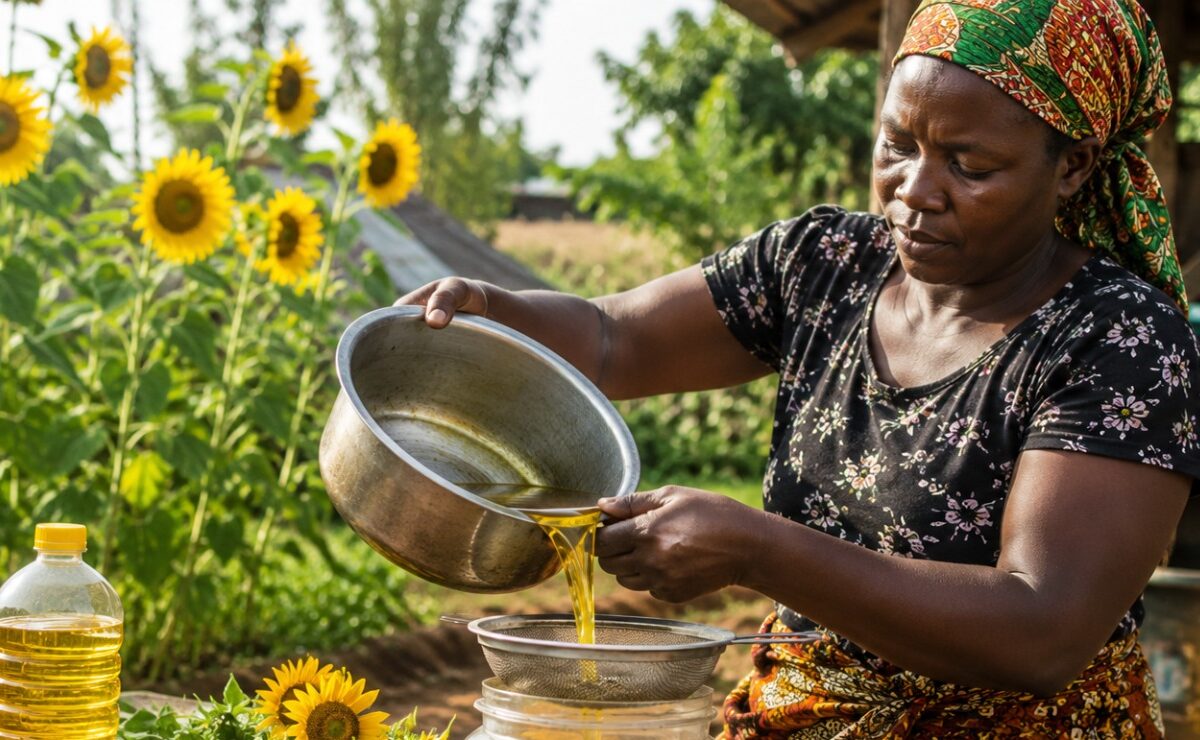
Cooking oil has quietly become one of the biggest budget strains for Kenyan households. Whether you are stretching a small bottle through the week or budgeting for a larger bottle, the price rarely gives you a break. And with the broader cost of living already squeezing most families, every extra shilling spent at the supermarket matters.
A solution might be growing in the farms around us.
The Kenyan government is pushing to grow more sunflower and soybean crops locally to slash imports. Right now, Kenya uses around 600,000 metric tons of edible oil every year, and more than 90 percent of that comes from abroad. That kind of dependence is risky. When global prices climb, or the shilling loses value against major currencies, Kenyan consumers end up paying the price at the shop counter.
To address this, the Ministry of Agriculture, in collaboration with research institutions, is encouraging farmers to grow more oil crops. The idea is straightforward: produce more at home, process more at home, and rely less on imports.

Western Kenya is already seeing real movement. The Lake Basin Development Authority launched a large-scale sunflower program in Kisumu to increase local oil production and provide farmers with a new source of income. Sunflowers offer more than just oil, too. Once the seeds are pressed, the leftover material can be used to make animal feed, which means the crop creates value at more than one point in the chain.
That said, nobody is promising quick results. Kenya still needs more farmers growing the crop, easier access to quality seeds, stronger processing plants, and reliable markets before local sunflower oil can seriously compete with imports.
But the potential is real. Kenya sends billions of shillings out of the country every year just to keep cooking oil on shelves. If more farmers come on board and local processors scale up, that money could stay within our economy while bringing some relief to consumers.
The sunflower may be a simple crop. But for Kenya, it could carry serious weight.