
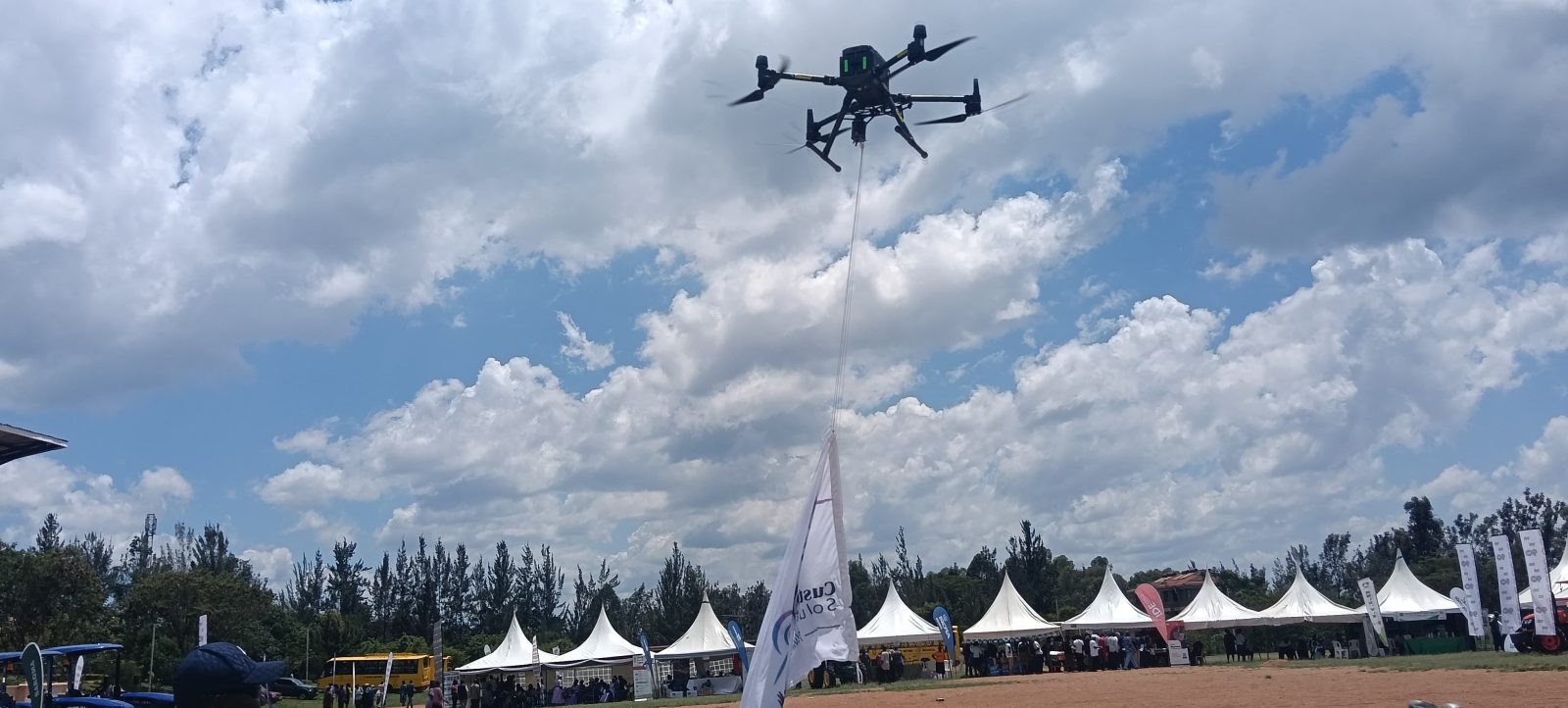
Farmers are being urged to embrace drone technology to access vital agricultural and weather-related information that can help them make informed farming decisions as climate change continues to trigger unpredictable weather patterns, threatening crop production and food security in the country.
The technology is emerging as an important tool in climate-smart agriculture, enabling farmers to monitor crop health, detect pests and diseases early, apply pesticides precisely and collect field data to guide farm management and water conservation.
Speaking to the press during the Agribusiness Expo at Kibabii University in Bungoma County, Alex Mugane, director of Customized Aviation Solutions Limited, encouraged farmers to adopt drone technology to improve crop management and minimize losses associated with changing climatic conditions.
The expo, held under the theme Climate-Smart Technologies and Practices for Sustainable Food Systems brought together agricultural stakeholders, researchers, students, technology providers and farmers to explore innovations aimed at improving agricultural productivity and resilience to climate change.
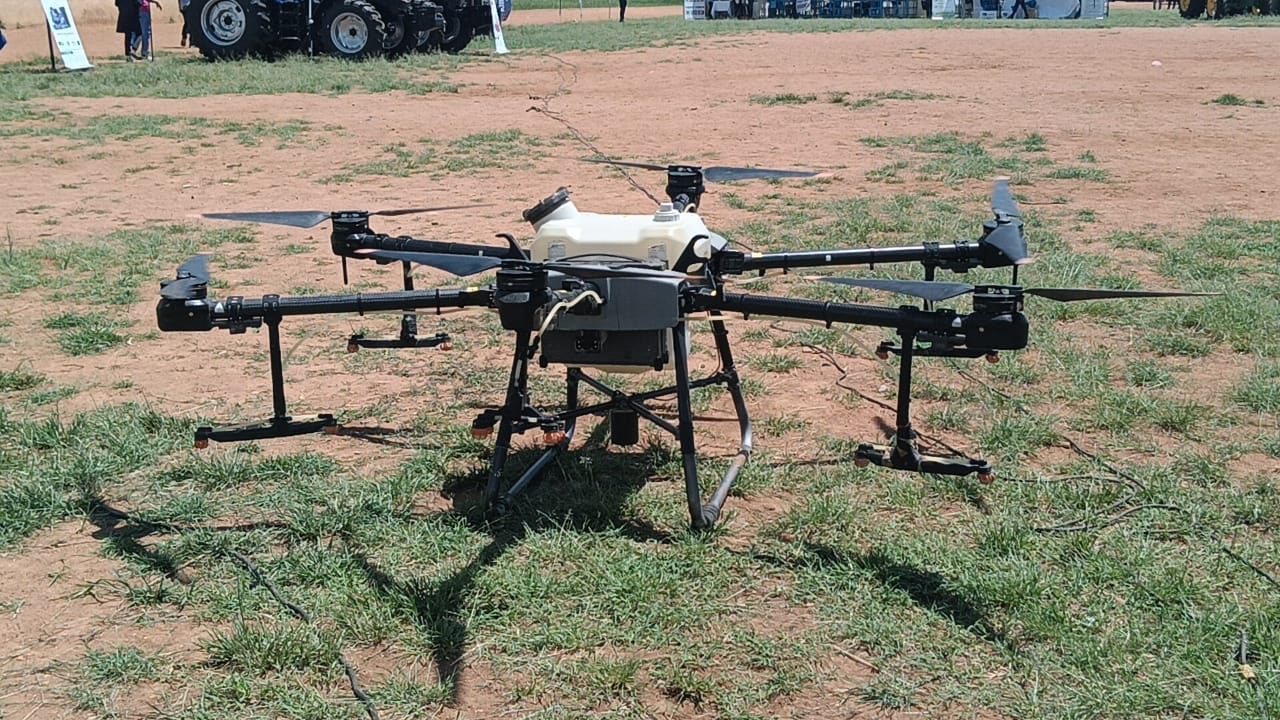
Mugane said the company uses drones to help farmers identify crop diseases, detect pests and assess plant health before problems spread across their farms.
Further he explained that early detection enables farmers to take timely action, while targeted spraying helps reduce the amount of chemicals used in crop production.
“When farmers do targeted sprays using drones, they save on chemicals, especially in terms of human exposure, and also save on water,” he said.
Mugane stated that conventional pesticide application can expose farmers to agricultural chemicals and lead to wastage when spraying is not properly targeted.
He said drone-assisted spraying enables farmers to apply pesticides to specific areas that require treatment, potentially reducing unnecessary chemical use and the environmental risks associated with excessive application.
Mugane noted that the technology could be particularly beneficial to farmers seeking to manage production costs while responding to emerging crop health challenges.
To expand access to the innovations, he said Customized Aviation Solutions Limited had partnered with Kibabii University to train farmers in crop health analysis and the use of drone technology in agriculture.
The training is intended to equip farmers with skills to identify crop diseases and plant stress early enough to take appropriate corrective measures before the problems significantly affect yields.
“This analysis helps farmers understand the type of crop diseases affecting their crops early enough and identify stress in the plants,” he said.
Beyond crop monitoring and pesticide application, Mugane said the company also uses drones to map agricultural land and collect data that can help farmers plan their activities in response to changing environmental conditions.
He explained that drone-generated maps can provide information on farm topography, including contour elevations, which is useful when planning water harvesting structures and other agricultural infrastructure.
“Every time the drone is flown, it helps in mapping the farm for contour elevation. That data helps a farmer make decisions, for example, on where to build a dam to capture water when it rains,” he said.
Mugane added that drones could also be used to collect information on trees within farms, assess waste management challenges and support disaster management efforts.
He said the data collected during drone operations undergoes analysis before being shared with farmers to inform their decisions.
He explained that the time required to process the data varies depending on the exercise, with some information taking between two and three days to analyse.
Mugane further said a drone could cover up to 1,000 acres in a day, depending on the equipment, survey requirements and prevailing operating conditions, potentially enabling farmers and agricultural service providers to assess large areas within a relatively short period.
The use of drone technology comes amid growing calls for farmers to embrace innovations that improve access to agricultural information and help them prepare for climate-related risks.
Kibabii University Vice-Chancellor Professor Joshua Ogendo said the Agribusiness Expo was organised through a partnership involving the Eastern Africa Grains Council (EAGC), Kibabii University and the Bungoma County Government.
Ogendo said the initiative was designed to connect academic learning with practical agricultural innovations while exposing farmers and students to technologies that can improve productivity and strengthen food systems.
He noted that demonstration plots established in collaboration with agricultural organisations and other industry players were showcasing farming techniques and technologies that could help farmers respond to climate change.
The plots provided an opportunity for students pursuing agriculture-related courses to learn about practical farming methods beyond what they encounter in lecture rooms.
“Agriculture is taught in class, but it makes a lot of sense when the practical aspect is done. Therefore, this Agribusiness Expo has enabled students to interact with the latest innovations, such as the use of drones, and learn about new seeds developed by different companies to fight climate change,” he said.
Ogendo said exposing students to emerging agricultural technologies was important in preparing them to contribute to the transformation of the sector.
The demonstration plots also offered farmers an opportunity to observe different farming practices and assess how the technologies could be applied to their own farms.
Paul Ochuna, a representative of the Eastern Africa Grains Council (EAGC), said agribusiness expos provide an important platform for farmers to interact with agricultural companies, researchers and other industry players.
He said the events were intended to bridge the gap between the development of agricultural innovations and their adoption by smallholder farmers, who often face challenges accessing information about emerging technologies.
“We organize such expos so that we give opportunities to smallholder farmers to come and interact with the industry, learn about different innovations and technologies, and understand how they can improve their productivity,” Ochuna said.
He urged farmers to adopt suitable technologies showcased at the university’s demonstration plots and incorporate the lessons into their daily farming activities.
Ochuna observed that climate change is already affecting agricultural production, making it necessary for farmers to explore new approaches to managing crops, conserving resources and improving yields.
“Climate change is a reality. A lot of crops are failing, but through this Agribusiness Expo, we give farmers an opportunity to witness and learn about the available technologies,” he added.