The Kenya Veterinary Board (KVB) has intensified its nationwide campaign against illegal veterinary practice following the successful arrest of a suspected quack veterinary practitioner in Ukunda, Kwale County, during a coordinated market surveillance operation.
The operation forms part of the Board’s mandate under the Veterinary Surgeons and Veterinary Paraprofessionals (VSVP) Act, 2011, which seeks to protect animal health, public health and consumers by ensuring that veterinary services are offered only by duly qualified, registered and licensed professionals.
The surveillance exercise was initiated following intelligence reports indicating that three individuals were allegedly providing veterinary services without the requisite legal qualifications and registration.
Through the enhanced professional engagements, licenced professionals were able to identify unregistered persons engaging in illegal veterinary practice.
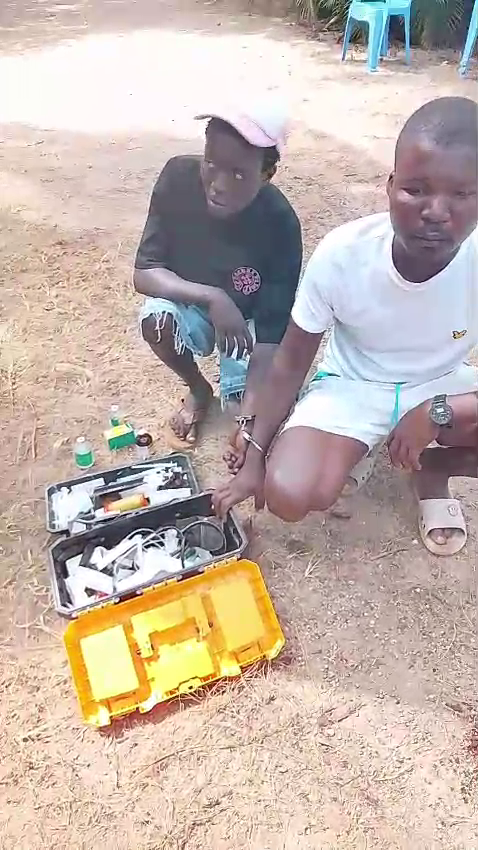
Investigators who posed as livestock owners in need of veterinary services. Assisted by the DCI Kwale County, One suspect could not be reached as his mobile phone remained switched off throughout the operation. A second suspect indicated that he was travelling to Mombasa, a claim later verified through investigations conducted by officers from the Directorate of Criminal Investigations (DCI).
The third suspect responded positively to the request for veterinary services and agreed to examine and treat the animal. Under close surveillance by Kenya Veterinary Board inspectors, the suspect proceeded to conduct the examination and undertake treatment on the dog. The entire interaction was discreetly documented as evidence by the undercover inspectors.
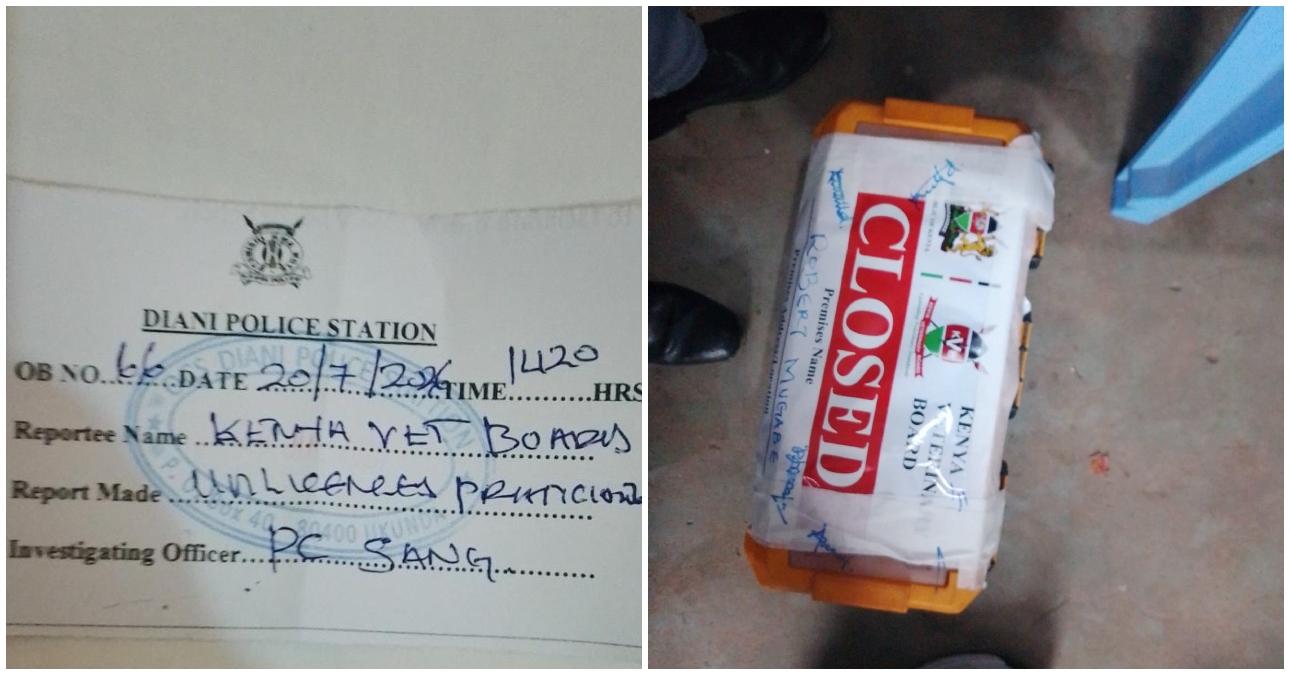
Immediately after the procedure, Kenya Veterinary Board inspectors moved in and arrested the suspect without incident. He was subsequently booked at Diani Police Station, where investigations are continuing. The suspect is expected to be arraigned before court to answer charges relating to unlawful veterinary practice under the VSVP Act, 2011.
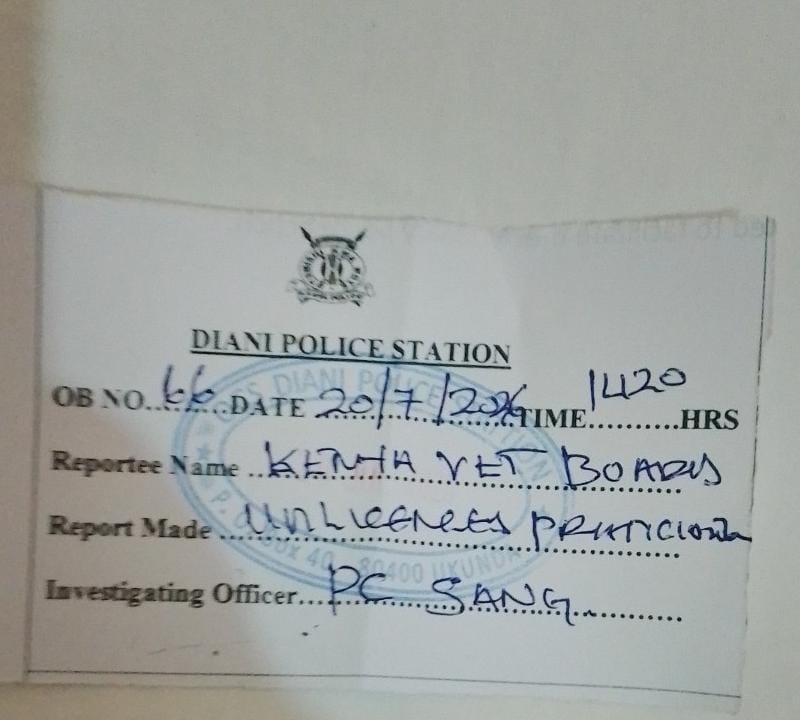
During the investigation, the suspect disclosed the source of the veterinary medicines he had been using. Inspectors immediately launched a follow-up operation targeting the identified agrovet outlet, distribution channels and manufacturers of the medicines where intensive investigations is being undertaken to bring all licenced and unlicenced persons facilitating quacksim to book.
Posing as ordinary customers, officers successfully purchased Prescription Only Medicines (POMs) without being required to provide proof of professional registration or authority to purchase such controlled veterinary medicines. The findings raise serious concerns regarding compliance with legal requirements governing the sale and distribution of prescription veterinary drugs.
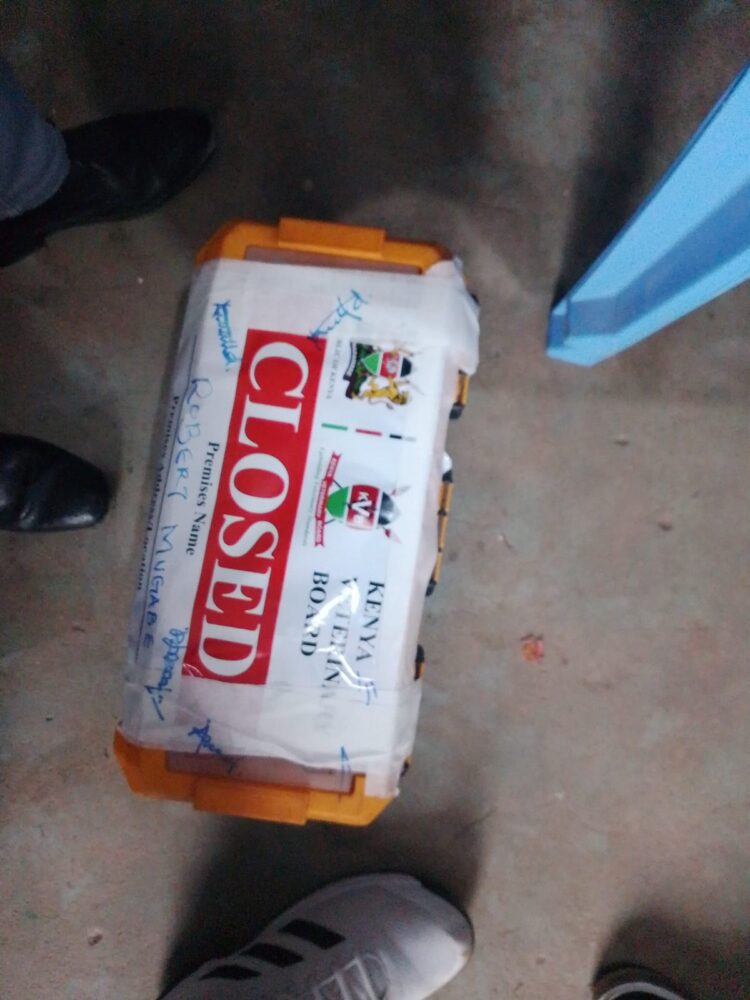
The Kenya Veterinary Board has commenced further investigations into the agrovet outlet and will take appropriate regulatory and legal action where violations are established.
Speaking on the operation, the CEO of the Board Dr Mary T Agutu reaffirmed that illegal veterinary practice places animal welfare, food safety, public health and livelihoods at significant risk.
“Veterinary practice is a regulated profession because the consequences of incompetence can be devastating. Unqualified persons performing surgery, prescribing medicines or treating animals expose farmers, pet owners and the public to preventable risks, including disease transmission, antimicrobial resistance and economic losses. The Kenya Veterinary Board will continue to identify, investigate and prosecute individuals who unlawfully practise veterinary medicine.”
The Director of Compliance and Enforcement at the Kenya Veterinary Board, Dr Benson Kibore, has urged livestock farmers, pet owners and members of the public to verify anyone offering veterinary services as duly registered and licensed by the Kenya Veterinary Board before allowing them to examine or treat animals.

The operation in Kwale County is part of an ongoing nationwide market surveillance programme aimed at eliminating quack practitioners, strengthening compliance with the law and safeguarding the integrity of the veterinary profession.
The Kenya Veterinary Board commended the support received from licensed veterinary professionals, law enforcement agencies and members of the public, noting that collaborative enforcement remains essential in protecting Kenya’s livestock sector, companion animals and public health.