

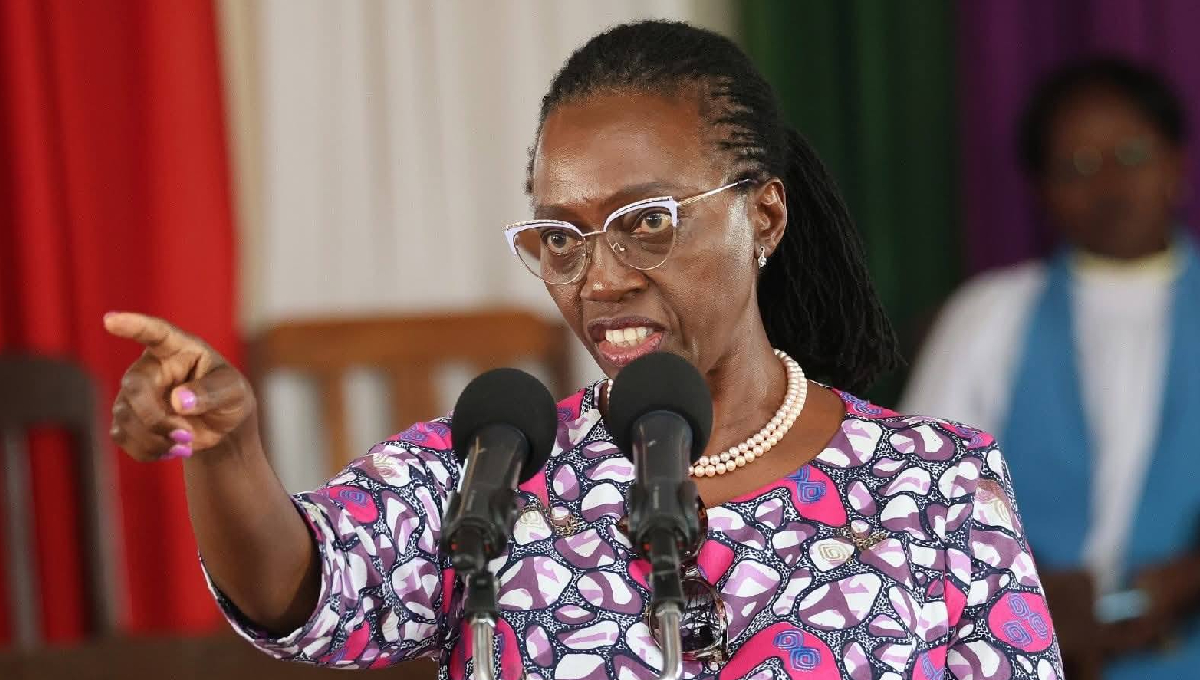
People’s Liberation Party Leader Martha Karua has accused the government of recycling the very same measures that sparked deadly protests in 2024, warning that the Finance Bill 2026 is little more than the previously rejected Finance Bill dressed up in new packaging.
Speaking during an interview on Wednesday, June 3, Karua said Kenyans should not be fooled by the rebranding.
“The same measures rejected by the Gen Z and which caused the death and injuries of so many is the same thing they are returning through the backdoor,” she said, arguing that the bill disproportionately targets ordinary citizens and the most vulnerable groups.
Karua reserved particular criticism for provisions touching on digital services and mobile money, saying the government was attempting to avoid the backlash of openly declaring new taxes by instead targeting service providers, knowing too well the cost would trickle down to everyday users.
“This Finance Bill is the 2024 Finance Bill. It carries exactly the same punitive measures, but because they do not want to openly say they are taxing people in the digital space, they are introducing taxes that ultimately fall back on the users. If you tax service providers, the cost will be passed on to the same people using the service, the same applies to mobile money taxation,” she said.
She also blamed the government’s spending priorities, pointing to an increased budget allocation for the Office of the President as evidence that those in power continue to expand their own comfort while pushing the tax burden onto struggling citizens.
A comparison of the two bills does reveal notable similarities.
Both target digital and financial transactions, both contain provisions affecting mobile phones, the 2024 bill through a proposed eco-levy on locally assembled devices and the 2026 bill through a 25 per cent excise duty on phone activation, and both extend the government’s reach into mobile money and payment services.
The 2026 bill also broadens tax enforcement oversight to cover cryptocurrency and virtual asset service providers, building on the mobile money record access sought in the 2024 version.
Treasury Cabinet Secretary John Mbadi has dismissed widely circulated claims about new taxes on cryptocurrency, bread, digital content creators, mobile money, and vehicles, insisting the bill does not introduce new taxes in those areas.
On the phone levy specifically, Mbadi has maintained that the 25 per cent excise duty is a consolidation of existing taxes rather than a fresh imposition.
The Finance Bill 2026 is currently before the Finance and National Planning Committee, which is preparing its report after receiving input from more than 200 entities during a two-week stakeholder forum and up to 100,000 written submissions from members of the public.
Public hearings across all 47 counties began on June 2, starting in Kiambu, Wajir, and Vihiga. Once the committee tables its recommendations, the bill will proceed to the Second Reading debate in the National Assembly.