
The government has reaffirmed its commitment to ending the remaining pockets of insecurity in the North Rift, warning that bandits, cattle rustlers and those inciting violence will face firm and decisive action.
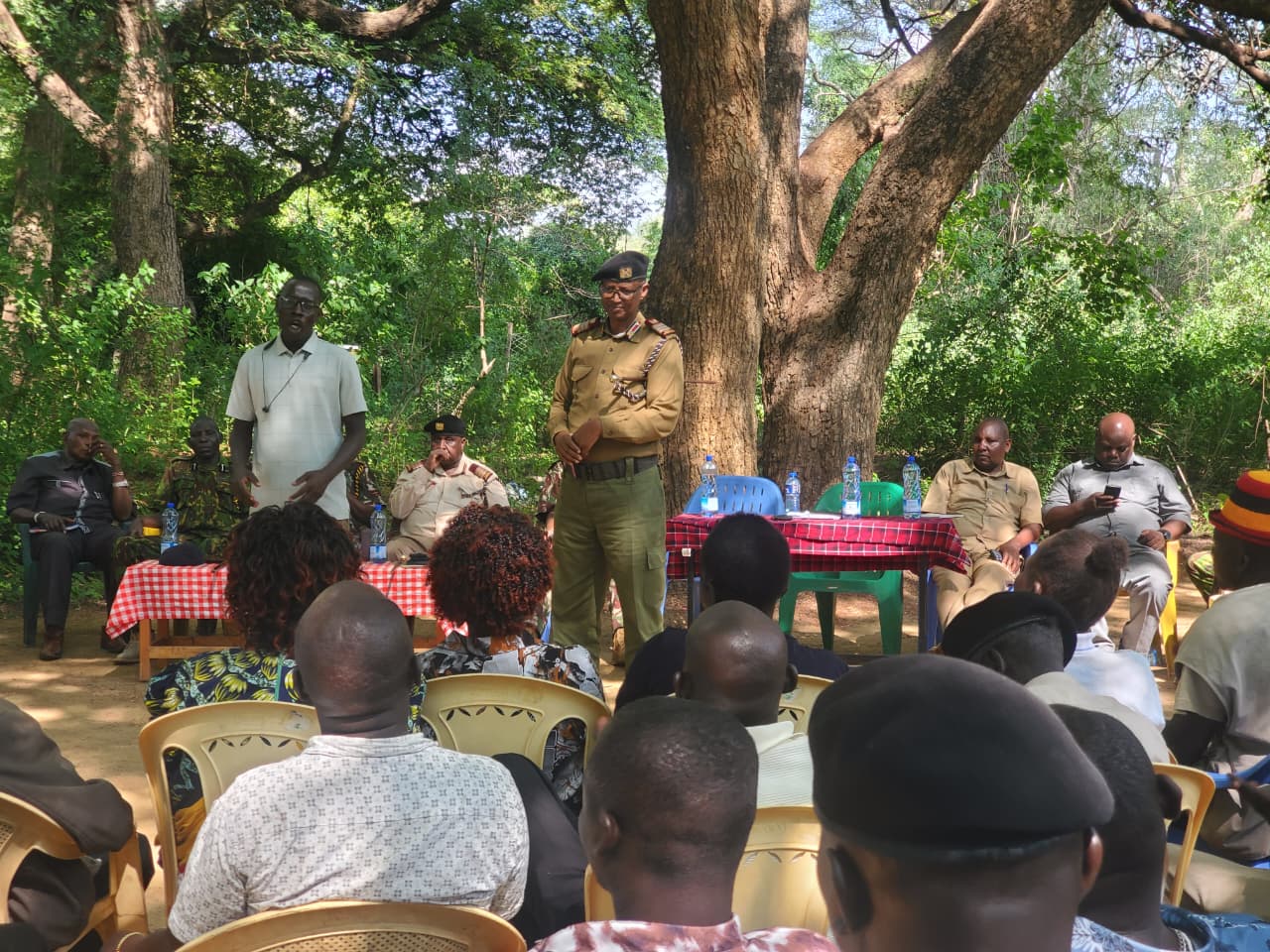
Speaking during a peace meeting at the border of West Pokot and Turkana counties, Rift Valley Regional Commissioner Dr Abdi Hassan said security operations had already yielded major results, with only a few hotspots remaining in areas such as the Turkwel Belt, Malaso Valley and Suguta Valley, as well as isolated areas bordering Isiolo, Samburu and Marsabit counties. He expressed confidence that security agencies would soon neutralise the threats if communities, leaders and security agencies worked together.
Dr Hassan appealed to residents in the affected areas to support government efforts to restore lasting peace, saying peace would allow communities to focus on development instead of killings,injuries and divisions caused by years of inter-community conflict.
According Hassan the continuous disarmament exercise had already led to the recovery of 1,000 illegal firearms — 339 from West Pokot and 700 from Turkana — alongside 1,500 rounds of ammunition, which he described as significant progress in restoring stability. He also issued a stern warning to criminal elements targeting travellers along the Kapenguria-Lodwar Highway, saying they would be dealt with in accordance with the law.
The Regional Commissioner warned politicians against inciting communities or sponsoring conflicts, saying the government would not spare anyone found undermining peace. “We shall not relent in taking stern actions against anybody opposed to peace and security within the North Rift. Anybody who crosses what we have termed as the red line will not be spared,” he said. He urged all stakeholders in peace and security initiatives to work closely with law enforcement agencies to find a permanent solution to insecurity that has affected the region for decades.
Participants at the meeting raised several challenges hampering peace efforts, including poor mobile phone network coverage which delays communication of security incidents, unclear administrative boundaries between neighbouring counties, poor road infrastructure, and limited alternative livelihood opportunities. They called on the government to expand irrigation projects along the Kerio Valley belt to promote sustainable food production and reduce over-reliance on pastoralism, which has been badly affected by climate change.
Dr Hassan urged residents to prioritise education, saying the President’s directive to reopen all schools previously closed due to insecurity remained in force and security agencies would ensure it is fully implemented. He regretted that Amolem Primary School was still being mentioned as closed despite improvements in security, and said the improving situation provided an opportunity for learners to return to school. “Time for cattle rustling and banditry is long gone. The best investment for now is education, which the government has greatly invested in,” he said.
The RC further said, lasting peace in the North Rift will only be achieved through unity, vigilance and development. He called on communities to embrace education, irrigation farming and lawful livelihoods, and to reject banditry and incitement. With continued disarmament, improved cooperation and government investment in schools and infrastructure, he said the North Rift can finally move from conflict to prosperity.