
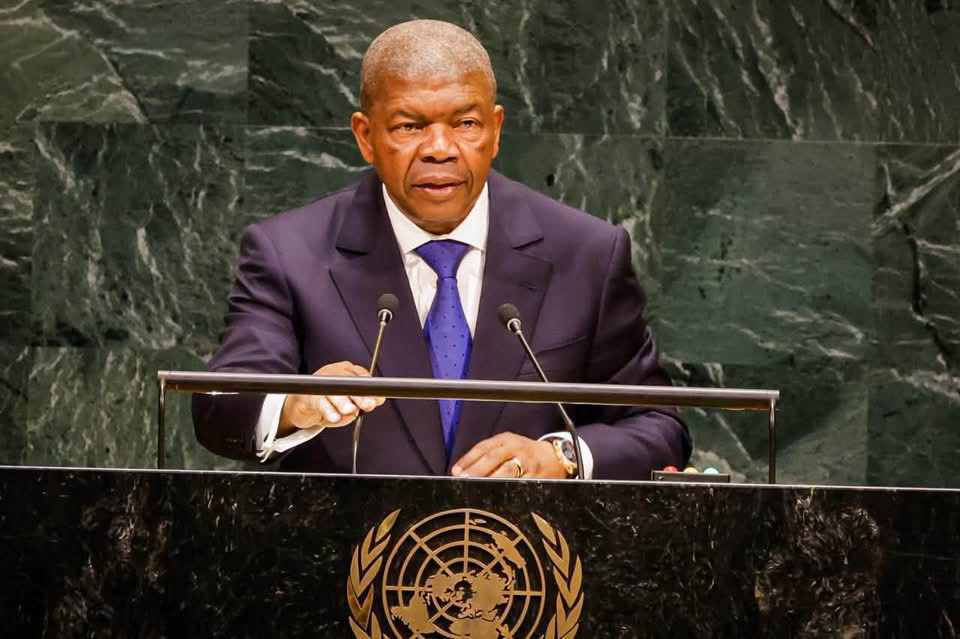
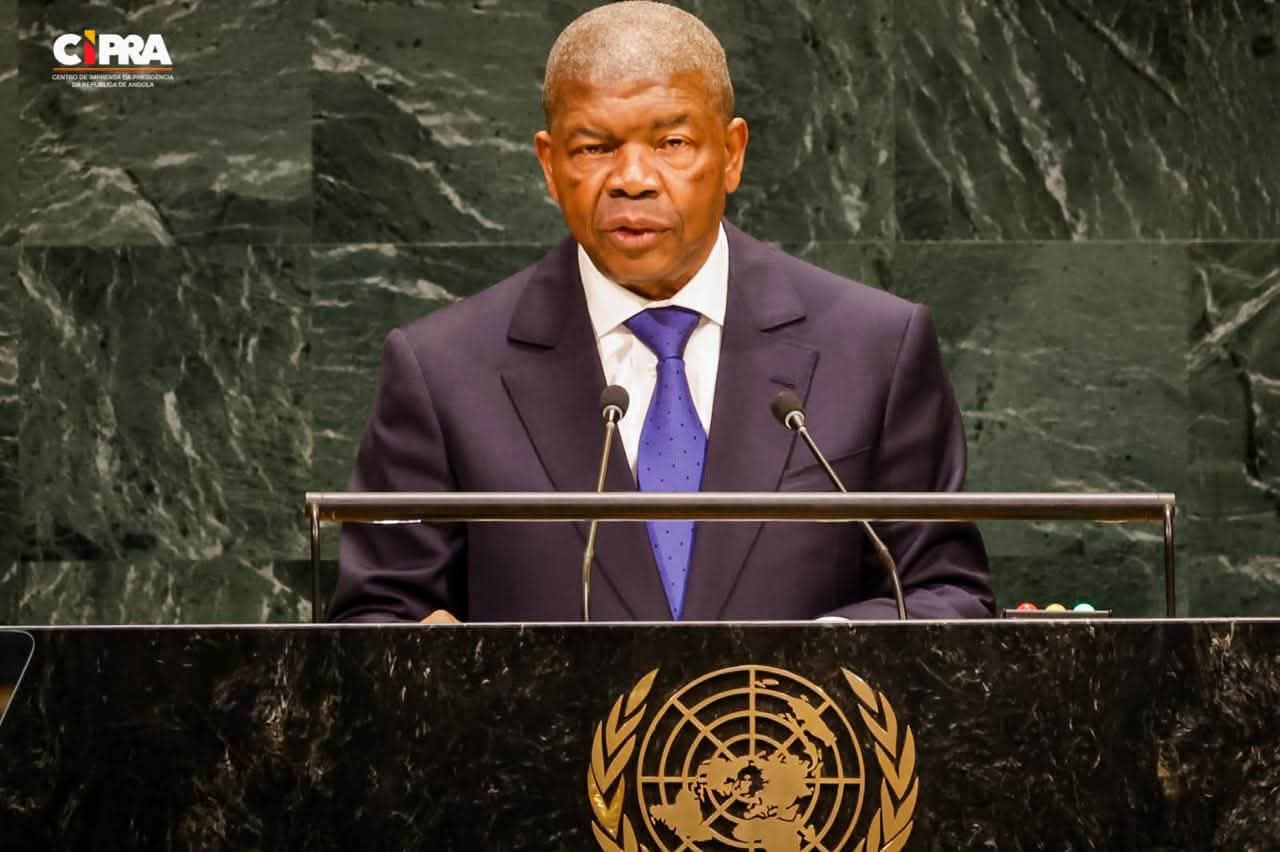
Angola’s shift into the World Bank’s higher GovTech maturity group reflects a broader state modernisation programme built around digital infrastructure, interoperability, digital identity, cybersecurity and artificial intel President João Lourenço used his address to the 81st United Nations General Assembly in New York to place artificial intelligence and digital transformation within a broader development agenda for Africa, linking technology to public services, productivity, inclusion and the continent’s role in shaping global AI governance.
For Angola, the speech comes as the government is moving from individual digital projects towards a more integrated architecture for the state.
The transition is reflected in the country’s latest GovTech Maturity Index, where Angola moved from Group C to Group B in the World Bank’s 2025 assessment, with a score of 0.593, slightly above the global average of 0.589.
The change is significant, but the more important story lies behind the indicator: a programme of institutional reform and public investment that is attempting to change how the Angolan state manages information, delivers services and interacts with citizens and businesses.
From administrative reform to a digital state
The digital agenda is part of the broader state-reform programme led by João Lourenço.
In June 2024, the Council of Ministers, chaired by the President, approved the 2027 Digital Transition Agenda for Public Administration, identifying 214 priority projects across government. The programme was designed to accelerate the digitisation of public services, simplify procedures and reduce the administrative burden on citizens and companies.
The approach is not simply to put existing paperwork online.
One of the central objectives is to make government systems communicate with one another. The planned interoperability platform is intended to allow public institutions to exchange information securely, reducing the need for citizens to repeatedly submit information that is already held by the state.
That distinction matters. Digitising a paper-based bureaucracy can make an inefficient system faster. Interoperability has the potential to change the structure of the bureaucracy itself.
Building the infrastructure underneath government
The next stage is the construction of the technological infrastructure required to support that architecture.
In June 2026, Angola formalised a $150 million Public Digital Infrastructure Project, designed to strengthen interoperability, digital identity, electronic signatures and the security of government digital services. The project has a planned implementation period of 12 months and is intended to provide the technological backbone for connecting different government information systems.
The project forms part of a wider digital transformation investment programme valued at about $450 million, including $300 million in World Bank financing and $150 million approved for public digital infrastructure. The government has set a target of completing the principal systems by 2027.
The significance is broader than the technology itself. Angola is attempting to establish the basic layers of a national digital public infrastructure — the systems through which identity, data, authentication, government services and secure transactions can operate across institutional boundaries.
Digital identity becomes a gateway to government
Digital identity is one of the most consequential components of this architecture.
A functioning digital identity system can allow citizens and businesses to authenticate themselves across multiple public services instead of maintaining separate credentials and records for different institutions.
Combined with electronic signatures, it also creates the possibility of completing administrative procedures digitally from beginning to end.
That is the difference between putting a government form on a website and creating a genuinely digital government.
The reform agenda has been moving in this direction since the early stages of the state-modernisation programme. In 2022, the government approved a roadmap for digital transition that included a Single Window for Non-Presential Public Services, designed to provide citizens with centralised access to different government services through digital channels.
Cybersecurity becomes part of state infrastructure
The expansion of digital government also changes the nature of national security.
As more public services, citizen information and administrative processes move online, cybersecurity becomes an essential component of government infrastructure rather than a purely technical function.
The new public digital infrastructure project explicitly includes security, continuity and reliability of electronic government services, alongside interoperability and digital identity.
That becomes even more important as Angola moves towards artificial intelligence, because AI systems depend on access to large datasets, secure computing infrastructure and reliable digital networks.
AI moves from policy discussion to implementation
This is where João Lourenço’s UN speech intersects most directly with Angola’s domestic reform agenda.
The President argued that artificial intelligence can contribute to sectors including education, healthcare, agriculture, public services, scientific research and economic productivity. He also called for greater African participation in discussions over the global governance of AI.
For Angola, the policy challenge is therefore no longer simply whether to adopt AI, but whether the country can build the institutional, technological and human-capital foundations needed to deploy it at scale.
The sequencing is becoming clearer: digital infrastructure first, interoperability and identity next, cybersecurity and legal frameworks alongside them, and AI applications on top of that foundation.
That sequence is particularly important for a country seeking to expand its role in Africa’s digital economy.
From GovTech to economic competitiveness
Angola’s improvement in the GovTech index should therefore be viewed as an indicator of a wider transformation rather than as a competitive ranking.
The World Bank’s GTMI measures government digital maturity across central government systems and shared infrastructure, online public services, digital citizen engagement and institutional enablers such as governance, regulation, skills, data management and security.
For Angola, the next question is whether this institutional progress can translate into measurable economic effects.
A more integrated digital state can potentially reduce the time and cost involved in establishing businesses, obtaining licences, complying with tax requirements, accessing public information and interacting with government agencies.
For investors, the quality of government digital infrastructure increasingly forms part of the business environment. For citizens, it can determine whether public services require physical visits and repeated documentation or can be accessed remotely.
The reform is already producing measurable commitments
The digital transformation is also moving beyond infrastructure.
In January 2026, João Lourenço authorised 8.6 billion kwanzas for Microsoft licences covering the Public Administration. The programme is linked to a broader digital partnership that includes training for public servants and the expansion of digital platforms across the public sector.
The government has also been pursuing the Project for Digital Acceleration of Angola, supported by proposed World Bank financing of $300 million, with objectives including digital inclusion, improved public services and the development of a digital entrepreneurship ecosystem.
These initiatives point to a broader shift: digitalisation is increasingly being treated as part of the infrastructure of government and economic development rather than as a collection of standalone technology projects.
The next test is execution
João Lourenço’s intervention at the United Nations gives the reform an international dimension. His message was that Africa should not merely consume technologies developed elsewhere but should have a voice in defining the rules governing technologies such as artificial intelligence. (Cipra)
For Angola, however, the credibility of that ambition will ultimately depend on domestic execution.
The country has moved into the World Bank’s Group B for GovTech maturity, but the indicator itself does not mean that Angola has completed its digital transformation. The government’s own programme acknowledges that major systems still have to be integrated and that the principal components are being implemented towards 2027. (Governo de Angola)
Angola is attempting to connect digital identity, interoperability, electronic signatures, cybersecurity, public digital infrastructure and artificial intelligence into a single architecture for the state.
If successfully implemented, the reform could change more than how citizens access government services. It could influence how companies interact with the state, how public data is used, how investment processes are handled and how Angola positions itself within Africa’s emerging digital economy.
The message from New York was therefore closely connected to what is happening at home: for João Lourenço’s government, digital transformation is increasingly being framed not simply as an IT reform, but as part of the wider restructuring of the Angolan state and its place in the African economy. (Cipra)