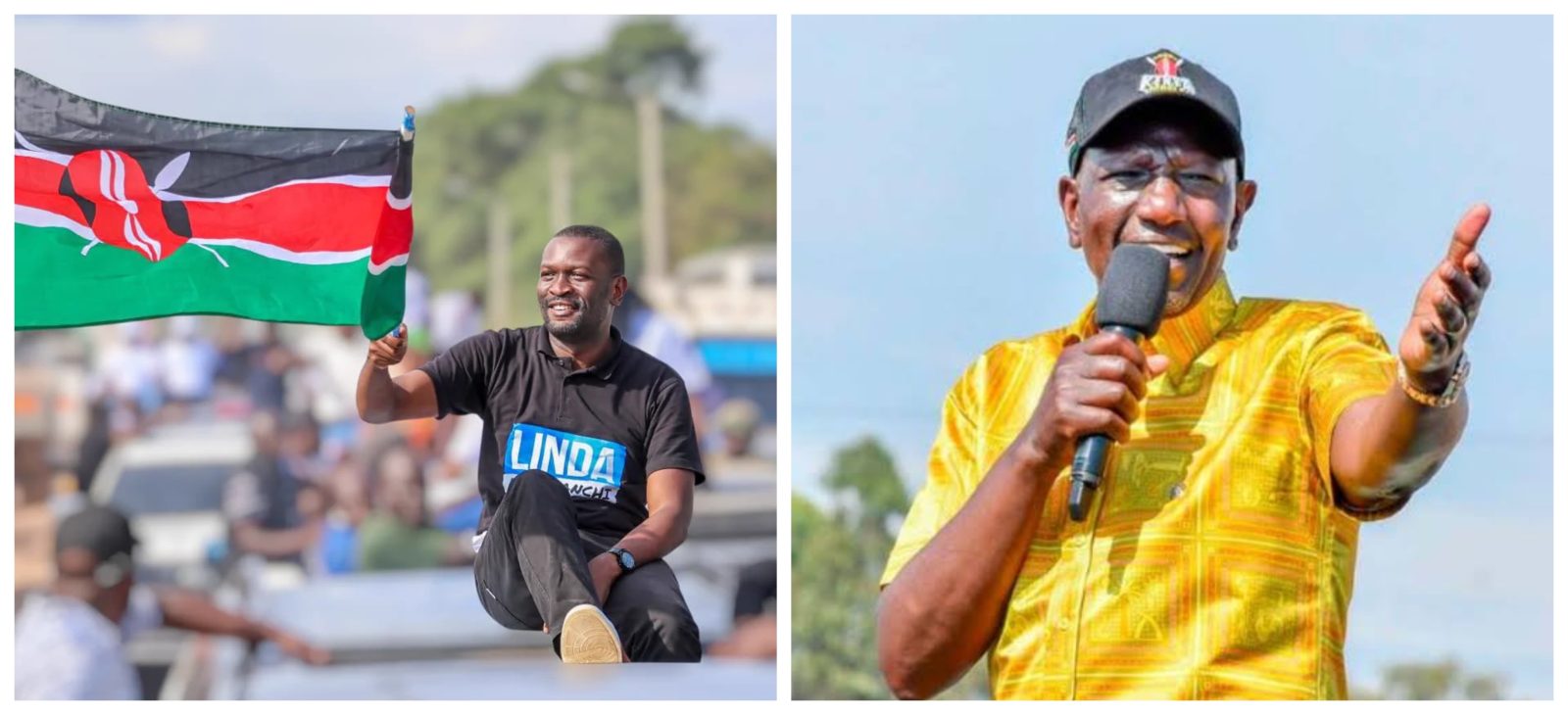
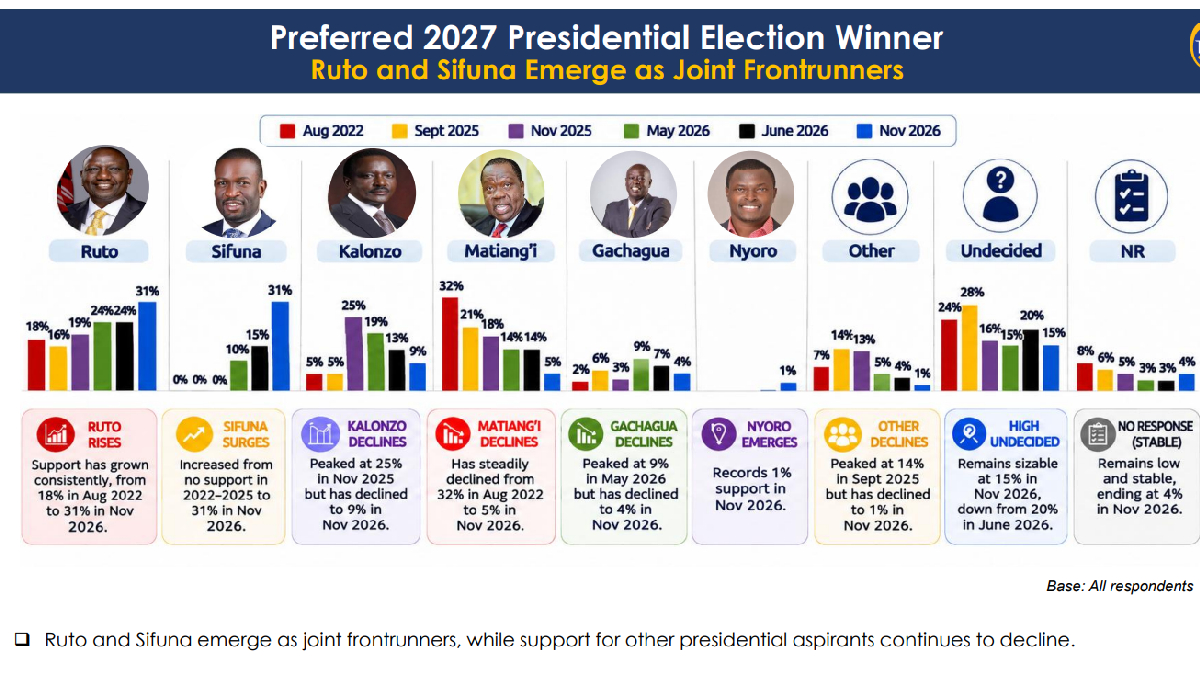
President William Ruto and Nairobi Senator Edwin Sifuna are tied as the most preferred candidates in the 2027 presidential election, each commanding 31 per cent support, according to a new survey by Trends and Insights For Africa (TIFA) Research.
The poll, released on Thursday, November 12, 2026, places the two leaders ahead of other potential contenders, with Sifuna recording a notable rise in popularity as support for several opposition figures continues to decline.
Wiper Party leader Kalonzo Musyoka comes third with 9 per cent, followed by Jubilee Party Leader Fred Matiang’i at 5 per cent and former Deputy President Rigathi Gachagua at 4 per cent.
Kiharu MP Ndindi Nyoro received 1 per cent support, while other potential candidates collectively accounted for another 1 per cent.
Meanwhile, 15 per cent of respondents were undecided, 2 per cent said they would not support any of the listed candidates, while another 2 per cent declined to respond.
According to TIFA, the combined support for opposition candidates stands at 19 per cent, suggesting that a united opposition could potentially pose a serious challenge to the incumbent.
The research firm noted that the opposition could give Sifuna a stronger chance of reaching the 50 per cent threshold if other candidates rallied behind him.
However, it cautioned that such an outcome would depend on whether opposition leaders could overcome their political differences, while also accounting for the advantages of an incumbent president.
A comparison with previous surveys shows a significant shift in presidential preferences.
Ruto’s support has increased from 18 per cent in August 2022 to 31 per cent in the latest findings, while Sifuna, who had no recorded support in earlier surveys, has risen to match the President.
Other opposition leaders have experienced a decline in popularity.
Kalonzo’s support has dropped from 25 per cent in November 2025 to 9 per cent, while Matiang’i has fallen from 19 per cent to 5 per cent over the same period.
Gachagua’s numbers have also declined, dropping from 9 per cent in May 2026 to 4 per cent in November.
Support for other potential candidates has equally fallen from 14 per cent in September 2025 to just 1 per cent.
The number of undecided voters stands at 15 per cent, down from 20 per cent in June 2026.
TIFA observed that Sifuna’s growing popularity appears to have come largely at the expense of other opposition hopefuls rather than Ruto.
The survey also highlighted significant regional differences in support for the leading candidates.
Ruto enjoys his strongest backing in Nyanza, where he commands 62 per cent, followed by Central at 59 per cent and the Coast at 40 per cent.
Sifuna, on the other hand, leads in Western with 55 per cent support, followed by Nairobi at 39 per cent and the Coast at 36 per cent.
Kalonzo remains dominant in Lower Eastern, where he enjoys 55 per cent support, while Matiang’i records his strongest showing in Northern Nyanza at 12 per cent.
Gachagua’s highest regional support is in Mt Kenya, where he has 11 per cent.