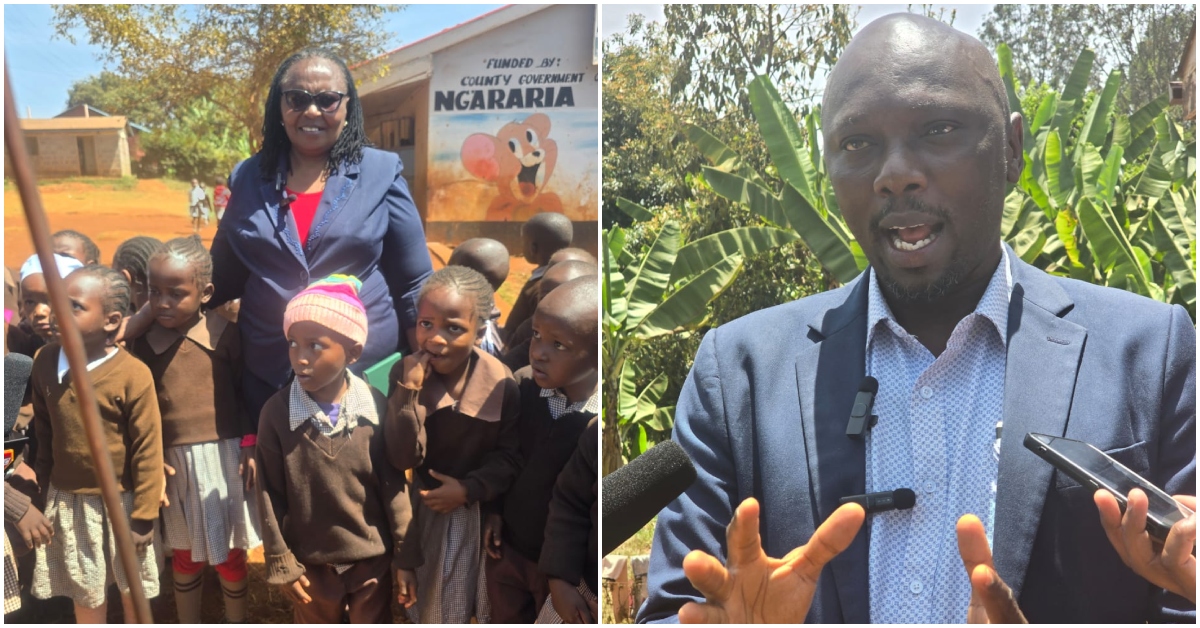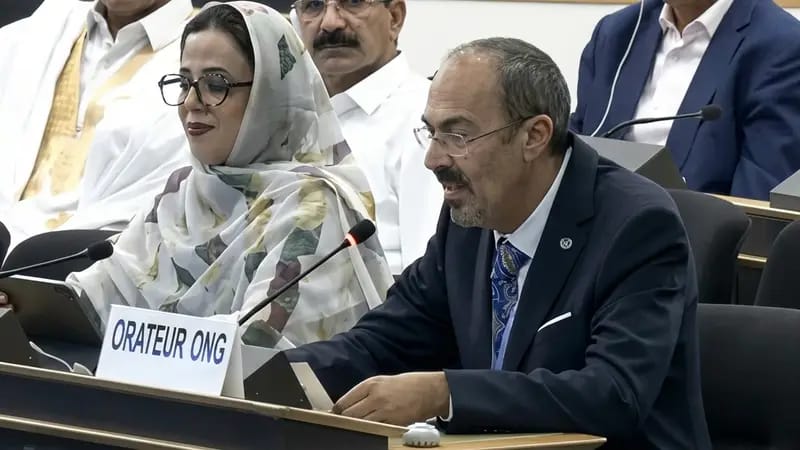
South Mugirango MP Sylvanus Osoro has opened up about a childhood marked by loss, homelessness and violence, revealing how he went from sleeping on the streets to finding his way back to school and eventually into politics.
Speaking on the Dialogue With Jagero podcast, Osoro said he lost his parents while he was still young, forcing him and his siblings to be separated and taken in by different relatives.
His early years had been relatively stable. Born in Kisii, Osoro said his father was a teacher who later moved the family to Nyaururu, where he spent part of his childhood.
“But the good life was not really to happen for long,” Osoro recalled. “Immediately after that, my parents passed on. So that is how I ended up, of course, in the streets for some time.”
He described his experience as genuine street life, rather than simply being a child from a difficult background.
“I’m a pure street guy. Really? Yes. I’m a pure chokora,” he said.
Osoro said he survived by pushing luggage, carrying goods and collecting scraps in town. At times, he begged for food, while on other occasions he was beaten by people who viewed street children with suspicion.
“Sometimes I could get people giving me something. Sometimes you get rough people who beat you up,” he said.
His search for somewhere to belong eventually led him to an uncle, but the new home did not offer the stability he had hoped for.
The uncle was imprisoned after a business deal went sour, leaving Osoro under the care of his uncle’s wife. The woman was jobless and had five children of her own, while several relatives were also living in the same household.
Osoro said his aunt frequently beat the children, something he only came to understand differently much later in life.
“I used to have a lot of negativity about her because she really used to beat us. But over time I realised it was frustration. It was pressure,” he recalled.
One incident, however, remains particularly vivid.
Osoro pointed to a scar on his finger while recounting how his aunt once attacked him with a panga.
“At one point she cut me,” he said, confirming that the injury was inflicted with a panga.
The incident was among the experiences that eventually pushed the young Osoro to flee the home.
He returned to the streets, where he said he became accustomed to a life without rules or security.
“I realised I had my hustle spirit of helping people push luggage and cart and everything in town was feeding me better,” he said.
His life on the streets also exposed him to unusual sleeping arrangements. Osoro recalled hiding underneath buses travelling between Nairobi and western Kenya, using the space beneath the seats as a place to sleep.
On one journey to Kericho, he said he fell asleep beneath the seats of a bus. He was discovered at Kikopey after another passenger accidentally touched him and raised an alarm.
“I mean, somebody is down there,” he recalled of the reaction.
Passengers pulled him out and accused him of being a thief before a driver intervened and asked what he had stolen.
Osoro explained that he was travelling to Kericho to look for an uncle who worked as a supervisor at a tea estate.
The driver listened to his story and helped him continue his journey.
Eventually, another uncle found Osoro and took him in, giving him an opportunity to return to school. He later lived in Chemasingi, Kericho, where he completed his primary education.
Despite the painful experiences, Osoro says he has chosen not to hold a grudge against the aunt who mistreated him.
He has since supported her children and even built the house where she lives—a striking reversal of a childhood relationship shaped by hardship and violence.
“Even the house she lives in, I’m the one who has built for her,” he said.