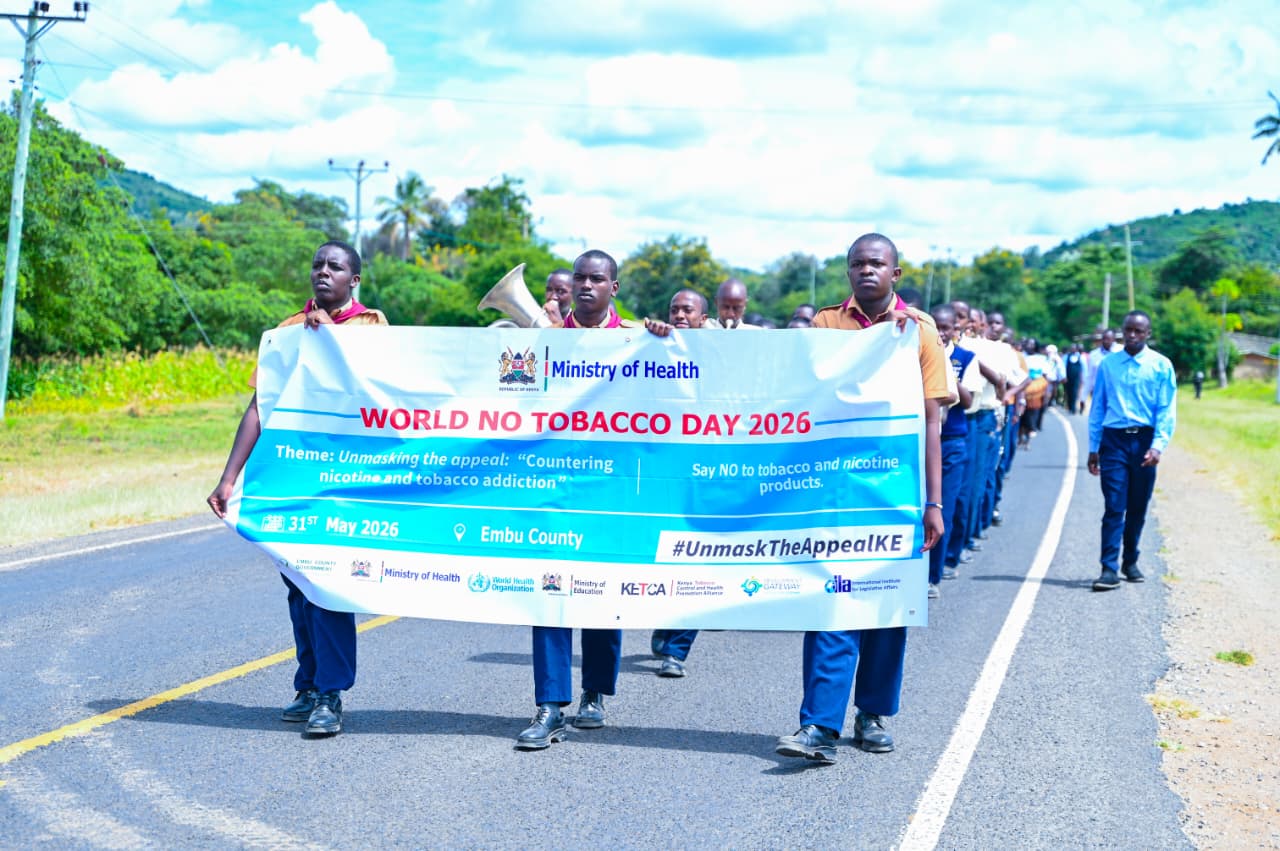
Public health advocates and government officials have intensified calls for the urgent enactment of the Tobacco Control Amendment Bill 2024, exposing aggressive tactics by the tobacco industry to derail the proposed law.
Speaking during the national celebrations for World No Tobacco Day 2026, held at the Umau Ground in Mbeere South Sub-County, Embu County, on Sunday, stakeholders led by the chairman of the Kenya Tobacco Control Alliance (KETCA), Joel Gitali, warned that the industry is actively mobilizing submissions via front groups to oppose the crucial public health bill.

For many caught in the web of dependency, the vulnerability begins long before a child ever sets foot in a retail shop. Sharing a poignant personal story, Ann Mathu, the former vice chair of the NACADA Board, highlighted the profound power of parental influence at home.
“My very first exposure to tobacco and nicotine products came directly through my father. Parents play a pivotal key role in either protecting children from addictive substances or inadvertently exposing them, making awareness and responsibility within the household absolutely critical. When parents set the right example and actively guide their children, they serve as the first line of defense, helping to prevent early exposure and significantly reducing the long-term risk of addiction,” she said.

Yet, even when homes are safe, the battlefield outside has fundamentally transformed. This year’s global campaign theme, “Unmasking the Appeal: Exposing Industry Tactics on Tobacco and Nicotine Products,” highlights a coordinated resistance from business associations, social media campaigns, and third-party “experts” trying to paint lifesaving reforms as anti-business.
Tobacco control advocates note that they will now need to organize and mobilize just as strongly on their side to ensure public health voices are equally well represented.
“Unmasking these commercial appeals is critical to preventing the next generation from falling into addiction. Advocates must remain vigilant in exposing the tactics used to make nicotine and tobacco products seem acceptable, particularly to children and young people, while ensuring communities understand the real risks of addiction and harm,” Gitali stated.
He further noted that devolved units continue to be a critical arm in this work, as closer collaboration with county governments and community structures will bring tobacco control efforts directly to the grassroots. He called upon the Ministry of Health to prioritize the Tobacco Control Fund and strengthen support to counties, noting that adequate and sustainable financing is essential to expand prevention programs, enforce tobacco control laws, support cessation services, and protect local communities.
A deeply worrying trend highlighted throughout the day’s celebrations is the quiet invasion of learning institutions by emerging nicotine products like e-cigarettes and flavored nicotine pouches.
“Today, that battle has shifted from the unmistakable smell and visibility of cigarettes to discreet, flavored products that are easier to hide and easier to market to young people and university students,” warned Caleb Mbugua, the program officer for policy development at the International Institute for Legislative Affairs (IILA).

“The urgency of this issue is clear: local research shows that the average age of initiation for tobacco is now dropping to as low as six years old. Furthermore, for children and teens between the ages of 10 and 17, these products are increasingly being designed with attractive packaging and enticing flavors specifically to hook a younger generation, a trend currently being mirrored in our university halls,” noted Mbugua.
He warned that if policymakers do not move with immediate urgency to pass the Tobacco Control (Amendment) Bill (Senate Bill No. 35 of 2024), which proceeded to public hearing through written memoranda on March 3, 2026, they are effectively choosing to let this cycle of addiction deepen.
Dr. Neema Rusibamayila Kimambo, the World Health Organization (WHO) Country Representative, voiced similar concerns, stating that youth are being reached by emerging nicotine products directly within their schools. She noted that these products are marketed in highly appealing ways, drastically increasing the risk of early addiction among learners.
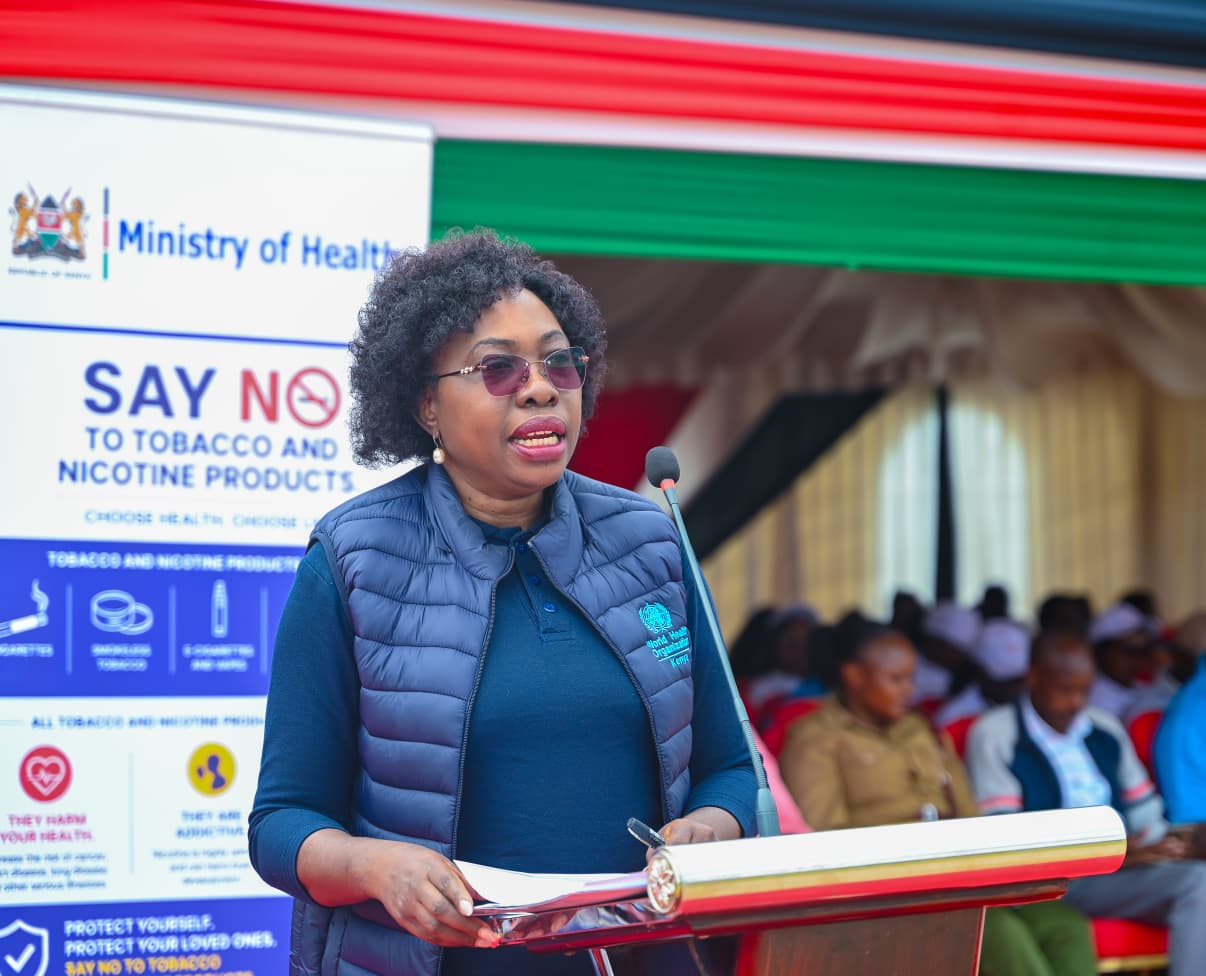
“We need to protect youth from exposure and access by creating safe environments that shield them from nicotine and tobacco products,” Dr. Kimambo noted, adding that legal and regulatory frameworks must keep pace with emerging nicotine trends while boosting cessation support for individuals who are already using these products.
Echoing these fears, the Embu County Director for Education, Mr. Mwiti, noted that the infiltration of tobacco and nicotine products into schools is deeply concerning to the education sector. He emphasized that schools must remain safe spaces for learning, free from commercial exposure, and called upon families, teachers, and communities to forge a united front.

“More education is needed so children can be taught early about the dangers of tobacco and nicotine to make informed and healthy choices,” Mwiti stated, pledging that Embu County remains fully committed to working with partners to strengthen awareness, prevention, and protection for young people in schools.
The sophisticated nature of this threat was reinforced by IILA’s research, which cited a high-profile case involving a Form Four student at Moi High School Kabarak. In that instance, vapes and pouches designed to mimic common everyday objects like highlighters, flash disks, or toys successfully infiltrated a highly disciplined environment by camouflaging their true nature and masking the harsh scent of nicotine with sweet aromas like mint and strawberry.
The devastating long-term impact of these products was put into sharp perspective by medical and state experts who dismantled the industry’s marketing narratives.
“Tobacco use remains a major cause of cancer,” pointing out that a significant proportion of malignancies affecting the lungs, throat, mouth, and other vital organs are directly linked to tobacco and nicotine use. She emphasized that starting use at a young age greatly increases the risk of lifelong dependence and severe clinical consequences in later years,” said Linet Kosgei, a representative from the National Cancer Institute.
Representing Public Health Principal Secretary Mary Muthoni, the Director of Primary Healthcare at the Ministry of Health, Dr. John Gondi, explained that while the devastating effects on human health are clear, the impact extends far beyond the clinic to significant social, economic, and environmental consequences that are often overlooked.
“The growing presence and appeal of emerging tobacco and nicotine products is increasing the vulnerability of young people, exposing them to addiction at an earlier age,” said Dr. Gondi.

He explicitly dismantled the industry’s “harm reduction” narrative, labeling the marketing around alternative products as deeply misleading. He stated that while they are frequently sold as safer alternatives, they still pose serious health risks and serve as a functional gateway to nicotine addiction, making widespread public awareness critical so communities can identify these hidden products and recognize marketing tactics.
Hosting the national event, Embu County Governor Cecily Mbarire, in a speech read by the county secretary and head of public service, Amy Ruria, expressed pride that Embu County was honored to host this year’s national World No Tobacco Day celebrations.
Embu County recognizes the growing challenge and remains committed to supporting regulatory efforts. She particularly acknowledged the vital work being carried out by Community Health Promoters (CHPs), noting that their close daily engagement with households makes them a critical link in raising awareness and advancing tobacco control interventions at the doorstep. She said.
The proposed legislative amendments currently awaiting action are extensive and strike directly at the core of the industry’s tactics. The bill moves to ban characterizing flavors, prohibit disposable e-cigarettes entirely, and increase mandatory pictorial health warnings from the current 30%-40% to a prominent 75% of the display area to counter sleek, vibrant packaging.
Civil society organizations continue to urge Parliament to fast-track the Tobacco Control Amendment Bill 2024 and push for tobacco tax increases toward the WHO-recommended benchmark of 75% to make these addictive products less affordable to the youth. They point out that the country cannot afford to delay, losing between USD 544 million and USD 756 million annually due to tobacco-related illnesses and lost productivity.