
By Dr Barbara Karau, Consultant Cardiologist and Dr Salim Abdallah Salim, Cardiology Fellow at Aga Khan University Hospital, Nairobi
A man collapses at home. A woman falls unconscious in a market. A young footballer drops to the ground during a match. Someone slumps over in a matatu. For a moment, everyone freezes. “Call an ambulance!” Someone says, or someone flags down a good Samaritan to help ferry the patient to the nearest health facility. When the heart stops, waiting is not an option.
Every year on October 16, the world marks World Restart a Heart Day, a global campaign that reminds us of one simple truth: when someone’s heart suddenly stops, the people closest to them are often the first and most important responders.
Not the ambulance, not the doctor but you.
Heart attack is not cardiac arrest. The two are often confused, but they are not the same. A cardiac arrest is the sudden stopping of the heart’s pumping action as a result of the heart’s electrical system malfunctioning, where the heartbeat either becomes chaotic or ceases altogether and blood stops flowing to the brain and other vital organs. Within seconds the person collapses, loses consciousness and a pulse, and stops breathing normally, with gasping respiration or no breathing activity at all witnessed. Without immediate cardiopulmonary resuscitation (CPR) and, where needed, an electric shock from a small machine called a defibrillator, death follows within minutes.
A heart attack is a circulation problem – a blocked heart artery starves part of the heart muscle of blood, resulting in chest pain, nausea, sweating and sometimes shortness of breath. The person is usually awake.
The two are nonetheless closely linked because a heart attack is the most common trigger of cardiac arrest in adults – sometimes the cardiac arrest strikes during a heart attack itself; in other cases it arises months or years later from the scar an earlier heart attack left behind. Behind the heart attack lie the familiar culprits: uncontrolled high blood pressure, diabetes, smoking, high cholesterol and obesity.
The next most common cause of cardiac arrest is a disease of the heart muscle, known as a cardiomyopathy, in which the muscle becomes weakened and enlarged, or abnormally thickened and is then prone to dangerous rhythm disturbances. Thickening can occur whenever the heart’s main pumping chamber, the left ventricle, has to push blood out against increased resistance. Like any muscle made to work harder, it bulks up over time. Long-standing high blood pressure is by far the commonest reason, followed by a narrowed aortic valve, the outlet through which blood leaves the heart.
In young people, the thickening is inherited, sometimes hinted at only by a family history of sudden death at a young age. Another cause of cardiac arrest in this young group is an artery that supplies the heart muscle that is abnormal in origin or course from birth, and cuts off blood supply to the heart muscle at the very moment it is needed most. Many of those affected have no warning symptoms at all, which is why collapse during activity in school or sport is sometimes the first sign. Inflammation of the heart muscle following a viral infection is another recognized cause in this age group.
Not every cardiac arrest begins in the heart. A severe lack of oxygen from drowning, choking or a serious asthma attack can stop it, as can heavy blood loss after a road accident or during childbirth, a large blood clot in the lungs, overwhelming infection or dangerous shifts in the body’s salts such as potassium, as seen in kidney failure. Drug overdose, certain medicines, electrocution and, rarely, a forceful blow to the chest can do the same.
Recognise. Call. Push.
So, what should you do if someone suddenly collapses?
First, recognise it. If the person does not respond when you speak to or gently shake them and is not breathing normally, treat it as cardiac arrest. Do not waste precious minutes trying to determine exactly what happened.
Second, call for help. Get someone to call emergency medical services. If you are alone, make the call and put the phone on speaker if possible.
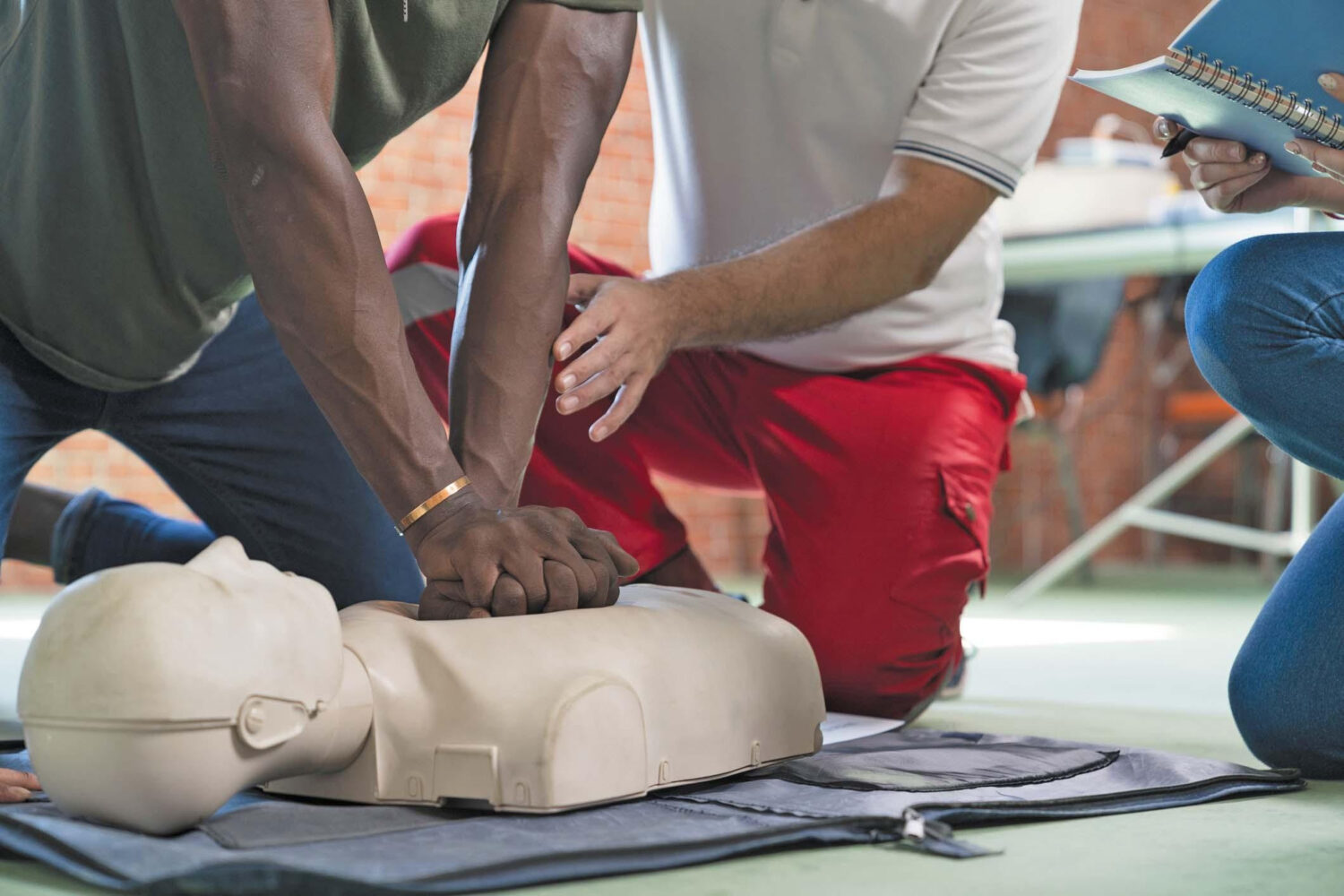
Third, push. Start CPR. Place the heel of one hand in the centre of the chest (over the breast bone), put the other hand on top, interlink the 2 and push hard, deep and fast. Aim for about 100120 chest compressions a minute and allow the chest to come back up between compressions.
Keep going until help arrives, the person starts showing signs of life, or a defibrillator instructs you to stop.
If you have never been trained in CPR, do not let that stop you. Hands-only CPR is a simple way for an untrained bystander to begin helping an adult who has collapsed and is not breathing normally.
This is particularly important in Kenya, where reaching hospital may take time because of distance, traffic and limitations in pre-hospital emergency services.
It means the first treatment may not come from a hospital. It may come from the person standing beside the person who has collapsed.
This is why CPR should not be thought of as a skill reserved for doctors and nurses. Teachers, security guards, drivers, sports coaches, students, parents and community members can all learn it.
The more people who know what to do, the better our chances of turning a cardiac arrest from a tragedy into a survivable emergency.
What about the AED?
The automated external defibrillator (AED) is another link in the chain of survival. This portable device analyses the heart’s rhythm and, when appropriate, delivers an electric shock. It is designed for ordinary people and gives clear instructions when switched on.
AEDs remain unfamiliar to many Kenyans and are rarely seen in markets, matatus, schools, shopping centres or stadiums. Kenya has an opportunity to make them more accessible in public places and train frontline staff to use them as emergency services improve.
But an AED is only part of the solution. A defibrillator cannot help if nobody recognises cardiac arrest and starts CPR. A bystander’s hands remain the first link in the chain.
When the heart restarts
Restoring the heartbeat is a victory, but not the end. Urgent hospital care is needed to identify the cause, protect the brain and other organs, stabilise the heart and reduce the risk of another arrest. The hours after resuscitation are critical.
Survival depends on a chain: rapid recognition, CPR, defibrillation, emergency medical care and appropriate hospital treatment. If one link is missing, the chances of survival fall.
We can all be part of the chain
World Restart a Heart Day is a reminder to everyone, not just healthcare professionals. If someone collapses, is unresponsive and is not breathing normally, do not simply stand and watch.
Recognise. Call. Push. And keep going.
As a country, we should make CPR training more widely available and consider how AEDs can become part of the emergency infrastructure in public spaces. But the first step is one each of us can take: learn CPR, teach someone else and be ready to act.