Aflatoxin has continued to be described as one of the major food safety crises in Kenya, with endemic contamination reportedly affecting key staple products such as maize, peanuts and dairy products, especially in parts of the country where the problem has persisted for years.
The aflatoxin crisis featured prominently during the annual Cereal Millers Association (CMA) Annual Technical Conference and Expo 2026, organised by CMA and bringing together more than 70 companies, including millers and solution providers, at the Sarit Expo Centre in Nairobi.
While exhibitors described aflatoxin as a crisis that requires urgent action, a Aflabox Srl, presented what it described as a new solution for Kenya and the wider African market.
The company has developed Aflabox, a system that is able to scan agricultural products using artificial intelligence and provide real-time screening results for aflatoxin directly from the field and along the supply chain. But beyond testing, the system is built to collect, manage and map data from every screening carried out.
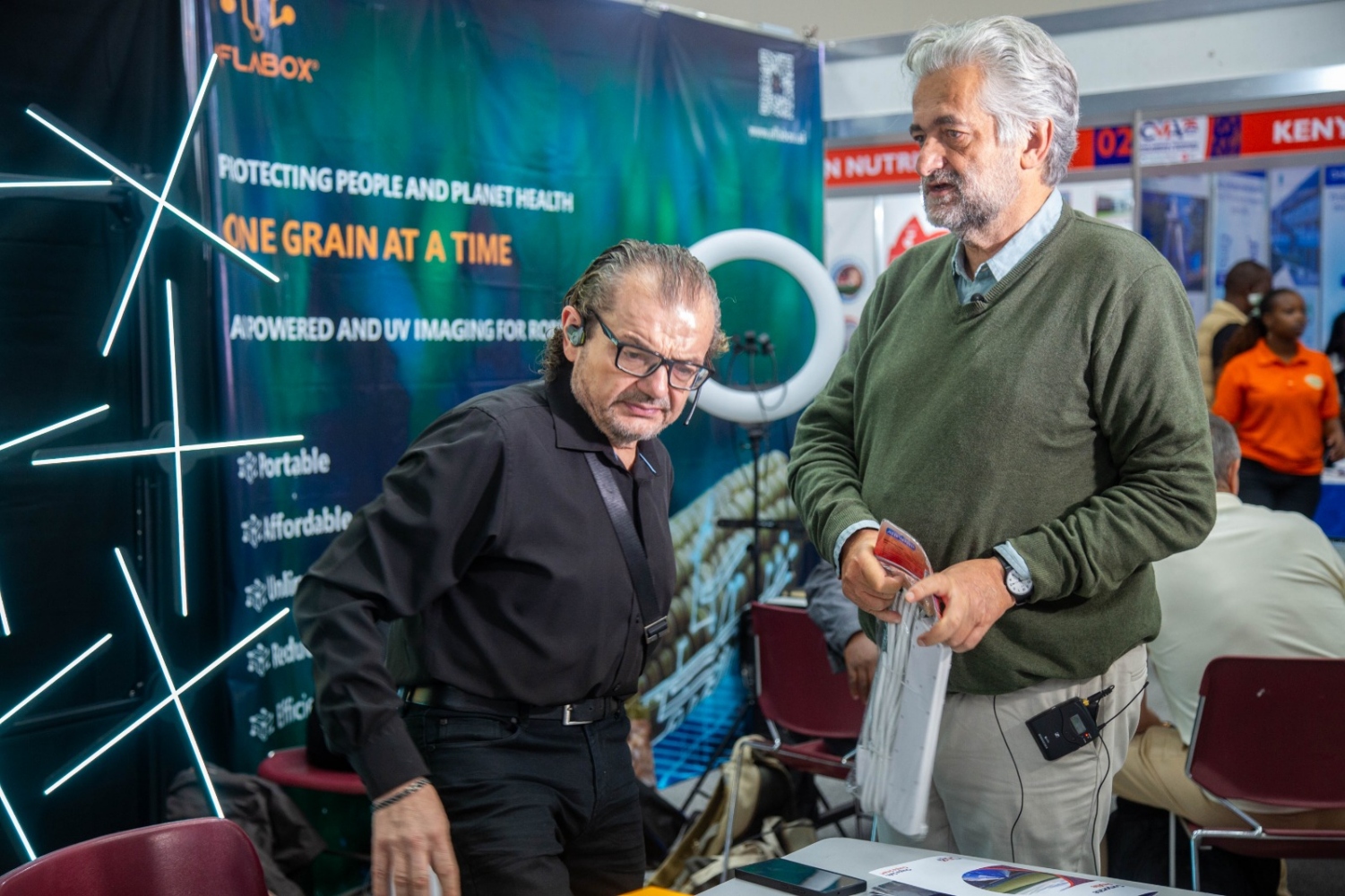
Aflabox was co-founded by Luca Alinovi and Fabrizio Cardillo. The company is positioning Aflabox not only as a rapid screening tool, but as a data acquisition, data management and mapping system that can support decision-making for private operators and institutions.
Each screening generates real-time information that can be geolocated through the system’s integrated GPS and organised through dashboards, making it possible to understand where contamination is detected, where products are coming from, how quality varies across territories and how risks move through the agricultural chain.
Paloma Fernandes, Chief Executive Officer of the Cereal Millers Association, said Kenya has had a serious aflatoxin problem for many years and that action has been ongoing to find ways of addressing the problem more effectively, with innovation playing a key role.
Speaking during the annual technical conference and expo, Fernandes said previous statistics had shown widespread contamination in commercial flour and added that the impact had extended to other food products as well. She said the sector had been working through self-regulation and other efforts, but the problem had remained significant.
Fernandes said the industry was encouraged by the new innovations presented at this year’s conference, especially those related to aflatoxin testing and fortification.
“One of the exciting ones, as you have seen, is the Aflabox, and this is going to be a game changer for us whether we are in mills, in the farms, as aggregators, and we are very excited to see where this innovation will take us,” she said.
Dr Luca Alinovi, CEO and Co-Founder of Aflabox, said the company was bringing a new technology to measure aflatoxin in a context where food safety challenges are often difficult to manage.
He said the innovation uses Aflabox, connected to Wi-Fi, to test aflatoxin without depending only on complicated laboratory systems.
“Instead of using complicated laboratory procedures, you use our device, you do a click, and in 30, 40, 50 or 60 seconds you get the results and understand if it is contaminated or not,” he said.
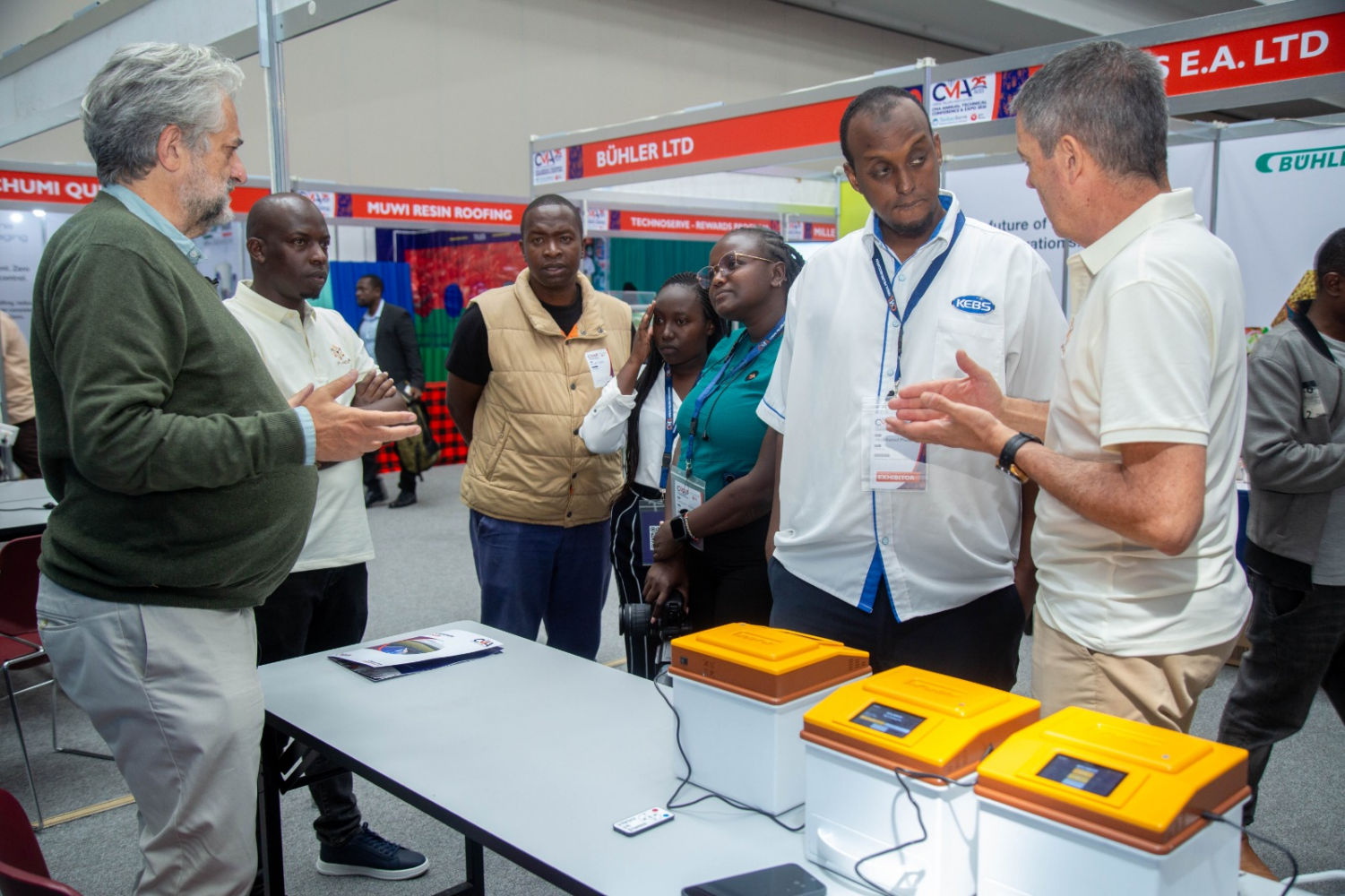
Alinovi said Aflabox is designed to change the lives of millers, traders and farmers who are often exposed to the problem of aflatoxin. He said the real strength of the system is not only the speed of screening, but also the value of the data generated by every scan.
According to him, when screenings are carried out at scale, the system can collect and analyse data in real time, continuously and under artificial intelligence, allowing users to map products, define quality parameters, monitor commercial quality, and understand geographic distribution and contamination patterns from local level to national level.
He said this gives private clients, aggregators, suppliers and institutions the possibility to know where problems are located, which areas show different quality levels, and how products are moving across the chain, so that better strategies and faster decisions can be taken.
“Aflabox is a European company, but through its presence here it wants to work extensively in the country and help solve the problem for millers, traders, farmers, institutions and government,” he said.
Alessio Collussi, agronomist at Aflabox, said one of the major problems Kenya and Africa are facing is the presence of aflatoxin in food consumed every day, particularly flour-based products.
He said that in many cases the level of aflatoxin found in food has been above the limit allowed by law.
“The legal limit in Kenya is 10 ppb. The issue is that to measure aflatoxin in food, equipped laboratories and sophisticated analysis are usually required. What we wanted to do was to prepare a solution that simplifies screening,” he said.
Colussi said the company developed a small box into which a maize sample can be placed for testing, allowing farmers, traders and aggregators to understand the origin of the risk and act early.
He added that the system also makes it possible to identify contaminated lots at the beginning and along the chain, reducing cross-contamination and ensuring that by the time products reach millers or processing companies, they have already been monitored, structured and mapped.
Dr Wilson Songa of Kaizen Top Mark and member of the Executive Board of Agriculture Sector Network said Aflabox could change how aflatoxin contamination is managed by making it possible to take action in time and prevent contaminated food from spreading further in the chain.